



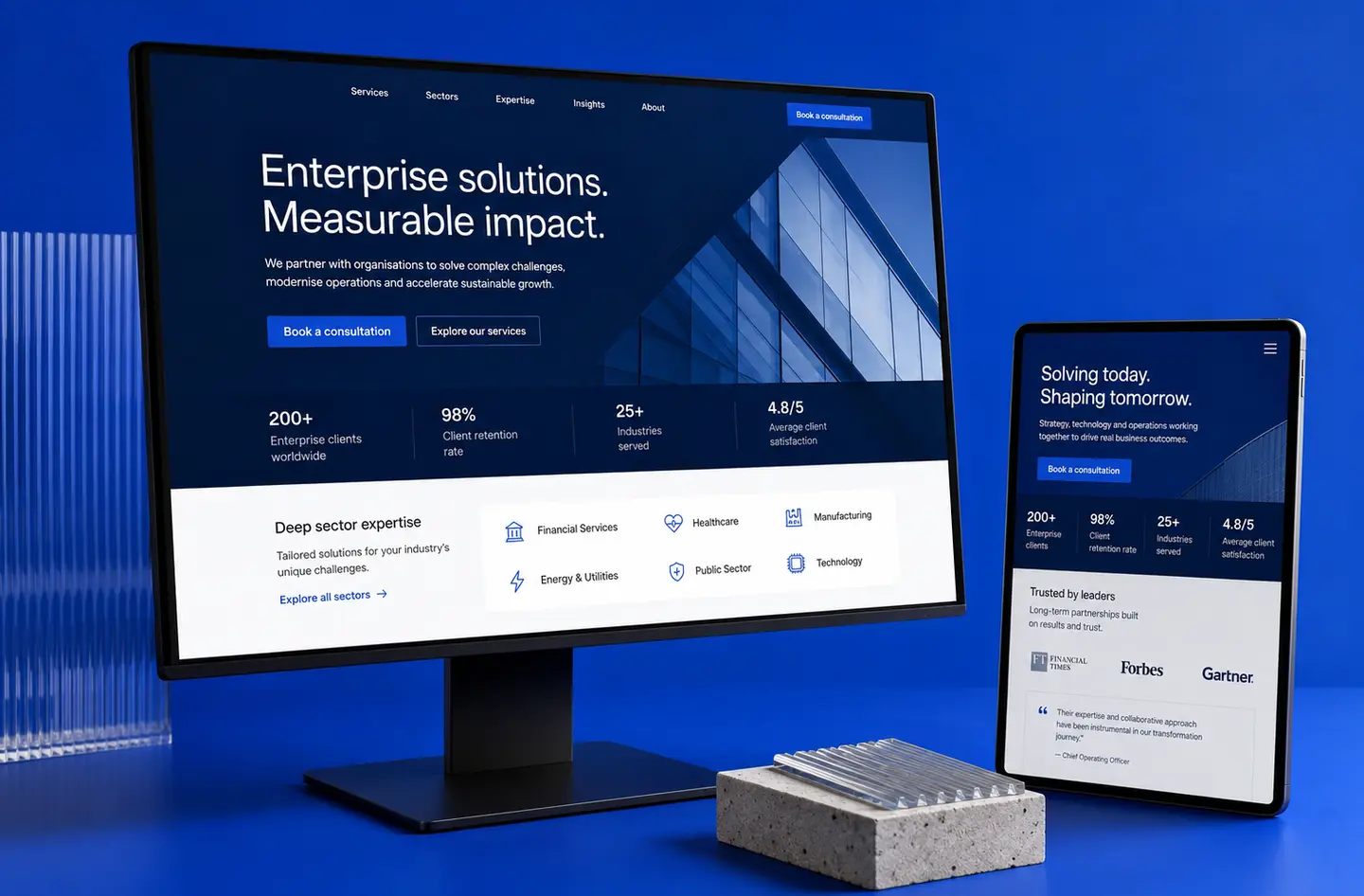
CORPORATE · B2B
Build authority, simplify complex services and create qualified lead journeys.
Best when the site needs to explain expertise, show proof and convert multiple buyer roles without feeling like a generic brochure.
AppsLoading designs and develops high-performance websites for corporate brands, SaaS companies, eCommerce businesses and digital platforms. We connect information architecture, responsive UX, custom engineering, CMS workflows, technical SEO, analytics and conversion into one maintainable web system.

A premium website connects search intent, product or service positioning, proof, navigation and conversion. The build should make that journey clearer instead of simply making the old pages look newer.
Separate research, comparison and conversion journeys before deciding page structure.
Create page relationships, navigation and internal links around how people actually discover content.
Use results, use cases, process and technical detail where uncertainty is highest.
Track leads, demos, purchases, engagement and search performance after launch.
The visible interface sits on top of content, rendering, APIs, analytics, search architecture and infrastructure. Treating those layers separately creates slow sites, brittle migrations and weak content operations.
Pages, routing, reusable UI, data fetching, forms and interaction behavior.
Use AppsLoading for a complete website build or for the stage that currently limits growth.
Tailored websites built around users, business goals, content and integrations.
Credibility-led service journeys, proof architecture and lead generation.
Product positioning, feature education, use cases, pricing journeys and demand generation.
Product discovery, merchandising, secure checkout and conversion optimisation.
Role-based dashboards, customer portals, internal tools and workflow applications.
Structured content models and editor-friendly publishing without sacrificing front-end quality.
Improve structure, speed, content and technology while protecting valuable URLs and search equity.
Security, analytics, experimentation, SEO improvement and continuous product iteration.
Conversion improves when the page sequence reflects how confidence is built: discovery, understanding, proof and action.
Land visitors on a page that immediately confirms they are in the right place.
Use hierarchy, examples and technical detail to make the value easy to evaluate.
Show relevant results, capabilities, process, integration depth and ownership.
Use calls to action that match intent instead of pushing every visitor into the same form.

Performance is easier to protect when rendering, scripts, images, fonts, third-party tools and CMS behavior are designed intentionally rather than optimised after launch.
Prioritise the main content element, server response, rendering path and media delivery.
Reduce long tasks, expensive JavaScript and interaction work that delays responsiveness.
Reserve layout space and control fonts, embeds and dynamic components to avoid visual shifts.
Monitor real-user performance after launch instead of relying only on lab scores.
Technical SEO should be part of the build system: URLs, rendering, metadata, canonical signals, schema, internal linking, redirects and content operations need clear ownership.
Clean navigation, internal links, XML sitemap support and crawlable HTML.
Keep duplicate states, faceted pages and migration rules from creating conflicting signals.
Choose server, static or client rendering based on content, product behavior and performance.
Use meaningful headings, descriptive titles, structured content and appropriate structured data.
Protect valuable URLs, backlinks and indexation when architecture changes.
Track indexing, search queries, landing pages and conversion outcomes after release.
The best stack is the one your team can operate while meeting performance, integration and product requirements.
Premium front-end work loses value if publishing is slow, inconsistent or dependent on developers for every small change.
Define page types, fields, relationships and components so editors are not rebuilding layouts manually.
Use roles, previews, staging and approvals where content risk or governance requires them.
Keep media, components and scripts within defined delivery rules.
Track organic entrances, conversion paths, engagement and business events by page type.
A migration should improve UX and technology while preserving useful content, search equity, analytics continuity and business integrations.
Map URLs, traffic, backlinks, conversions, content, integrations and performance issues.
Protect high-value pages while removing duplication and weak legacy patterns.
Create the new sitemap, component system, CMS structure and internal linking plan.
Prepare URL mappings, canonicals, metadata, analytics and staging checks before cutover.
Watch crawl behavior, indexing, rankings, performance and conversion data for regressions.
The architecture changes when the site exists to establish trust, explain a software product or operate a customer-facing platform.
Best when the site needs to explain expertise, show proof and convert multiple buyer roles without feeling like a generic brochure.
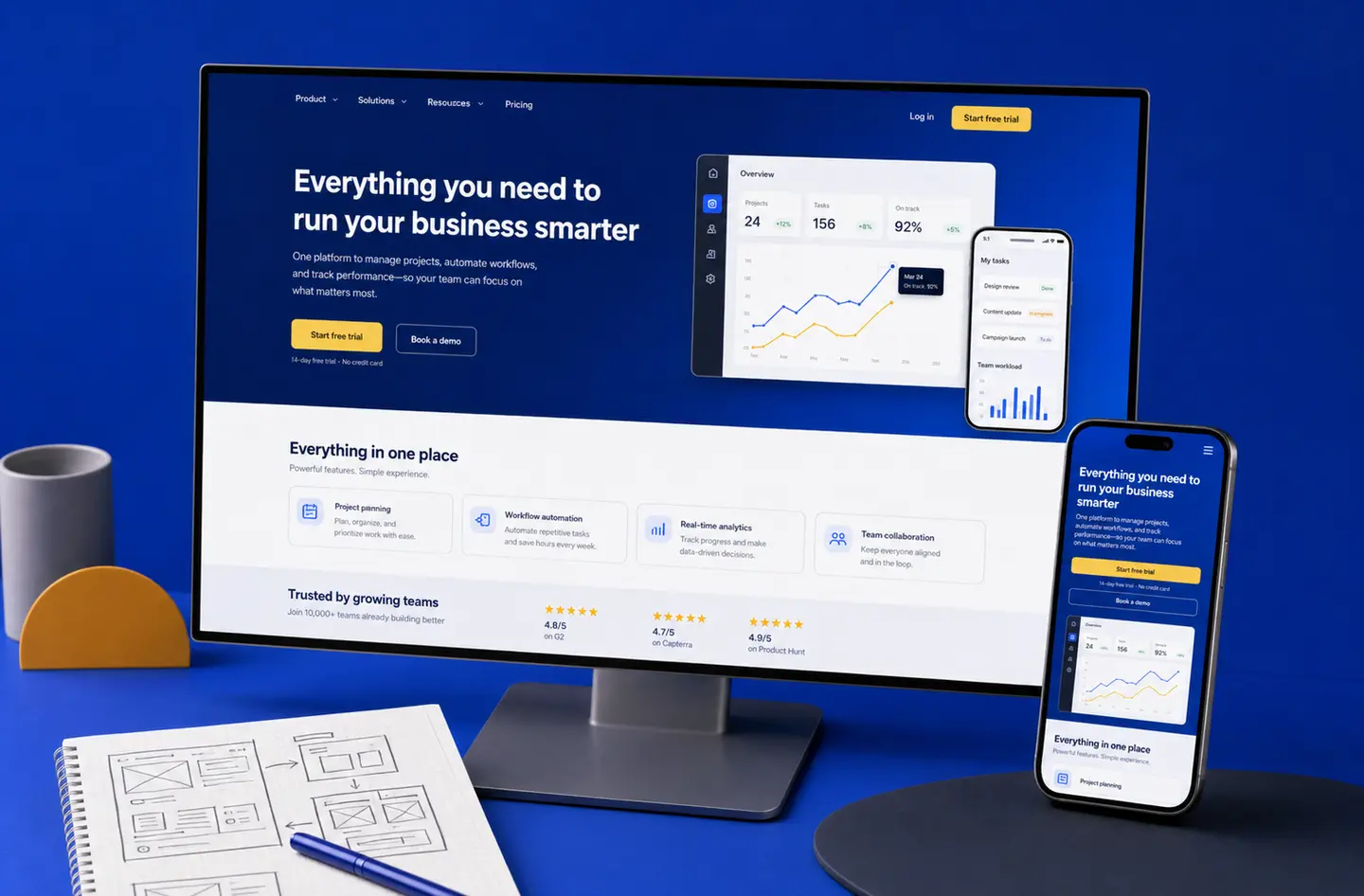
Useful when website content must support product-led discovery and sales-assisted conversion.
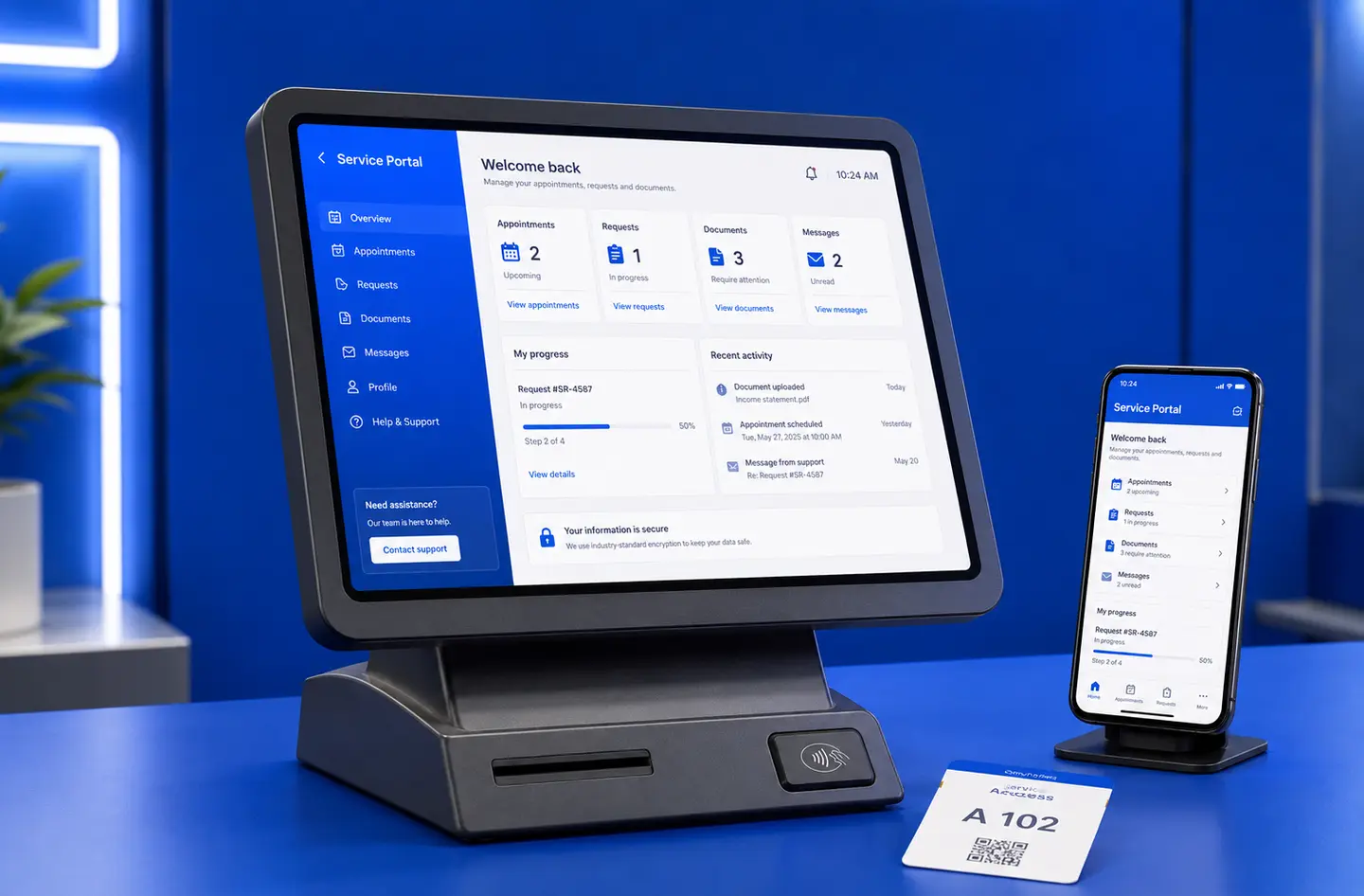
Useful when customers or teams need data, permissions, account management and connected business actions.
The stack should support how the site renders, how content is edited, what systems it integrates with and who will maintain it.
The page structure and technical priorities change by buying journey, regulation, content depth and transaction model.
Product education, use cases, integrations, pricing and demo conversion.
PRODUCT MARKETING · SEO · DEMANDExpertise, service architecture, case studies and high-intent lead generation.
TRUST · CONTENT · LEADSDiscovery, merchandising, checkout, retention and campaign landing systems.
COMMERCE · CRO · PERFORMANCEService discovery, patient education, accessibility and controlled data flows.
ACCESSIBILITY · TRUST · CONTENTTrust-led product explanation, onboarding, comparison and secure integrations.
SECURITY · UX · COMPLIANCEAuthenticated dashboards, workflows, roles and integration with operational systems.
PORTALS · DATA · WORKFLOWDesign depth, content operations, integrations, migration risk, eCommerce and application behavior all change delivery effort.
Unique page systems, interactive storytelling, content support and brand depth.
Custom content models, roles, previews, multilingual publishing and governance.
CRM, payments, search, analytics, identity, marketing automation and internal APIs.
Accounts, pricing, checkout, dashboards, permissions and transactional workflows.
URL preservation, redirects, content consolidation and large existing search footprints.
Accessibility, performance, browser coverage, security, monitoring and support.
We develop corporate websites, SaaS marketing sites, eCommerce experiences, landing-page systems, customer portals, CMS websites and custom web applications.
We map audience intent, conversion goals, search opportunities, content relationships and business priorities before finalizing the sitemap and page hierarchy.
Yes. We can support positioning, page architecture, content models, conversion journeys, technical requirements and implementation priorities.
The right stack depends on content operations, product functionality, integrations, performance, internal skills and long-term ownership.
Yes. We can build traditional CMS websites, custom React or Next.js experiences and headless architectures based on the project requirements.
Yes. We design content models, reusable components and publishing workflows so approved content can be managed safely by non-technical teams.
Yes. We consider crawlability, semantic HTML, metadata, internal linking, rendering, canonicals, redirects, structured data and performance during the build.
We engineer around loading performance, interaction responsiveness and visual stability, then validate with lab testing and real-user data where available.
No responsible provider can guarantee rankings. We can build a strong technical and content foundation that supports ongoing search growth.
We reduce migration risk by auditing valuable URLs, mapping redirects, preserving useful content, reviewing metadata and monitoring the site after launch.
Yes. We can migrate content, rebuild components, clean up legacy structure and move to a CMS or custom stack that better fits future requirements.
Yes. New work can be developed and tested in separate environments until migration, redirect and launch checks are complete.
Cost depends on design complexity, CMS requirements, integrations, eCommerce or application features, migration scope, content support, testing and timeline.
You retain ownership of approved code, designs, content and project assets according to the engagement terms.
Yes. Ongoing support can include security, updates, performance, content, analytics, technical SEO, conversion improvements and new functionality.
Share your current site, new build or migration challenge. We’ll map the page architecture, technology, technical SEO, CMS workflow and conversion priorities before implementation begins.
