Reuse product logic and UI patterns across major platforms.
Build with React Native. Launch fast, scalable mobile products with native control.
AppsLoading designs and develops high-performance React Native applications for iOS and Android. From product strategy and adaptive UI to TypeScript engineering, Expo, native modules, backend integrations, testing, app-store launch and long-term support, we manage the complete React Native journey.
Coordinate iOS and Android delivery through one product roadmap and engineering team.
Ship fixes and improvements across platforms with less duplication.
Connect device APIs, third-party SDKs and custom Swift or Kotlin modules when required.
One product foundation. Multiple high-quality experiences.
From product strategy and UX to engineering, migration, testing and post-launch growth, we support the complete react-native lifecycle.
Custom React Native Development
Scalable iOS and Android applications tailored to users, workflows and business goals.
React Native · TypeScriptReact Native MVP Development
Launch a focused first product across both major mobile platforms.
MVP · ValidationReact Native UI/UX Engineering
Adaptive interfaces and reusable components with platform-aware interactions.
Design · Adaptive UINative-to-React Native Migration
Move suitable native screens and workflows into a shared React Native architecture.
Migration · ModernizationExpo App Development
Accelerate builds, updates, testing and store delivery with Expo tooling.
Expo · EASNative Module Development
Connect Swift, Objective-C, Kotlin and Java capabilities when deeper device access is required.
Native Modules · SDKsReact Native Performance Optimization
Improve startup time, rendering, memory usage, navigation and bridge performance.
Performance · ProfilingMaintenance and Product Growth
Support framework upgrades, OS compatibility, releases and continuous feature development.
Support · ScalingA React Native architecture built for shared delivery and native flexibility.
We structure React Native applications around modular JavaScript and TypeScript layers, native capabilities, predictable state and reliable release workflows.
Define the right React Native architecture before development begins.
We can map feature modules, navigation, state management, Expo services, native SDKs, performance needs and release strategy.
Plan your React Native app →React Native engineering without compromising product quality.
We combine shared architecture with platform-aware design, testing and native integrations.
React Native-first architecture guidance
We recommend the right React Native architecture, plugins and native extensions based on product fit.
Modular architecture
Clear boundaries make the app easier to test, maintain and scale.
Real-device validation
We test performance, UX and compatibility on devices users actually use.
Post-launch partnership
We support releases, analytics, optimization and roadmap expansion.
React Native products built for real users and scalable growth.

Mobile finance and payment platform
Secure onboarding, transactions, account visibility and real-time analytics.

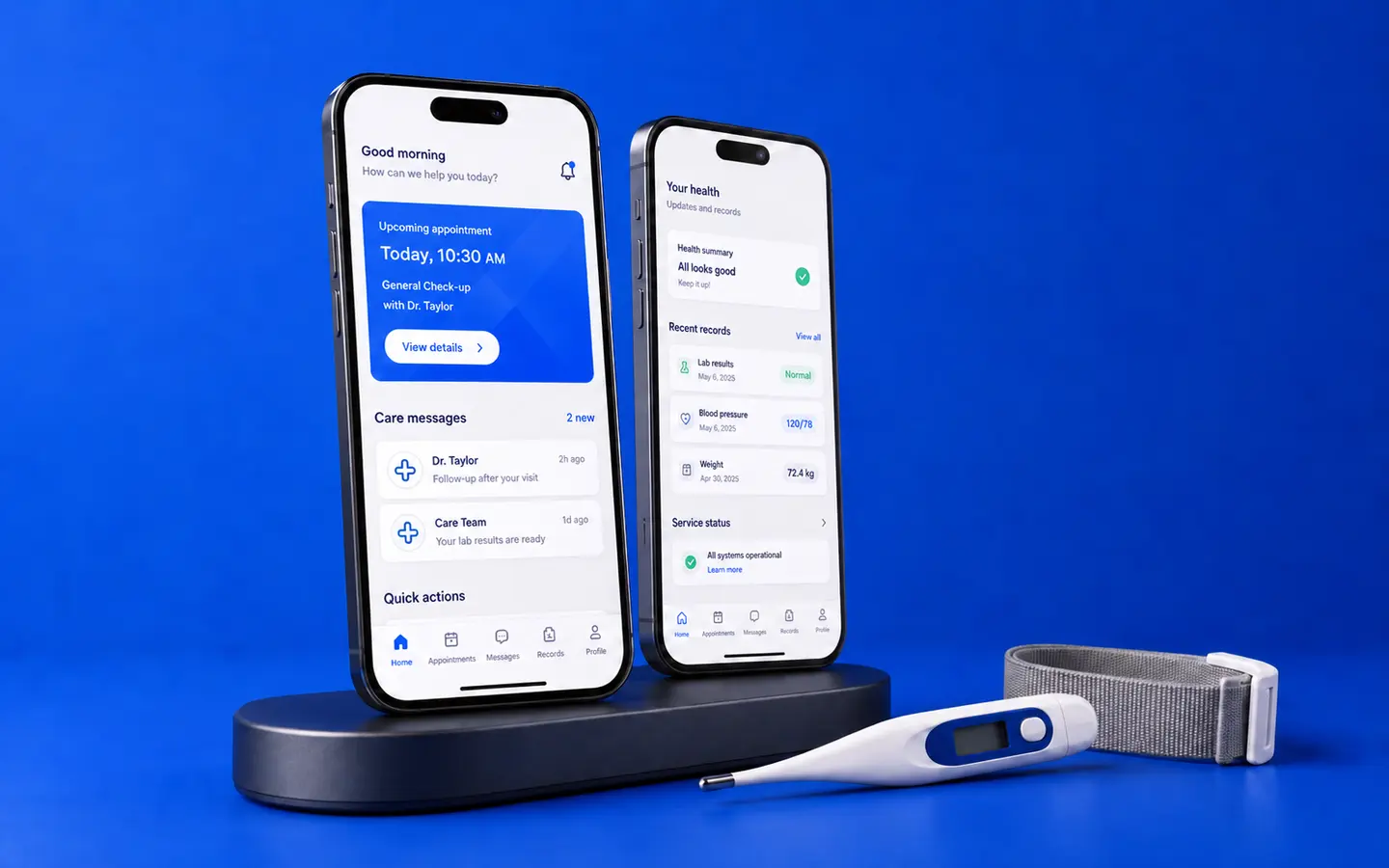
Patient and care coordination platform
Appointments, communication, records and service access across devices.

Shopping and customer engagement app
Product discovery, checkout, loyalty, payments and notifications.

Field operations and tracking application
Tasks, approvals, offline workflows, reporting and distributed team coordination.
Launch faster. Maintain less. Reach more users.
React Native creates value when one product team can deliver coordinated experiences across Android, iOS and web.
Choose the right delivery model based on product complexity and native requirements.
Expo-managed, bare React Native and hybrid native architectures can all work well. The right model depends on SDK requirements, native complexity and release ownership.
Expo managed
Fast builds, updates and delivery with a strong managed toolchain.
Ideal for most product teams and rapid iterationBare React Native
Maximum control over native projects, build settings and third-party SDKs.
Ideal for complex native integration requirementsHybrid native integration
Introduce React Native modules inside an existing iOS or Android application.
Ideal for phased migration and legacy modernizationModern tools for reliable React Native delivery.
We select frameworks and services around performance, integrations, maintainability and team fit.
React Native
Shared mobile development with native rendering and integrations.
TypeScript
Typed code for safer refactoring and scalable architecture.
Expo
Builds, updates, testing and store delivery through EAS.
Redux Toolkit
Predictable application state and data workflows.
React Navigation
Flexible stacks, tabs, deep links and navigation flows.
Firebase
Authentication, notifications, analytics and crash reporting.
GraphQL
Efficient application data access for complex interfaces.
REST APIs
Reliable backend and third-party service integration.
SQLite
Local storage, offline workflows and synchronization.
Detox / Jest
Unit, component and end-to-end mobile testing.
EAS Build
Automated signing, builds, updates and store releases.
Sentry
Crash reporting, diagnostics and release monitoring.
A React Native product foundation your team can launch, maintain and extend.
Deliverables cover architecture, design, engineering, testing, release and long-term support.
Platform recommendation
React Native architecture and platform-fit recommendation with clear rationale.
Product architecture
Modules, state, data, navigation and native integration strategy.
Adaptive design system
Shared components with platform-aware interaction behavior.
Production application
Tested Android, iOS and optional web builds.
Release setup
Build automation, signing, store preparation and analytics.
Documentation and handover
Technical guidance, code ownership and support roadmap.
Choose React Native when shared delivery must still support native capability.
React Native works best when products need coordinated features, custom UI and faster multi-platform releases.
Discuss your React Native strategy →When you need Android and iOS together
Coordinate both releases through one product roadmap.
When the MVP must reach more users
Validate demand across platforms without duplicate teams.
When features should remain consistent
Share product logic, components and release planning.
When maintenance cost is rising
Reduce fragmented code and repeated implementation.
When design consistency matters
Use React Native widgets and themes to maintain a consistent product experience.
From product strategy to React Native app-store launch.
A structured process with platform decisions, architecture, testing and release milestones.
Discover
Align on users, platforms, goals, integrations and constraints.
StrategyChoose architecture
Define modules, state management, data and native integration approach.
ArchitectureDesign and build
Create adaptive UI, shared logic and platform features.
EngineeringTest and validate
Check devices, OS versions, performance and native behavior.
Quality and deliveryLaunch and improve
Release to stores, monitor usage and prioritize growth.
GrowthReact Native products for consumer, SaaS and enterprise markets.
React Native product delivery across industries where mobile reach and release speed matter.
Fintech
Payments, wallets, investment and account experiences.
Healthcare
Patient, provider, appointment and care coordination apps.
eCommerce
Shopping, loyalty, delivery and customer engagement.
Logistics
Tracking, routing, field operations and delivery workflows.
Education
Learning, assessments, communities and course delivery.
SaaS and enterprise
Dashboards, workflows and mobile workforce tools.
What is React Native app development?
React Native is a framework for building iOS and Android applications using shared JavaScript or TypeScript code with access to native platform capabilities.
When should we choose React Native?
React Native is a strong fit when you need coordinated iOS and Android releases, shared product logic and access to the React ecosystem.
Can React Native apps feel native?
Yes. Native components, platform-specific code and adaptive interactions can deliver polished experiences on both platforms.
Is React Native suitable for enterprise apps?
Yes. It can support secure, role-based and integration-heavy enterprise applications with the right architecture.
Can one team manage both platforms?
Yes. One React Native team can manage shared features and releases while native specialists support complex modules when required.
Can React Native support tablets?
Yes. Responsive layouts and platform-aware design can support phones, tablets and foldable devices.
Should we use Expo or bare React Native?
Expo is suitable for many products, while bare React Native offers deeper control for complex native dependencies and custom build settings.
Why use TypeScript with React Native?
TypeScript improves safety, editor tooling, refactoring and maintainability in larger applications.
Should we use Redux Toolkit or Zustand?
The choice depends on application complexity, data flow, team experience and debugging requirements.
Can React Native use Swift and Kotlin code?
Yes. Native modules can connect React Native with Swift, Objective-C, Kotlin and Java.
Can React Native integrate existing native SDKs?
Yes. Existing iOS and Android SDKs can be integrated through native modules or supported packages.
Can React Native work with an existing React team?
Yes. React and TypeScript experience can transfer well, although mobile architecture and native platform knowledge remain important.
Can React Native deliver native-like performance?
Yes. Performance depends on architecture, rendering, navigation, native integrations, data handling and implementation quality.
How do you optimize React Native performance?
We reduce unnecessary renders, optimize lists and images, profile JavaScript and native threads, and manage navigation and state carefully.
Can React Native apps work offline?
Yes. Local databases, caching and synchronization can support offline and low-connectivity workflows.
Can React Native access device hardware?
Yes. Camera, location, biometrics, Bluetooth, notifications and other APIs can be accessed through libraries or native modules.
Can React Native handle animations?
Yes. Libraries such as Reanimated can support smooth gestures, transitions and interactive animations.
How do you monitor production crashes?
We use tools such as Sentry or Firebase Crashlytics to monitor crashes, errors and release health.
Can you migrate native apps to React Native?
Yes. We can assess existing applications and plan a phased or complete migration.
Can React Native be added feature by feature?
Yes. React Native can often be introduced into an existing native app module by module.
Can existing backend APIs be reused?
Yes. Existing APIs can usually be reused after reviewing authentication, performance and mobile suitability.
Will existing users lose their data?
No, when migration is planned correctly. User accounts and application data can remain in existing backend systems.
Do you handle App Store and Play Store releases?
Yes. We support signing, builds, testing tracks, submissions and release monitoring.
Can Expo applications later move to bare React Native?
Yes. Expo projects can move to custom native projects when deeper native control becomes necessary.
How much does React Native development cost?
Cost depends on features, design complexity, native modules, backend systems, integrations, security and timeline.
Does React Native reduce development cost?
It can reduce duplicated iOS and Android engineering, but total cost still depends on product scope and quality requirements.
How long does a React Native app take to build?
A focused MVP may take several weeks, while complex applications are usually delivered in phases.
Who owns the source code?
You retain ownership of approved source code, designs and project assets according to the engagement terms.
Can we start with an MVP and scale later?
Yes. We can build the first release around essential validation while keeping architecture ready for future growth.
Do you provide support after launch?
Yes. Support can include framework upgrades, OS compatibility, bug fixes, performance optimization and new features.
Build one React Native product foundation for iOS and Android.
Share your idea and receive a practical react-native recommendation from AppsLoading.
Start your React Native project →