



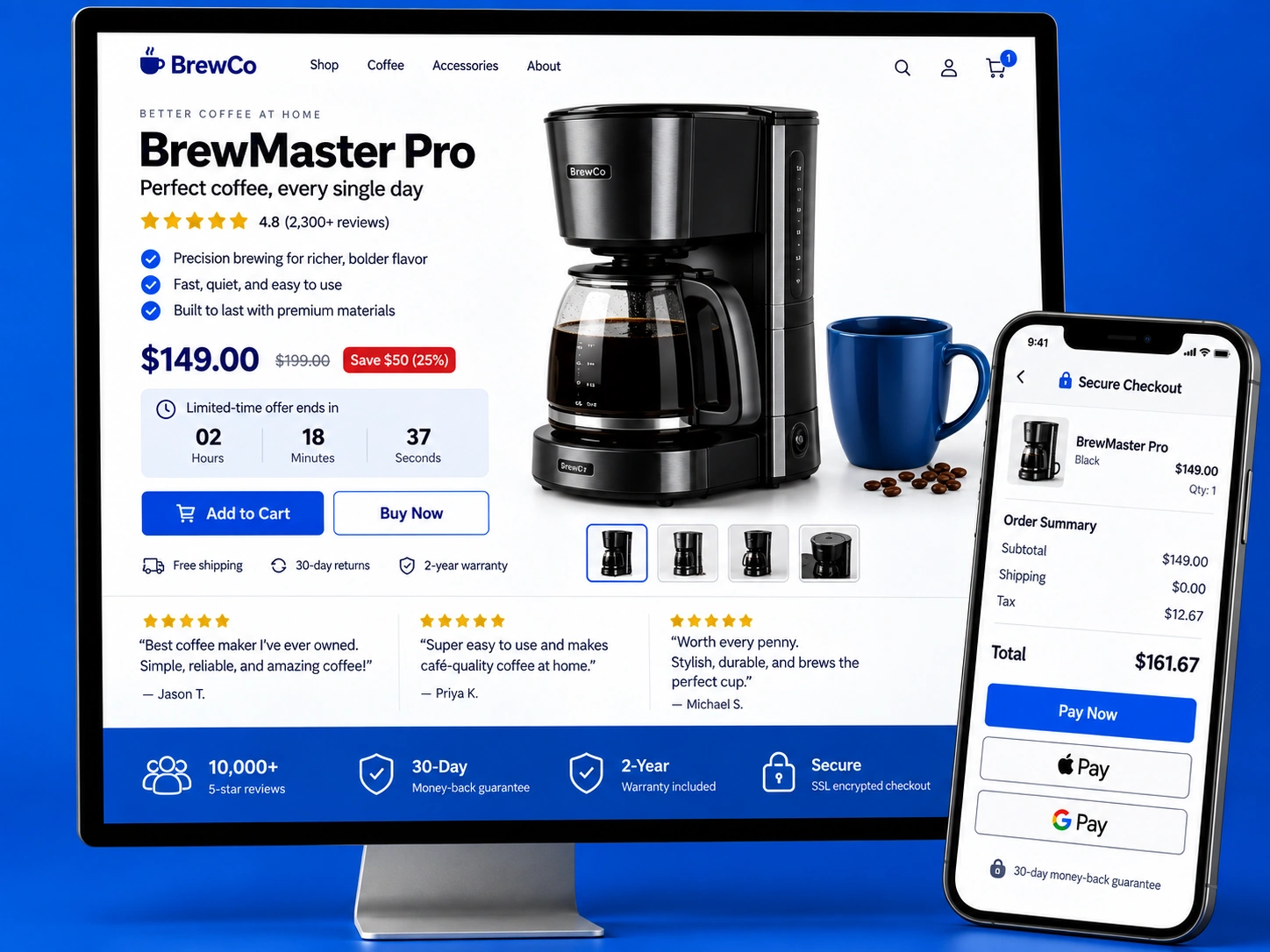
PAID MEDIA · LEAD GENERATION
Match campaign intent and make the next action unmistakable.
Useful when every click has acquisition cost and the page must qualify, persuade and convert without unrelated website paths.
AppsLoading plans, designs and develops conversion-focused landing pages for paid search, paid social, SaaS demos, product launches and lead generation. Strategy, responsive UX, fast development, CRM integration, analytics and testing stay connected from brief to launch.
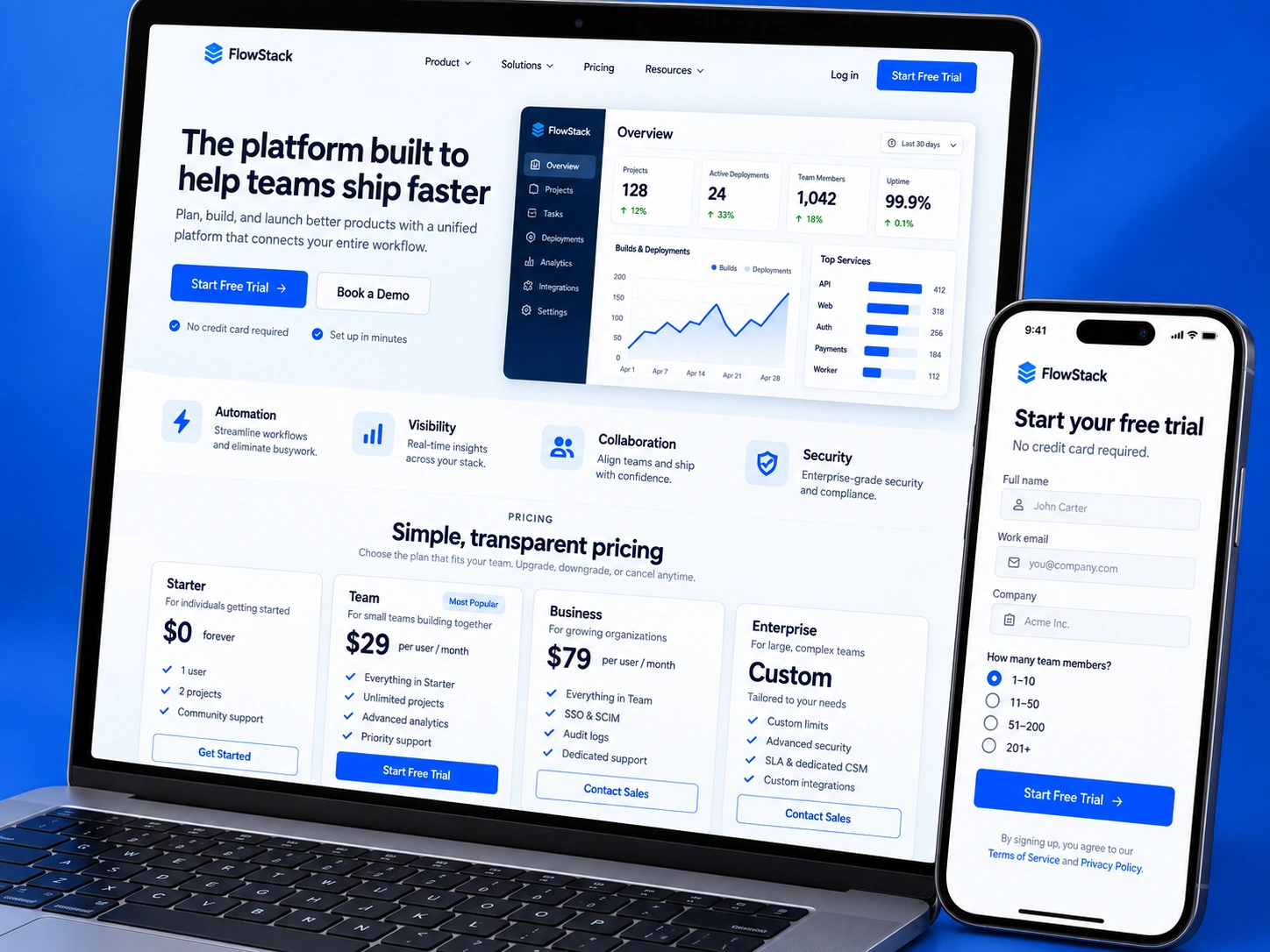
A campaign page should not behave like a smaller website. We start with traffic source, audience awareness, offer, objections and desired action, then build the information sequence around that decision.
Carry the language and intent from the ad or campaign into the first screen without forcing the visitor to reinterpret the offer.
Choose the conversion that matters most, then remove competing paths that weaken focus.
Use evidence, outcomes, trust signals and FAQs where the visitor is most likely to hesitate.
Connect page events with lead quality, pipeline stages or purchases so optimisation follows business value.
High-performing landing pages connect traffic intent, message hierarchy, proof, forms, tracking, CRM routing and follow-up. Treating those pieces separately creates measurement gaps and conversion friction.
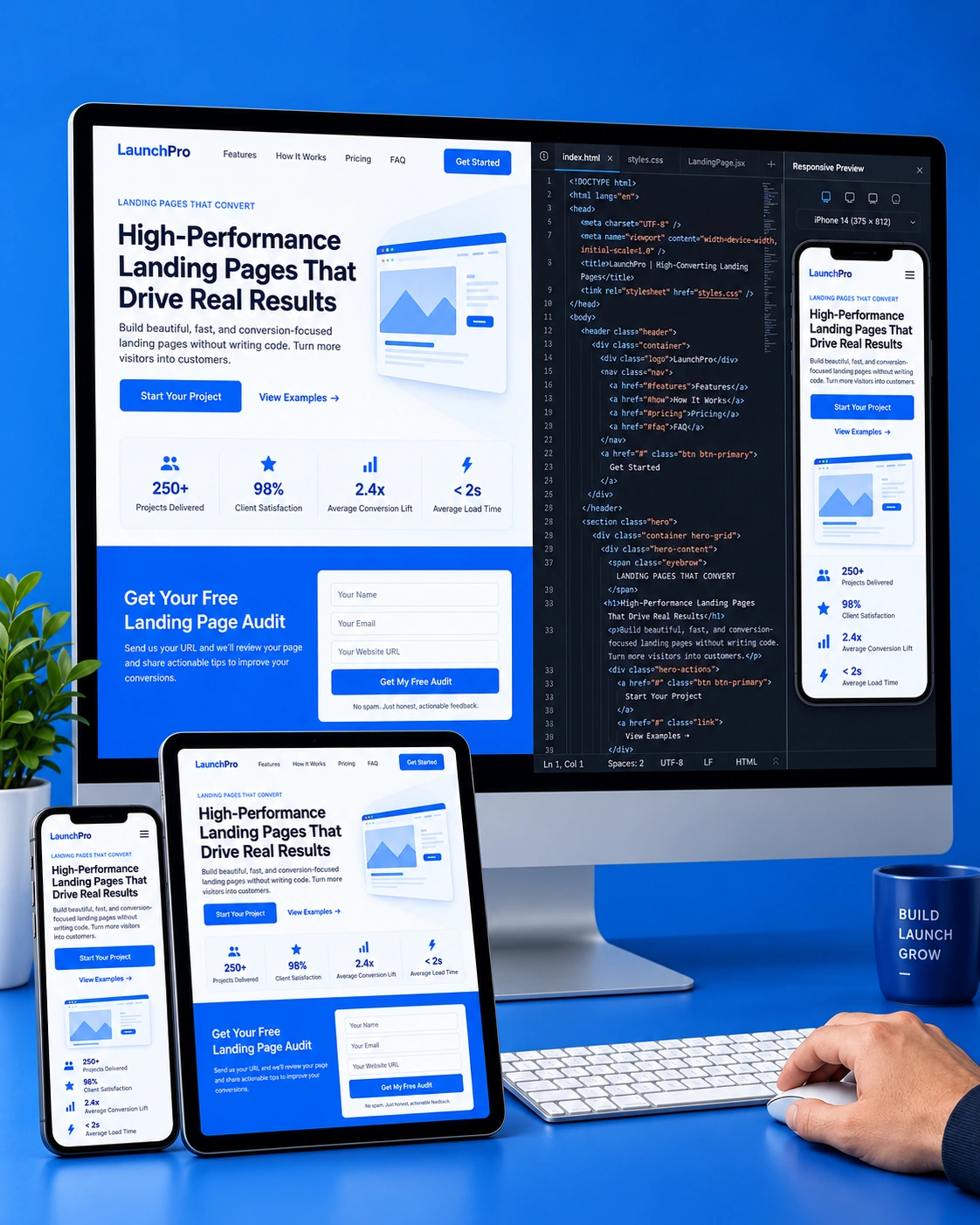
The visible page connects campaign intent to a measurable business outcome.
Use AppsLoading for complete landing page delivery or for the stage currently limiting campaign performance.
Clarify audience, offer, objections, proof, conversion goal and page sequence before design begins.
Create a focused visual hierarchy that guides the visitor toward one meaningful action.
Build high-performance pages without generic template constraints across desktop, tablet and mobile.
Shape headlines, benefits, proof, objections, FAQ and CTA messaging for clarity and momentum.
Connect forms, calendars, CRMs, email systems, automation and lead-routing workflows.
Configure events, tag management, pixels and campaign signals for reliable measurement.
Prepare modular variants for headlines, offers, proof, layouts, forms and calls to action.
Improve speed, message clarity, form completion and conversion using campaign and sales data.
The strongest landing pages reduce uncertainty in sequence. They orient the visitor, establish relevance, earn trust and make the next action feel obvious.
Connect the headline directly to the campaign promise, audience and desired outcome.
Show the problem, benefit and differentiator without making the visitor decode company language.
Place credibility, outcomes, process, customer proof and objections close to the relevant decision.
Keep the form, booking or purchase flow focused and ask only for information that helps the next step.
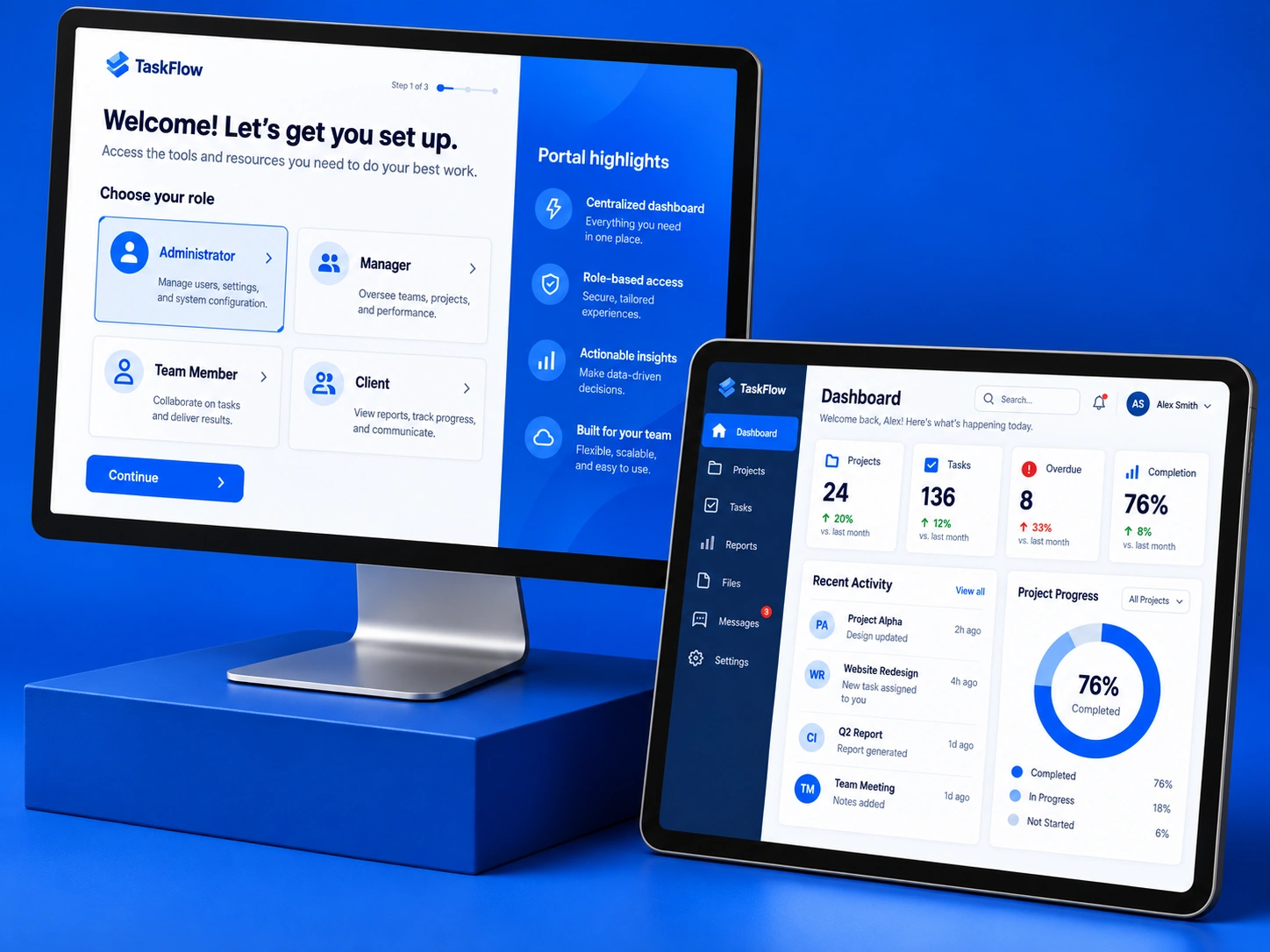
Landing page performance is affected by image weight, scripts, fonts, third-party tags, layout stability and hosting. We treat those as conversion inputs rather than post-launch cleanup.
Prioritise critical content and control media so the first useful screen appears quickly.
Design forms, sticky actions and content density around real mobile behavior and smaller screens.
Control tag and widget weight so analytics and marketing tools do not undermine the experience they measure.
Track page performance alongside conversion events so regressions can be connected to campaign outcomes.
Page views are not enough. A campaign system should capture meaningful actions, preserve attribution where possible and connect marketing signals with lead or revenue quality.
Measure form starts, submissions, bookings, calls, CTA clicks, purchases and other campaign outcomes.
Use Google Tag Manager or the appropriate implementation method to keep campaign tracking maintainable.
Configure supported ad platform tags and conversion events for campaign learning and audience building.
Route forms into the CRM with campaign context so qualified opportunities can be traced back to acquisition.
Implement tracking with the project’s consent, privacy and regional requirements in mind.
Structure experiments around clear hypotheses and decision metrics rather than changing multiple variables blindly.
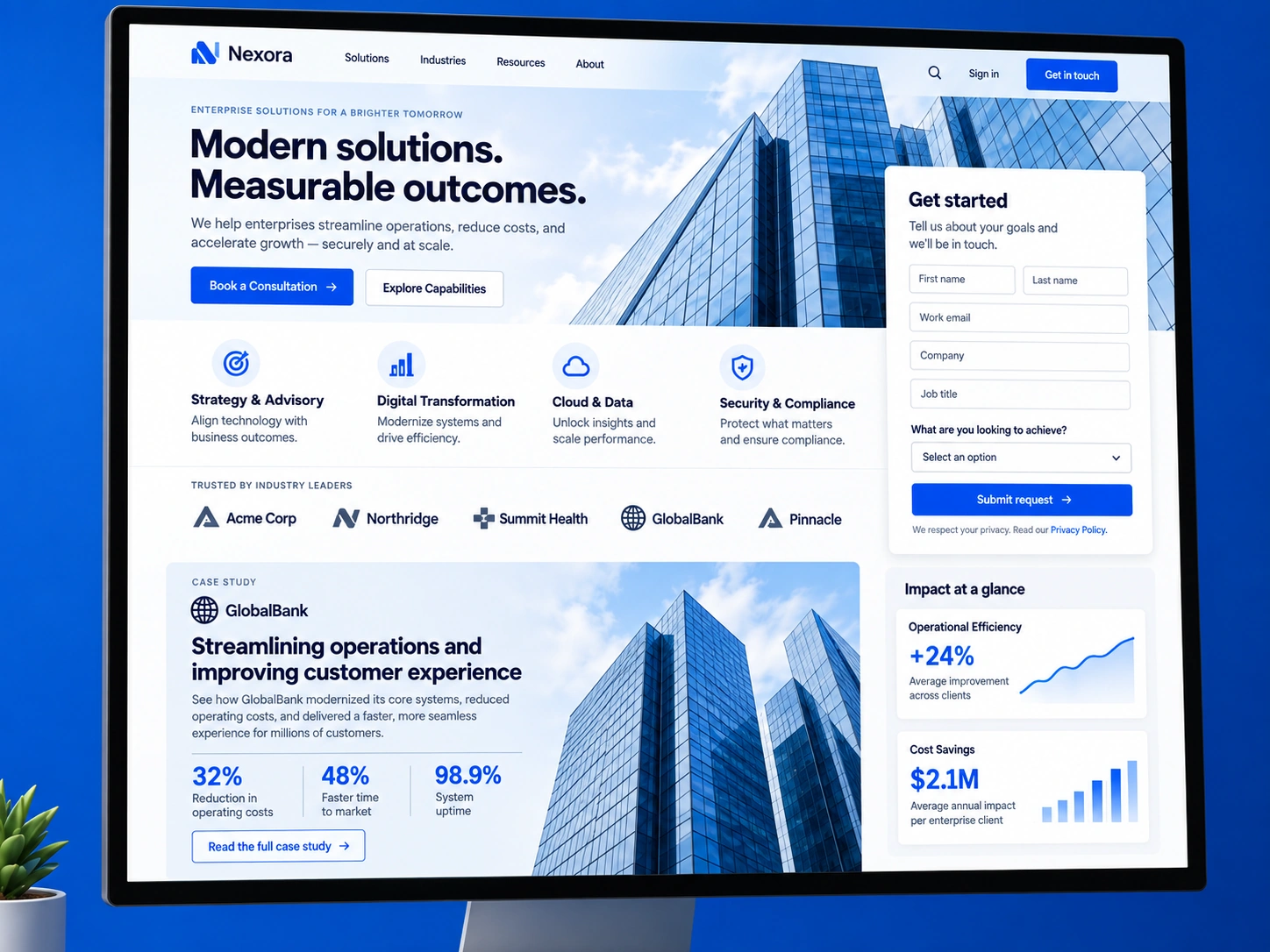
We connect the landing experience with analytics, ad platforms, CRM fields and lead-routing logic so optimisation can move beyond raw submission counts.
Align the offer, audience, message, proof, form, CRM routing and measurement plan before launch so every campaign click lands on a page built for one clear outcome.
Each stage should reduce uncertainty for the next one. Strategy, content, design, development and measurement stay connected instead of handing work across isolated silos.
Turn the campaign brief into a single conversion objective, message hierarchy and evidence plan.
Plan headline, benefits, proof, objections, form logic and CTA placement before visual polish.
Translate the information hierarchy into a premium visual system that stays clear across device sizes.
Implement the page, forms, CRM connections, tracking and performance controls as one release.
Use campaign behavior, lead quality and experiment evidence to guide the next version.
Conversion optimisation works best as a sequence. We identify the largest message, UX, performance and measurement gaps, then test improvements against a clear baseline.
Review message match, hierarchy, proof, mobile behavior, forms, page speed and tracking quality.
Prioritise problems that block comprehension or action before changing visual details with no evidence.
Define what should change, why it may improve the outcome and which metric will decide the result.
Change the smallest useful variable set so experiment results remain interpretable.
Use campaign and CRM outcomes to improve message, qualification and the next test cycle.
The page shape changes when the visitor is booking a demo, comparing a high-consideration service or responding to a time-sensitive product offer.
Useful when every click has acquisition cost and the page must qualify, persuade and convert without unrelated website paths.
Useful when different buyer roles need fast context, credible proof and a clear qualification path.

Useful when timing matters and the page needs to explain the offer, answer objections and capture action quickly.
The platform should support how quickly the page must launch, who needs to edit it, what systems it connects to and how experiments will be managed.
The right conversion system changes by purchase risk, decision cycle, offer complexity and how the sales process continues after the page.
Demo bookings, trial starts, feature launches and product-led acquisition campaigns.
DEMO · TRIAL · PIPELINEConsultation requests, service campaigns, location-specific acquisition and patient lead journeys.
TRUST · FORMS · ACCESSHigh-trust applications, lead generation, product education and qualification flows.
TRUST · DATA · QUALIFICATIONCourse enrolment, counselling, webinars, lead magnets and cohort launch campaigns.
ENROLMENT · EVENTS · LEADSProduct drops, seasonal offers, promotional campaigns and focused checkout journeys.
OFFER · URGENCY · PURCHASEProject launches, property enquiries, location campaigns and qualified lead capture.
PROJECT · ENQUIRY · ROUTINGStrategy, custom design, copy support, integrations, tracking, variants and launch urgency all influence delivery effort.
Audience research, offer clarity, content hierarchy, proof requirements and copy involvement.
Brand direction, responsive layouts, custom components, motion and campaign-specific visual treatment.
CRM routing, calendars, conditional logic, payments, email tools, APIs and automation.
GA4 events, tag management, paid media pixels, CRM source context and offline outcome feedback.
Multiple offers, audiences, traffic sources, localised variants and A/B testing setup.
Urgent timelines, QA coverage, campaign coordination, post-launch optimisation and ongoing iteration.
It is the strategy, design and development of a dedicated page built for one campaign, audience and conversion goal.
A landing page removes unrelated navigation and focuses its message, proof and calls to action around one campaign outcome.
Paid search, paid social, SaaS demos, product launches, lead magnets, events, app launches and focused sales offers often benefit from a dedicated page.
Yes. Each page can be designed around the brand, offer, audience and campaign rather than using a generic layout.
Yes. We can shape the headline direction, benefit hierarchy, proof placement, objections, form flow and CTA language.
Yes. Layout, typography, forms, sticky actions and interaction targets are designed and tested for real mobile traffic.
We can use WordPress, Webflow, HubSpot, Next.js, React or another suitable stack based on editing, performance and integration requirements.
Yes. Forms can connect with HubSpot, Salesforce, Zoho, calendars, email platforms, Zapier and supported custom APIs.
Yes. Qualification flows can include multiple steps, conditional fields, validation and lead-routing logic.
Yes. We can configure GA4, Google Tag Manager, ad pixels and meaningful events for forms, calls, bookings, clicks and purchases.
Yes. We can prepare structured variants and testing plans for headlines, offers, proof, forms, layouts and calls to action.
Yes. CRM stages and offline conversion data can connect campaign leads with qualified opportunities and sales outcomes.
Cost depends on strategy, copy support, custom design, development, integrations, tracking, variants and launch urgency.
A focused page may take one to several weeks depending on content readiness, complexity, approvals, integrations and testing requirements.
Yes. Support can cover edits, new variants, experiments, analytics review, integrations, performance improvements and campaign expansion.
Share your offer, audience and traffic source. We’ll map the message hierarchy, responsive experience, integrations, tracking and optimisation priorities before implementation begins.
