


Unify fragmented work
Replace spreadsheets, disconnected tools and manual handoffs with one purpose-built business system that reflects how work actually moves.
Use the project contact page to share context and get routed to the right capability.
Open project contact →AppsLoading is a custom software development company building SaaS products, enterprise applications, business systems, customer portals, workflow automation and data-rich platforms. We handle product discovery, UX, software architecture, frontend and backend engineering, API integrations, QA, cloud deployment, modernization and ongoing product support.
WHY CUSTOM SOFTWARE
The strongest case for a custom system appears when standard tools create repeated workarounds, disconnected data, slow approvals or customer experiences that are difficult to differentiate.
Replace spreadsheets, disconnected tools and manual handoffs with one purpose-built business system that reflects how work actually moves.
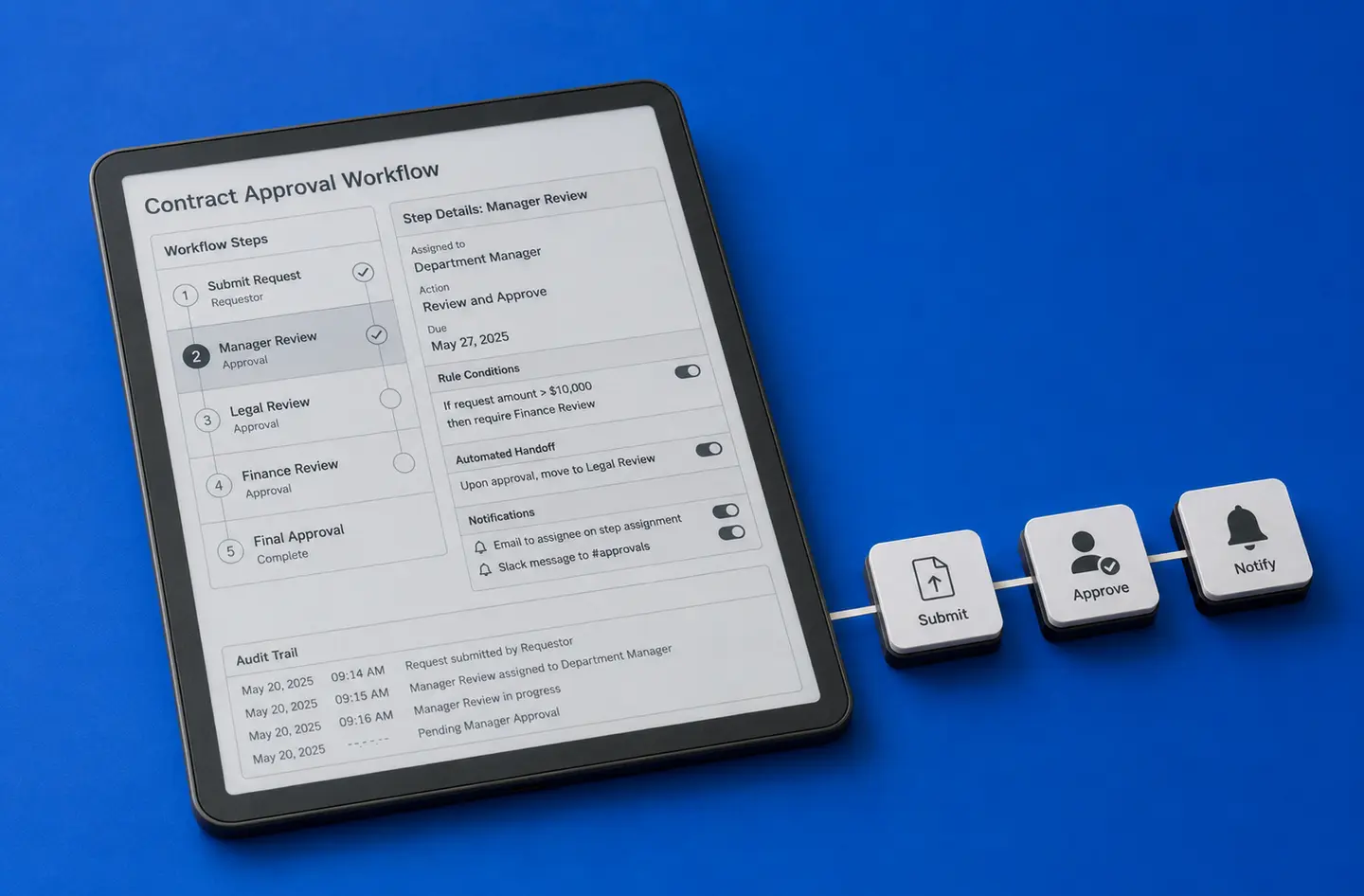
Build role-based permissions, approvals, calculations, pricing logic and operational rules directly into the application instead of relying on workarounds.
Connect CRM, ERP, payments, analytics, communications and partner APIs so teams work with consistent data across the operation.
Create customer, partner and employee experiences around your real processes instead of forcing the business into generic software limitations.
CUSTOM SOFTWARE DEVELOPMENT SERVICES
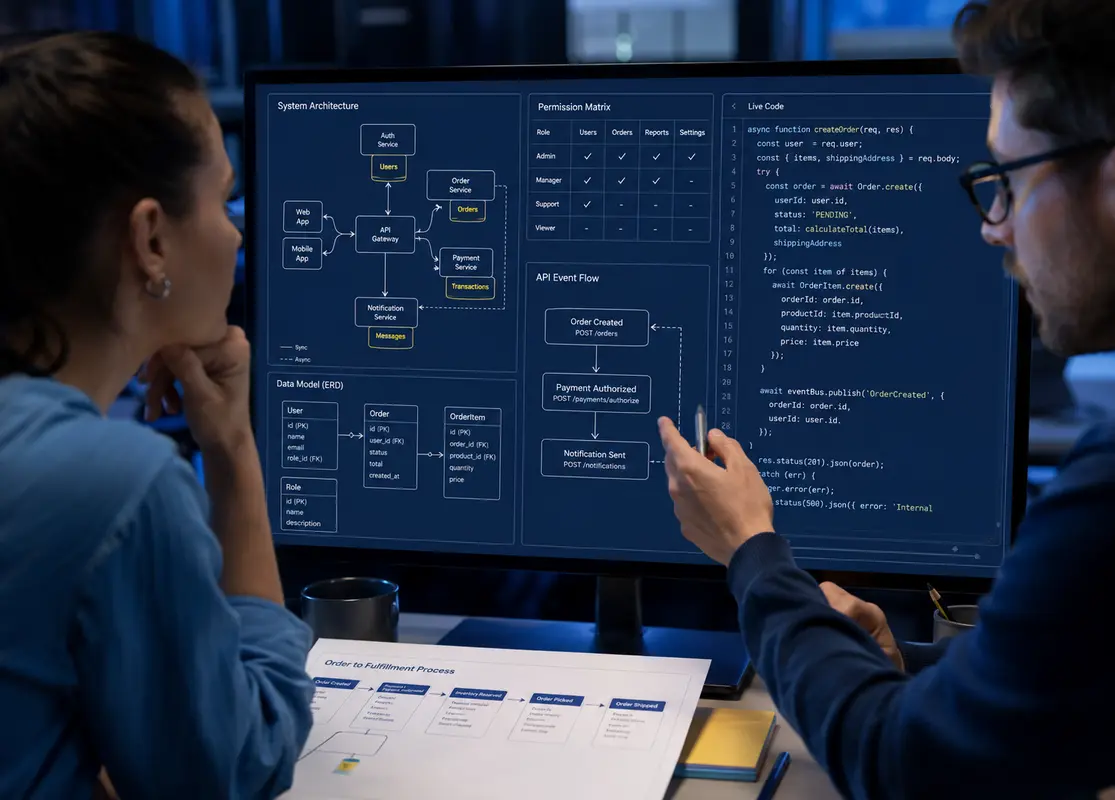
Use AppsLoading for complete custom software development or a focused engagement across product discovery, UX/UI, architecture, SaaS engineering, enterprise application development, workflow automation, API integration, legacy modernization, QA, DevOps and application support.
We document users, workflows, exceptions, business rules, data, integrations and ownership before architecture decisions become expensive.
We engineer customer portals, internal systems, multi-tenant SaaS, dashboards and role-based applications with clear domain boundaries.
APIs, event flows, notifications, documents and third-party systems are connected through controlled integration boundaries.
We design data models, administration, audit history and reporting around the questions teams actually need to answer.
We assess the current codebase, dependencies, data and integration boundaries, then choose what to retain, wrap, refactor, migrate or replace.
Testing, deployment, monitoring, backups, incident visibility and ongoing improvements are designed before production becomes the source of truth.
SOFTWARE ARCHITECTURE
We separate user experience, domain logic, data, integrations and platform operations so the software can evolve without turning every new feature into a high-risk change.
Portals, dashboards, responsive workflows and customer experiences.
Permissions, approvals, pricing, calculations, states and core application behavior.
Models, search, audit history, analytics, caching and retention.
CRM, ERP, payments, communications, partner APIs and event flows.
Identity, cloud, CI/CD, monitoring, backups, alerts and recovery.
SELECTED SOFTWARE DIRECTIONS
A CRM platform, operations system, SaaS product and workflow automation platform may share technologies, but each requires a different data model, permission model, integration strategy and user experience.
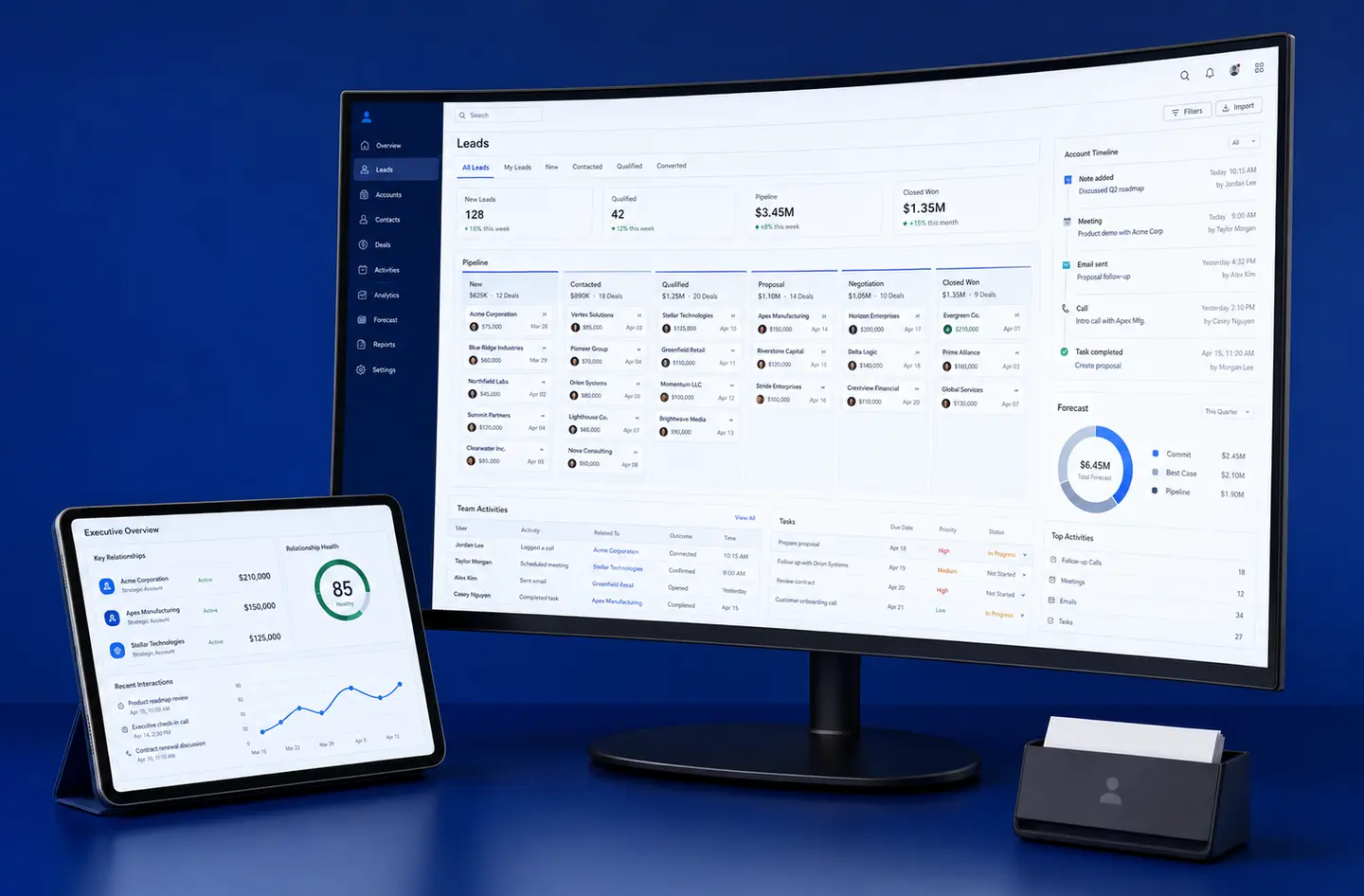
Connect pipeline, communication, approvals and reporting without forcing teams to reconcile multiple systems manually.
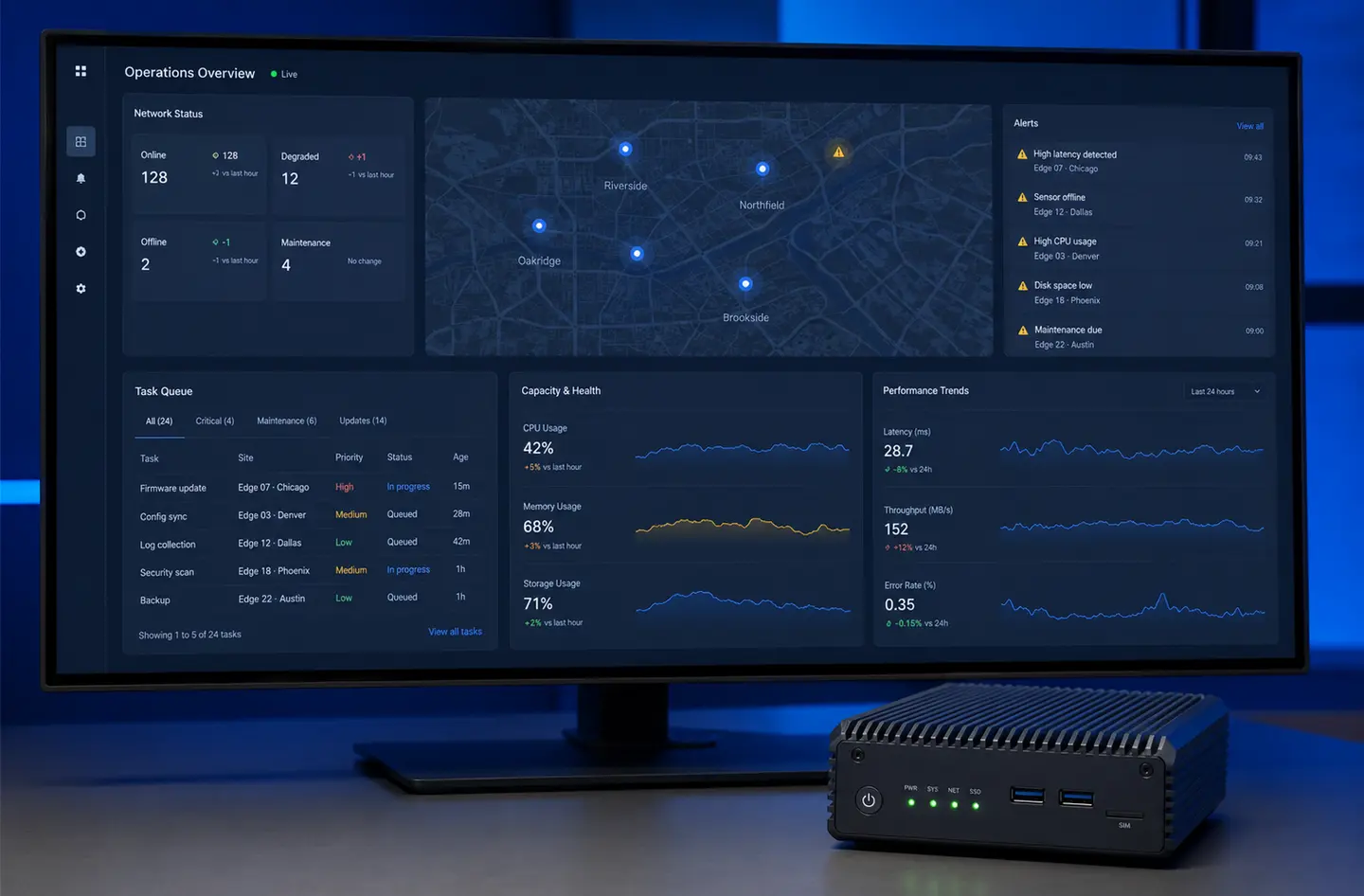
Coordinate tasks, rules, documents and integrations around one operational view.
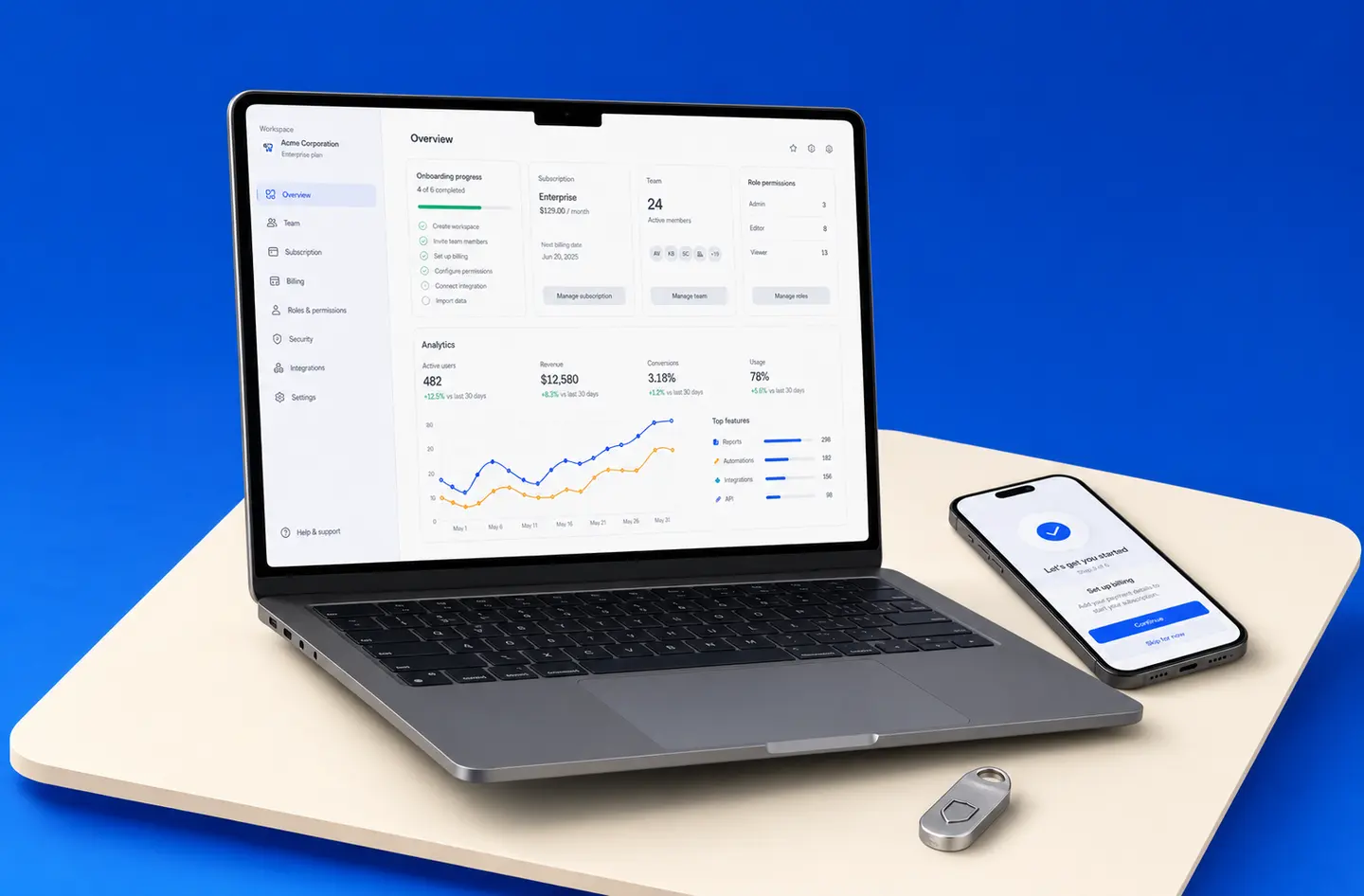
Keep customer-facing workflows and internal administration connected from the beginning.
ENGINEERING GOVERNANCE
Architecture decisions, security controls, release gates, testing evidence and production observability are documented so teams can understand why the system works, what can change safely and what must be protected.

Boundaries, dependencies and material tradeoffs are documented.
Identity, permissions, secrets and sensitive flows have explicit gates.
Automated checks and acceptance criteria protect critical workflows.
Logs, metrics, alerts and recovery paths remain visible after launch.
PRODUCT + BUSINESS OUTCOMES
The strongest custom software improves cycle time, operational visibility, process control, user adoption and the cost of future change. We define measurable product and engineering signals before treating delivery as successful.
Cycle time · wait time · rework · manual handoffs
Ownership · exceptions · backlog · service health
Permissions · approvals · audit history · policy adherence
Completion · repeat use · successful journeys · support demand
Release confidence · regression risk · documentation · test coverage
SOFTWARE TECHNOLOGY
Technology choices follow the product requirements: user experience, domain complexity, data volume, integrations, security, performance, cloud environment, internal team capability and long-term maintenance.
We do not force every product into one house stack. Technology is selected after the operating model, constraints and ownership requirements are clear.
LEGACY SOFTWARE MODERNIZATION
We audit legacy applications, architecture, dependencies, databases, integrations and production risks before choosing refactoring, replatforming, cloud migration, incremental replacement or a controlled rebuild.
Map risk, bottlenecks, unsupported dependencies and operational constraints.
Separate what should be retained, wrapped, refactored, replaced or retired.
Use phased releases, data validation and rollback planning to protect live operations.
CUSTOM SOFTWARE DELIVERY SYSTEM
Our delivery process connects discovery, software architecture, UX/UI design, engineering, QA, security validation, deployment and production support. Each phase produces concrete artifacts the next phase can use and verify.
Business context, roles, exceptions, data and integrations.
Scope, domain model, permissions, release priorities and risks.
Journeys, interfaces, states and design-system behavior.
Frontend, services, data and integrations evolve together.
Quality, security, permissions, performance and integrations.
Deployment, monitoring, support and roadmap learning.
ENGAGEMENT MODELS
Best for an evolving product roadmap with ongoing discovery, design, engineering and releases.
Best when scope, dependencies and acceptance criteria are sufficiently defined.
Best when workflows, integrations, scope or modernization approach still need definition.
INDUSTRY EXPERIENCE
Healthcare, fintech, manufacturing, logistics, real estate and professional services each bring different workflow, security, data, integration and operational requirements. We design the software around those constraints.
Custom software becomes more compelling when important workflows require repeated workarounds, critical systems do not integrate, permissions are unusually complex, or the software experience itself creates operational or customer advantage.
Discovery should clarify users, workflow states, business rules, exceptions, data, integrations, security requirements, release priorities and ownership. That reduces the risk of turning assumptions into expensive architecture.
Yes. A focused first release can target the highest-value operational problem while preserving clear boundaries for later modules, integrations and user roles.
Cost depends on workflow complexity, user roles, UX depth, integrations, data migration, security, reporting, infrastructure and the level of production support required. Discovery is usually the right place to define a credible range.
A focused internal workflow can be delivered relatively quickly, while multi-role platforms, SaaS products and modernization programmes are normally released in phases over a longer roadmap.
Yes. Prioritizing the highest-value workflow first can reduce risk, validate assumptions and create production feedback before later modules are funded.
Yes. Existing CRM, ERP, payment, communication, analytics, identity and partner systems can usually remain in place while the custom application becomes the workflow and experience layer around them.
Scalability begins with clear domain boundaries, controlled dependencies, appropriate data models, observable infrastructure and architecture that can evolve without forcing every module to change together.
Not necessarily. The architecture should match the product and organizational needs. A well-structured modular application is often easier to operate early and can be separated further when scale or ownership boundaries justify it.
Yes. The first step is a technical and operational audit covering code, dependencies, data, integrations, infrastructure, release process and business-critical behavior.
No. Retain, wrap, refactor, migrate or replace can all be valid. A phased approach is often safer when the existing system still supports live operations.
Define migration boundaries, preserve critical data behavior, test integrations early, run staged releases where possible and keep rollback or continuity plans for business-critical workflows.
Security can include authentication, role-based access, encryption, secure secrets, audit history, environment controls, dependency management, logging and review of sensitive data flows.
Ownership and transfer terms should be defined in the agreement. Approved source code, designs, documentation and project assets can be transferred according to the engagement terms.
Yes. Ongoing work can include monitoring, incident response, security updates, dependency maintenance, performance optimization, user feedback, reporting and new feature delivery.
Share the users, systems, constraints and business goal. We’ll help shape the scope, architecture and most practical first release.
AppsLoading capabilities
AppsLoading helps startups, growing businesses and enterprise teams turn ideas, operational needs and outdated systems into dependable digital products. Our multidisciplinary teams support product strategy, user experience, mobile and web engineering, ecommerce, cloud infrastructure, enterprise automation, software modernization and long-term technical support.
Mobile application development: Native Android and iOS applications, Flutter and React Native products, cross-platform solutions, wearable experiences and mobile MVPs designed around adoption, reliability and future growth.
Website and web application development: Conversion-focused websites, WordPress builds, headless CMS platforms, progressive web apps, landing pages and custom web systems that remain fast, maintainable and easy to evolve.
Ecommerce engineering: Shopify, WooCommerce, Magento, headless commerce, multi-vendor marketplaces, catalogue systems, checkout journeys and secure payment integrations connected to business operations.
Custom and enterprise software: ERP, CRM, customer portals, operational dashboards, workflow automation, system integration and legacy modernization shaped around how teams, data and customers actually move through the business.
Product design and validation: Product strategy, UX research, interface design, prototypes, usability testing and design systems that reduce uncertainty before engineering investment increases.
Cloud, DevOps and support: AWS, Azure and Google Cloud architecture, CI/CD implementation, DevOps automation, application maintenance, performance optimization and flexible technical teams.
Startups and founders: Validate important assumptions, define an achievable MVP, launch with a maintainable foundation and build the measurement needed for the next product decision.
Growing businesses: Replace fragmented tools, improve customer journeys, automate repetitive workflows and add scalable software capacity without rebuilding the entire organization.
Enterprise teams: Modernize legacy systems, connect platforms and data, strengthen delivery infrastructure and introduce new digital services while managing security, continuity and operational complexity.
Digital product teams: Add specialized designers, mobile engineers, web developers, cloud professionals and QA support to extend internal delivery capability around a defined roadmap.
Yes. Engagements can cover discovery, product design, engineering, cloud, integrations, release support and continuous improvement through one coordinated team.
Yes. Teams can audit, modernize, redesign, optimize or extend an existing application without requiring a complete rebuild when an incremental path is more practical.
Yes. Delivery models can be adjusted for MVP validation, fixed-scope product work, long-term development, specialist augmentation or complex enterprise modernization.
Industry solutions
Industry software succeeds when technology reflects the people, processes, regulations, data and commercial realities around it. AppsLoading combines product strategy, domain discovery, user experience, engineering, cloud and integration work to create software that fits actual operating conditions rather than generic feature lists.
Customer and user applications: Mobile apps, self-service portals, booking journeys, ordering systems, account experiences, notifications and personalized digital services designed around real user tasks.
Operational platforms: Internal dashboards, workflow systems, staff applications, inventory tools, scheduling, approvals, reporting and role-based systems that support day-to-day execution.
Data and system integration: APIs, payment systems, CRM, ERP, third-party services, legacy databases and external platforms connected through controlled and observable integrations.
Automation and modernization: Replace repetitive manual work, reduce fragmented processes, improve visibility and modernize aging systems without disrupting critical operations.
Security and reliability: Plan access control, data handling, auditability, resilience, monitoring and release processes according to the risk level and responsibilities of the industry.
Growth and continuous improvement: Measure user behaviour, operational performance and commercial outcomes, then improve the product through planned iterations and technical support.
Healthcare and wellness: Patient experiences, appointment flows, care coordination, staff tools, health data integrations and secure communication platforms.
Fintech and payments: Customer onboarding, account experiences, transaction journeys, payment integrations, operational dashboards and workflow automation.
E-commerce and retail: Storefronts, marketplaces, catalogue systems, checkout, loyalty, inventory connections, order management and customer service tooling.
Logistics and mobility: Booking, dispatch, tracking, route visibility, field applications, driver workflows, fleet operations and customer notifications.
Education and learning: Learning platforms, student and educator portals, assessments, content delivery, scheduling, communication and administration systems.
Real estate and professional services: Listings, lead management, document workflows, client portals, project visibility, scheduling and internal operational systems.
Yes. Discovery can cover user groups, workflows, business rules, risks, integrations, operational dependencies and the outcomes the software must support.
Yes. New digital products can be integrated with current CRM, ERP, payment, identity, data, communication and industry-specific platforms.
Yes. Complex industry products are often divided into controlled phases to reduce risk, validate assumptions and protect continuity.
Related services
A successful digital product often depends on more than one isolated service. AppsLoading connects product planning, experience design, application engineering, cloud infrastructure, integrations, quality, maintenance and growth support so each stage of delivery works with the next.
Discovery and product planning: Clarify users, business goals, risks, workflows, feature priorities, technical constraints and delivery milestones before unnecessary complexity enters the build.
UX and interface design: Translate requirements into user journeys, information architecture, wireframes, prototypes, usable interfaces and consistent design systems.
Application and backend engineering: Build maintainable mobile, web and business software supported by secure APIs, databases, integrations, authentication, notifications, analytics and administration tools.
Cloud and delivery infrastructure: Establish environments, automated build and release pipelines, monitoring, scalable cloud architecture and operational visibility appropriate to the product.
Modernization and integration: Connect new experiences to existing systems, improve unstable architecture, replace manual processes and modernize critical software in controlled phases.
Maintenance and product growth: Resolve production issues, support platform changes, improve performance, ship new capabilities and add specialist capacity as priorities evolve.
End-to-end product delivery: One coordinated team manages strategy, design, engineering, quality and launch around agreed outcomes and milestones.
Focused service engagement: Bring AppsLoading into a defined stage such as UX, mobile engineering, ecommerce, cloud, automation, modernization or maintenance.
Dedicated development team: Build longer-term capacity around your roadmap with a stable combination of specialists and transparent delivery routines.
Staff augmentation: Add individual engineers, designers or infrastructure specialists to an existing internal or partner-led team where delivery needs extra capability.
Yes. Most engagements combine the primary service with selected design, backend, cloud, integration, testing, maintenance or optimization support.
Yes. The team can review documentation, code, architecture, design and delivery risks before proposing a practical transition or improvement plan.
Yes. Support can include monitoring, updates, issue resolution, performance work, feature development and planned product iterations.