



Get the right sellers, providers or assets live faster.
MARKETPLACE DEVELOPMENT COMPANY
Build a marketplace where supply, demand and operations reinforce each other.
AppsLoading designs and develops multi-vendor commerce, service, B2B, rental, booking and on-demand marketplaces. We connect onboarding, listings, matching, transactions, commissions, payouts, trust, support and marketplace operations into one scalable product system.
Buyer + seller journeysCommissions + payoutsTrust + safetyMarketplace operations
NetworkSupply and demand designed as one growth systemTransactionPayments, fees, refunds and settlement mapped end to endOperationsAdmin tools for exceptions, quality and marketplace health
Help buyers find the right option without excessive friction.
Verification, reviews, policies and dispute handling.
Dashboards, automation and exception management.



THE MARKETPLACE FLYWHEEL
A marketplace grows when each side makes the other side more valuable.
Marketplace product design is not just a buyer experience plus a seller dashboard. Supply quality, discovery, matching, transaction trust, fulfilment and repeat behavior must reinforce one another.
Acquire supply
Recruit the right sellers, providers, inventory or assets for the initial market.
Create liquidity
Help demand reliably find relevant supply in the right location, category or time window.
Make transaction safe
Pricing, payments, commissions, verification, support and dispute logic reduce risk.
Increase repeat value
Ratings, rebooking, saved preferences, replenishment and seller performance compound network value.
MARKETPLACE SYSTEM ARCHITECTURE
Design the marketplace as a network of connected product systems.
The front end matters, but marketplace reliability is usually decided by the rules behind onboarding, listings, matching, money movement, fulfilment and exceptions.
Seller / provider system
Onboarding, identity, catalog, availability, pricing and account health.
Buyer experience
Search, filters, recommendations, comparison and conversion journeys.
Marketplace money
Checkout, fees, commissions, refunds, wallets, payouts and settlement.
Safety layer
Verification, moderation, reviews, policy enforcement and disputes.
Control plane
Admin tools, automation, analytics, customer support and exception queues.
MARKETPLACE COREIdentity · listings · rules · transactions · events · permissions · analyticsOne source of operational truth
MARKETPLACE DEVELOPMENT SERVICES
Build the parts that make the network work.
Choose an end-to-end marketplace team or bring AppsLoading into the stage where product, payment, trust or operations complexity is slowing delivery.
Marketplace product strategy
Define users, transaction model, supply acquisition, revenue model, liquidity goals and MVP boundaries.
Buyer experience
Search, filters, comparison, saved items, messaging, checkout, booking and post-transaction journeys.
Seller and provider systems
Onboarding, listings, availability, orders, earnings, promotions, account health and support.
Marketplace payments and payouts
Commissions, split payments, escrow-like states where appropriate, refunds, settlement and payout reconciliation.
Trust and safety
Verification, reviews, moderation, fraud controls, policy workflows, disputes and case management.
Marketplace administration
Operational dashboards, approvals, exception queues, user controls, analytics and configuration tools.
Marketplace mobile apps
Buyer and provider applications connected to the same transaction, identity and notification systems.
Marketplace scaling and optimization
Improve search quality, performance, conversion, liquidity, automation and operational cost as the network grows.

SELLER & PROVIDER ONBOARDING
Reduce time-to-value for the people who create your supply.
A marketplace cannot grow demand if sellers struggle to register, publish inventory, understand fees or complete the first transaction. We design onboarding around activation, quality and operational readiness.
Screen the right supply
Category, location, capacity, documents, experience and marketplace fit.
Confirm identity and trust
Profiles, business details, payout information, KYC and approval workflows.
Make supply discoverable
Structured attributes, media, availability, pricing and policy requirements.
Guide the first transaction
Readiness checklist, education, quality signals and support before demand arrives.
DISCOVERY & MATCHING
Help buyers reach the right supply, not just more supply.
Search and matching logic should reflect the marketplace model. A service marketplace may rank by availability and trust. B2B may prioritize contract terms, geography and fulfillment capability. Rentals may need time-window inventory.
Search relevance
Keywords, synonyms, structured attributes and category-aware ranking.
Marketplace constraints
Location, availability, price, service radius, stock, capacity or buyer eligibility.
Quality signals
Reviews, response rate, completion rate, recency, verification and seller health.
Merchandising logic
Promotions, sponsored supply, curated collections and category priorities without destroying relevance.
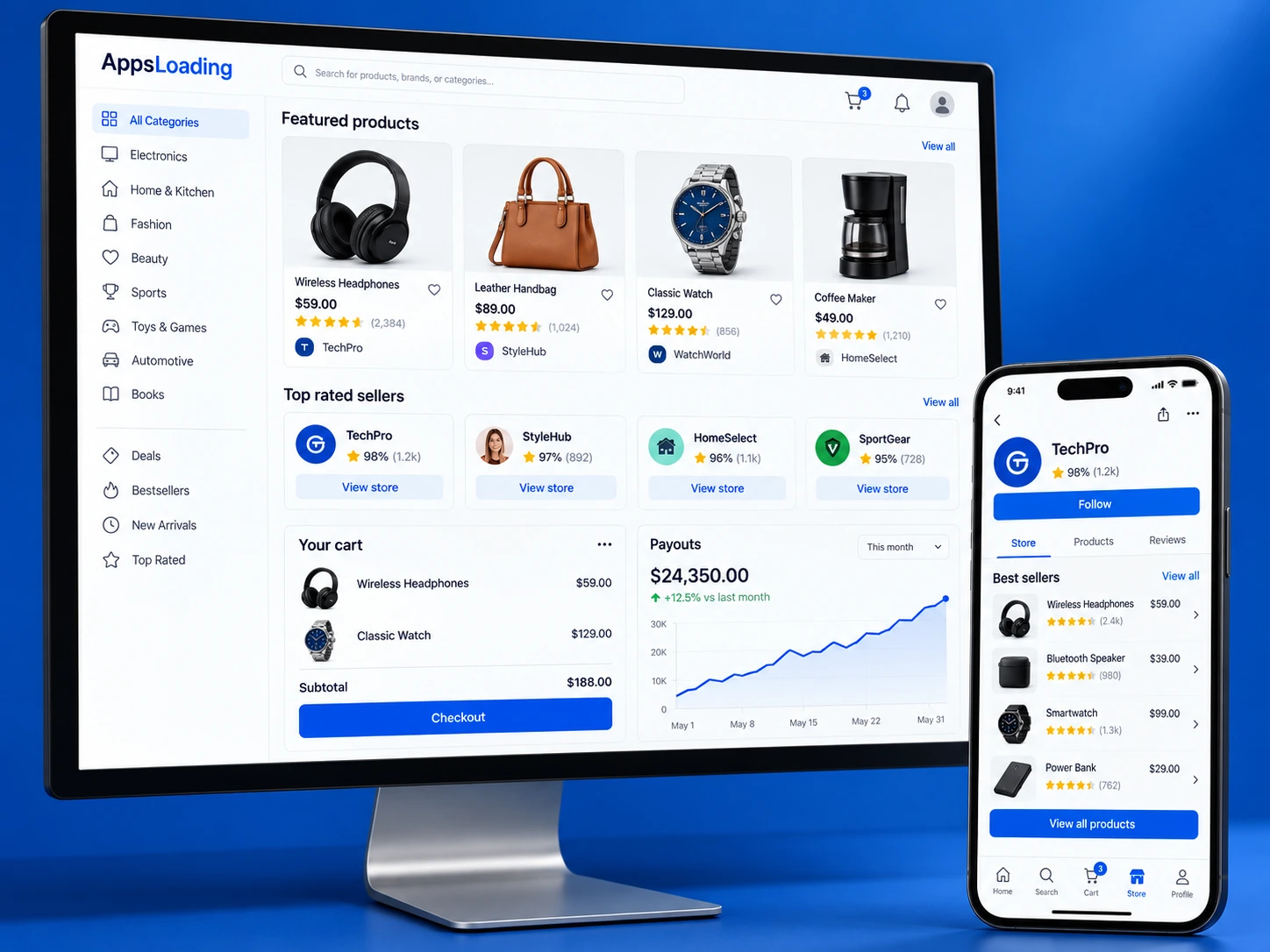
QUERYrelevance + availability + trust + commercial rulesRANKING

SERVICE MARKETPLACE LOGIC
When the product sells time or expertise, availability becomes inventory.
Service marketplaces need more than listings. Availability, location, price, qualification, response time, cancellations, rescheduling and service completion all become transaction states.
Profiles + availability
Show expertise, price, location, trust and bookable time together.
Slots + capacity
Calendar logic, buffers, travel time and provider capacity.
Service states
Accepted, confirmed, in progress, completed, rescheduled or cancelled.
Rebooking + favourites
Reduce repeat discovery for customers who already know what works.

MARKETPLACE MONEY MOVEMENT
Model the transaction before writing the checkout.
Marketplaces move money between more parties and states than a normal online store. Fees, commissions, taxes, refunds, cancellations, payout timing and reconciliation should be designed as one ledger-aware flow.
Customer payment
Authorize or capture against the correct order, booking or milestone state.
Marketplace fee
Percentage, fixed fee, subscription, lead fee or hybrid monetization.
Seller balance
Track net earnings, adjustments, refunds, disputes and reserves.
Payout
Settlement schedules, payout eligibility, failed transfers and reconciliation.
TRUST & SAFETY
The platform has to manage what happens when the happy path breaks.
Marketplace trust is built through product rules, operational tools and clear evidence. Reviews matter, but they are only one layer.
PREVENTION
Design trust before a dispute happens.
Use verification, marketplace policies and risk signals to reduce low-quality supply, abuse and transaction ambiguity.
RESOLUTION
Make exceptions visible and ownable.
Support teams need structured evidence, decision rights and case states rather than a shared inbox full of screenshots.

FULFILMENT & SERVICE DELIVERY
Connect the transaction to what actually happens after purchase.
Every marketplace needs a completion model. Product marketplaces coordinate inventory and shipping. Service marketplaces coordinate appointments and completion. Rentals coordinate pickup, return and asset condition.
Order / booking state
Clear state transitions from confirmation to completion.
Provider responsibility
Who owns acceptance, fulfilment, updates and exceptions.
Tracking and evidence
Status, location, messages, proof and timestamps.
Returns / cancellations
Policy-aware refunds, fees and exception handling.
Customer communication
Notifications and support aligned to transaction state.
Marketplace intervention
Admin override, reassignment, escalation and resolution tools.
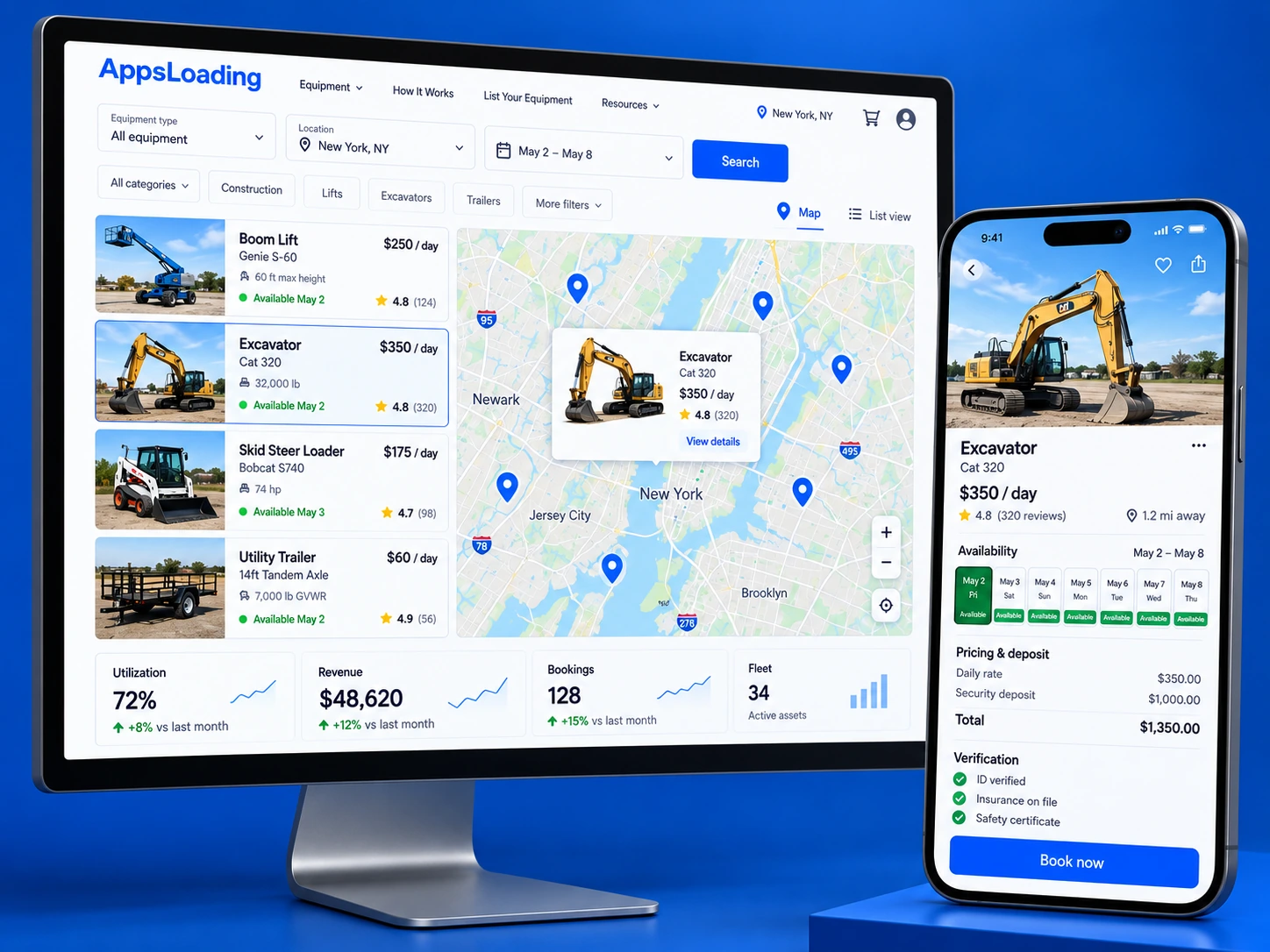
SELLER OPERATING SYSTEM
Give supply partners the tools to run the business inside your marketplace.
The seller dashboard should make the next action obvious: publish, respond, fulfil, resolve, withdraw earnings or improve performance.
Listings and availability
Catalog, services, inventory, slots, locations, pricing and media.
Orders and work queue
Actionable states instead of a passive transaction history.
Earnings and payouts
Gross value, fees, adjustments, pending balances and completed payouts.
Marketplace health
Response rate, cancellations, ratings, fulfilment and policy status.
MARKETPLACE ECONOMICS & LIQUIDITY
A marketplace can have thousands of listings and still feel empty.
We design product analytics around whether buyers and sellers actually find value in the same market at the same time. Liquidity is usually a local problem by category, geography, price band or time window.
Product decisions should connect growth metrics with operational quality. More supply is not always better if the supply is inactive, unavailable or poorly matched.
Supply activation
quality + live
Search success
find + compare
Match / conversion
intent → action
Completion rate
transaction health
Repeat behavior
network value
Supply metrics
Activation, listing quality, availability, response rate, fulfilment and retention.
Demand metrics
Search success, conversion, time-to-match, repeat use and category depth.
Transaction metrics
GMV, take rate, refund rate, dispute rate, payout failure and completion.
Operational metrics
Manual interventions, support load, moderation volume and exception aging.
MARKETPLACE DIRECTIONS
Different marketplace models need different transaction logic.
A B2B marketplace, rental network and service marketplace may share marketplace primitives, but the buying cycle, inventory model, trust model and settlement logic are fundamentally different.
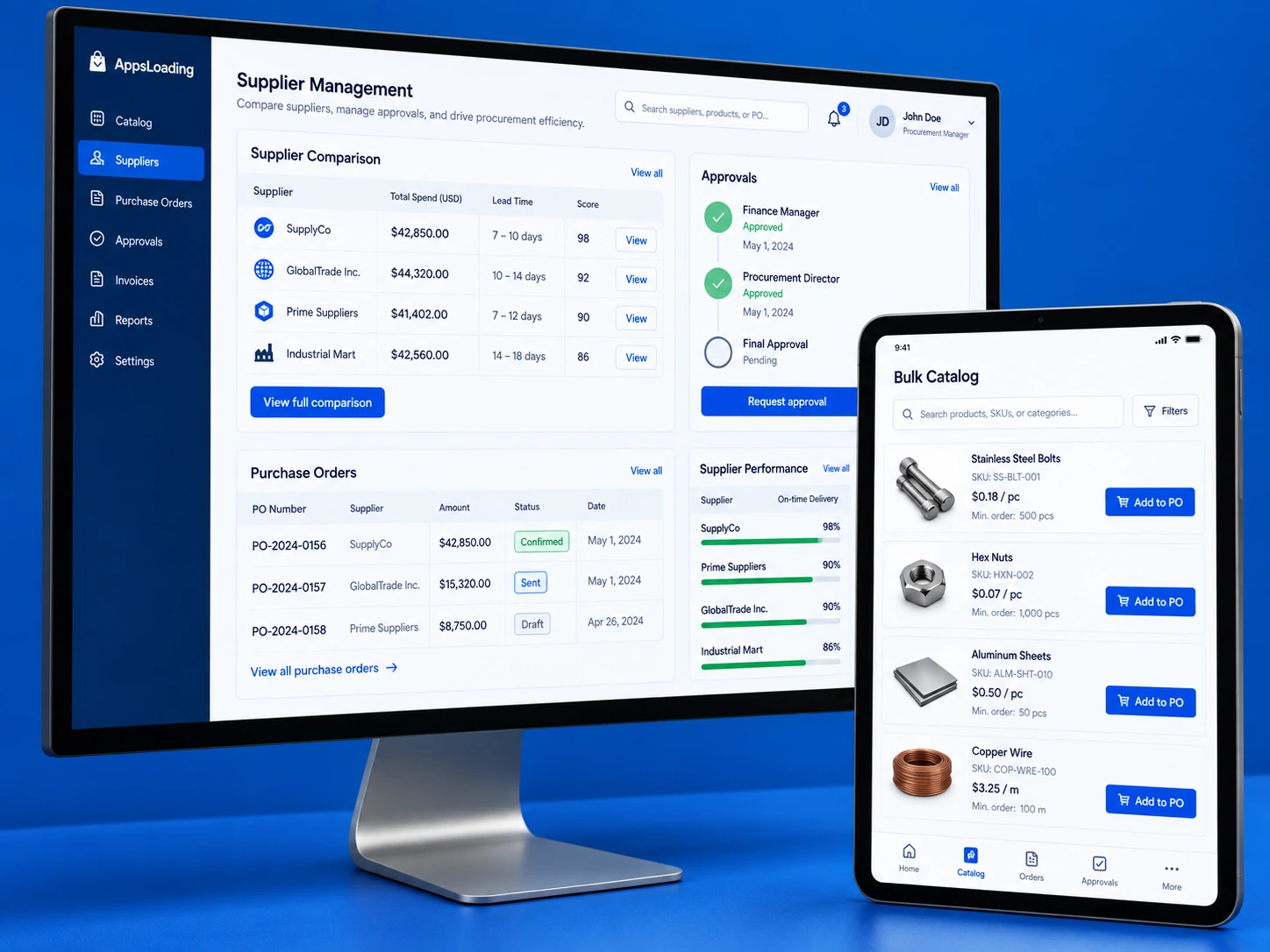
B2B & PROCUREMENT
Account-aware buying with RFQs, approvals, negotiated terms and repeat ordering.
Buyer organizations, supplier qualification, contract pricing, purchase workflows and operational visibility.

RENTAL MARKETPLACES
Availability, deposits, condition and return matter as much as discovery.
Time-bound inventory and asset lifecycle logic.

SERVICE & BOOKING
Match customers with people, expertise and availability.
Profiles, schedules, service states, cancellations and rebooking.
MARKETPLACE ACROSS CHANNELS
The network should remain coherent when buyers and sellers move between devices.
Marketplace mobile apps, web products, notifications, support and seller operations should share the same identity, transaction and marketplace-state model.

SELLER / PROVIDER MOBILE
Run the marketplace business without staying at a desk.
Notifications, order actions, schedule changes, messages, stock updates, payouts and support can be designed for fast mobile action.
OrdersMessagesAvailabilityPayouts

MARKETPLACE OPERATIONS
Keep operational ownership clear as the network grows.
Admin and support teams need role-aware tools for approvals, policy, transaction intervention, account health and marketplace configuration.
ApprovalsRiskSupportAnalytics
MARKETPLACE TECHNOLOGY ECOSYSTEM
Use technology that supports the transaction model and operating model.
Stack decisions should reflect search volume, real-time activity, payouts, data ownership, mobile requirements, regional expansion and marketplace operations.
 ReactBuyer and seller web experiences.
 Next.jsFast marketplace storefronts and SEO.
 Node.jsAPIs, events and marketplace services.
 PostgreSQLTransactional marketplace data.
 Stripe ConnectMarketplace payment and payout patterns.
 AWSCloud delivery, queues and observability.
MARKETPLACE USE CASES
Marketplace mechanics change with what is being exchanged.
Inventory, fulfillment, trust and payment logic vary by category. We shape the marketplace around the real operating model rather than forcing every business into one template.
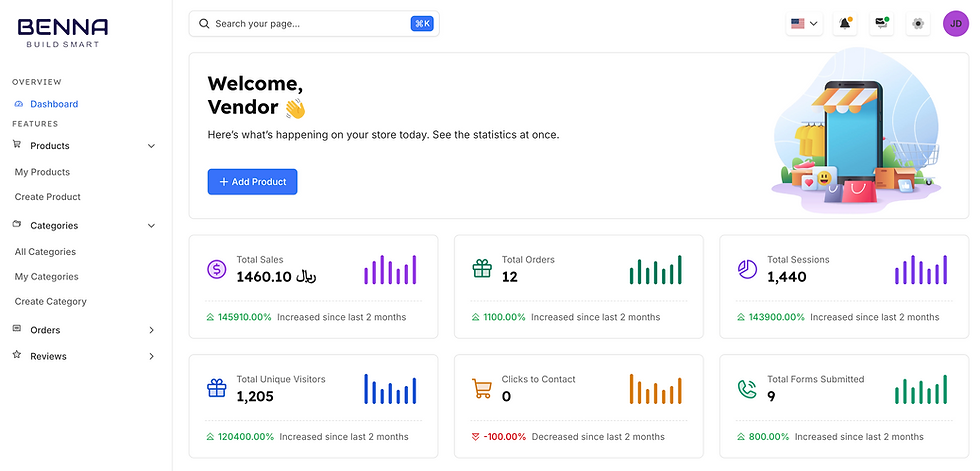
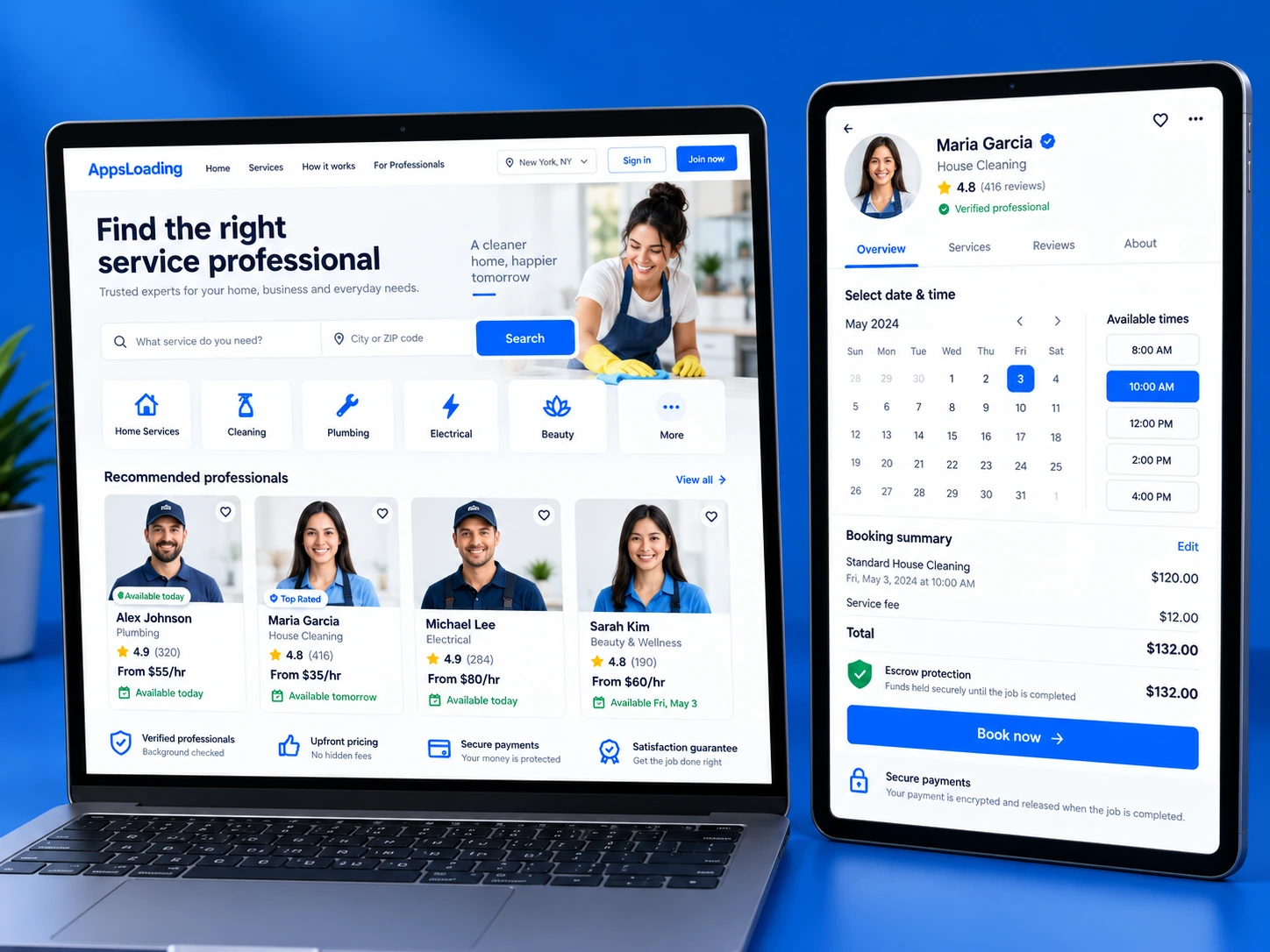
MULTI-VENDOR COMMERCE
Products, sellers, orders and commissions
Catalog, checkout, fulfillment and marketplace policy.
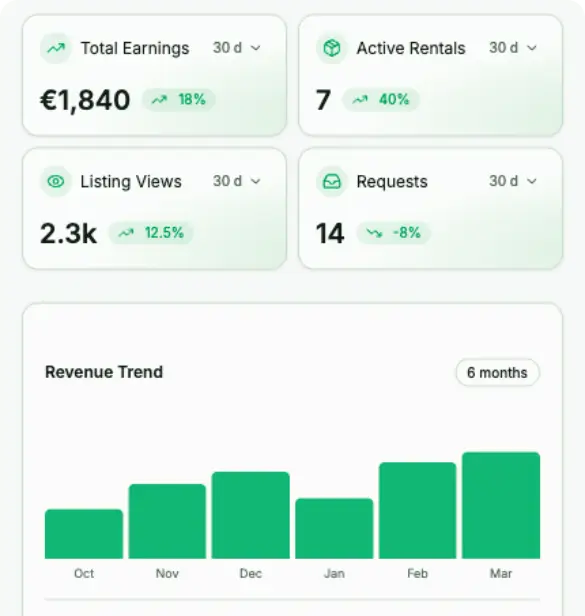
PROFESSIONAL SERVICES
Profiles, quotes, bookings and completion
People, schedules, service delivery and repeat use.
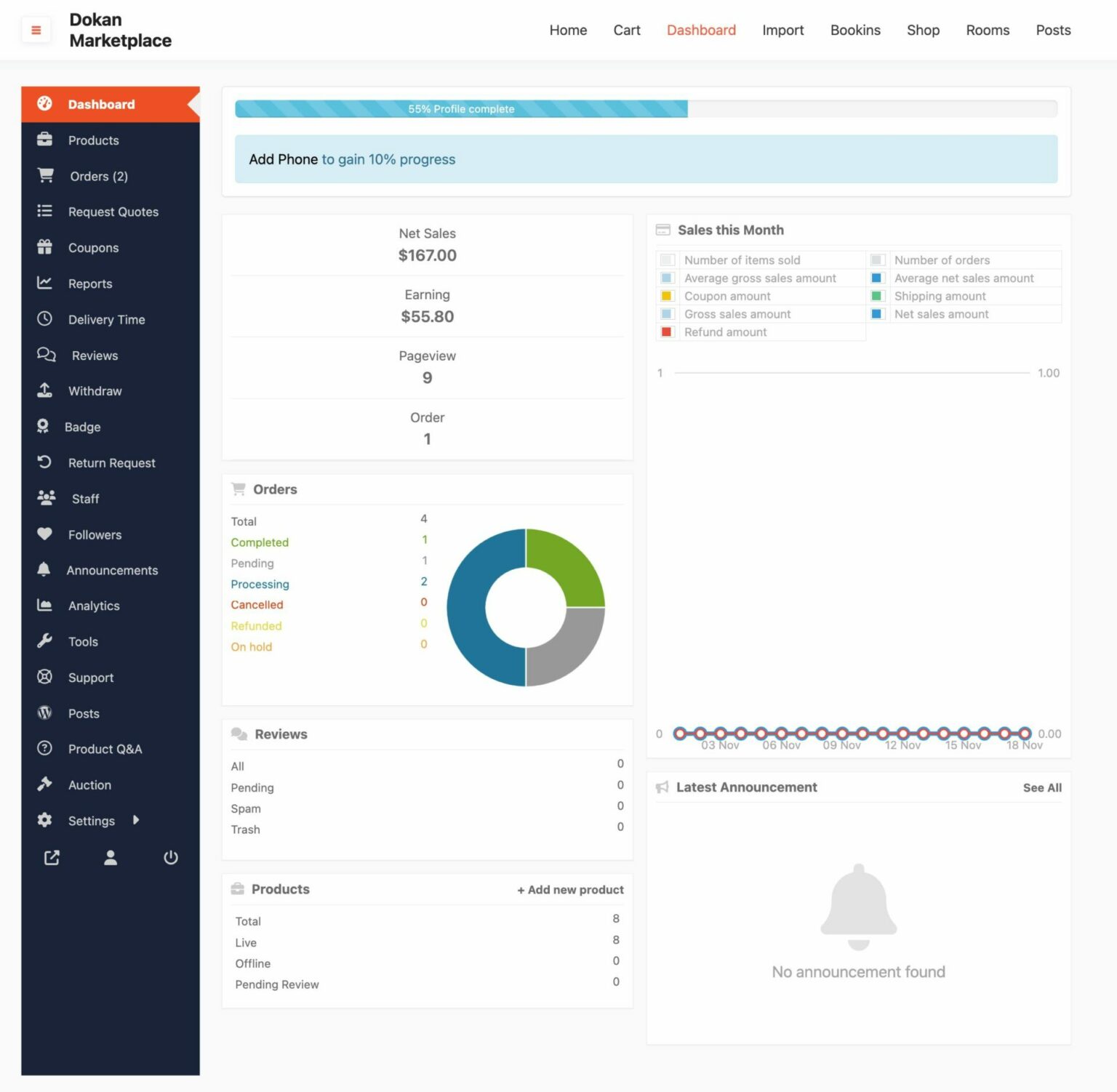
RENTALS & ASSETS
Availability, deposits and returns
Asset state, booking window, pickup, condition and return.
B2B TRADE
RFQs, pricing, approval and repeat purchase
Organizations, supplier terms and procurement workflows.
MARKETPLACE DELIVERABLES
What the team should own when the marketplace launches.
We make product rules, data states, transaction logic and operational responsibilities explicit so growth does not depend on hidden knowledge.
Marketplace model
User roles, transaction loop, revenue logic, supply strategy, trust requirements and MVP boundaries.
Buyer + seller journeys
Discovery, onboarding, listings, conversion, messaging, fulfilment, review and repeat behavior.
Transaction state model
Payment, fees, refunds, cancellations, payout eligibility, disputes and settlement states.
Admin operations
Approval, moderation, customer support, overrides, risk, account health and marketplace configuration.
Analytics model
Supply activation, demand quality, liquidity, conversion, take rate, completion, retention and operational load.
Production platform
Responsive web or mobile products, backend services, integrations, observability, deployment and support handover.
MARKETPLACE DELIVERY PROCESS
Start with the network model before scaling the feature list.
We reduce marketplace risk in stages so transaction rules and operating assumptions are tested before the product becomes expensive to change.
Model
Define users, value exchange, supply, demand, revenue and marketplace constraints.
MARKETPLACE BRIEFDesign
Map buyer, seller and admin journeys plus transaction and exception states.
VALIDATED FLOWSEngineer
Build the transaction core, experiences, integrations and operational tooling.
WORKING PLATFORMValidate
Test permissions, payouts, edge cases, trust flows, performance and real marketplace tasks.
RELEASE CANDIDATEGrow
Measure liquidity, conversion, repeat behavior and operational cost; improve the network deliberately.
MARKETPLACE GROWTHENGAGEMENT MODELS
Bring AppsLoading in where marketplace complexity is highest.
Work can begin with discovery, a focused marketplace capability or complete product delivery.
Marketplace discoveryMODEL + SCOPE
MVP deliveryCORE TRANSACTION LOOP
Full marketplace productBUYER + SELLER + ADMIN
Marketplace modernizationREBUILD / SCALE
WHAT DRIVES COST
Complexity usually lives in rules and operations, not page count.
We estimate marketplace delivery around transaction and operating complexity.
User roles + permissionsIDENTITY
Payment / payout modelMONEY
Search + matching depthDISCOVERY
Trust + moderationRISK
Integrations + automationOPERATIONS
What is marketplace development?
Marketplace development creates a digital product where two or more user groups can discover, transact and manage products, services, bookings or assets through one platform.
Which marketplace models can AppsLoading build?
We support multi-vendor commerce, service marketplaces, B2B networks, booking platforms, rental marketplaces, on-demand products and digital-goods marketplaces.
Should a marketplace start with an MVP?
Often yes. An MVP can validate the core supply, demand, discovery and transaction loop before the team invests in more advanced automation or marketplace operations.
How should seller onboarding work?
Seller onboarding should capture only the information needed to confirm eligibility, trust, payout readiness and listing quality, while showing clear progress toward activation.
Can the marketplace support different seller types?
Yes. Role-aware onboarding, permissions, pricing, catalogs and dashboards can support different supply models within one marketplace.
Can you build seller dashboards and mobile tools?
Yes. Seller tools can cover listings, inventory or availability, orders, earnings, payouts, messaging, promotions, support and marketplace-health metrics.
Can you support marketplace commissions and split payments?
Yes. We can design commission, platform fee, refund and payout workflows around suitable payment providers and the commercial model.
How are seller payouts handled?
Payout logic can include eligibility rules, settlement schedules, adjustments, failed transfer handling and reconciliation so seller balances remain understandable.
Can the marketplace support subscriptions or lead fees instead of commission?
Yes. Marketplaces can combine transaction commissions with subscriptions, listing fees, lead fees, promoted placement or other revenue models where they fit the network.
How do you build trust and safety into a marketplace?
Trust can combine identity checks, listing moderation, ratings, policy rules, transaction evidence, seller-health signals, fraud controls and structured dispute workflows.
Can admins intervene in transactions?
Yes. Admin tools can support approvals, account actions, refund or cancellation decisions, payout holds, reassignment, moderation and exception handling with an audit trail.
Can the marketplace support multiple countries or regions?
Yes. Regional rollout may require localized catalog rules, currencies, payment methods, tax treatment, languages, compliance requirements and operational ownership.
How much does marketplace development cost?
Cost depends on user roles, transaction logic, payments, payouts, search, mobile apps, trust systems, admin tooling, integrations, automation and launch scope.
How long does marketplace development take?
Timeline depends on the marketplace model and scope. Discovery is used to separate the core transaction loop from advanced operations so the first release can be planned responsibly.
Do you provide support after launch?
Yes. Support can include monitoring, performance, search quality, payout issues, operational tooling, integrations, framework upgrades and new marketplace capabilities.
READY TO BUILD THE NETWORK?
Turn the marketplace idea into a product where every transaction makes the system stronger.
Share the supply, demand, transaction and operating model. We’ll map the marketplace architecture, MVP boundary and critical operational flows before implementation begins.
Buyer + seller journeysPayments + payoutsTrust + operations

SUPPLYone marketplace operating systemDEMAND