




Engineering lead
Architecture, technical direction and engineering decisions.
AppsLoading assembles stable, cross-functional software teams for startups, scale-ups and enterprises. Engineering, QA, DevOps, design and delivery leadership work inside your product rhythm, tools, time-zone expectations and quality standards.
A dedicated model works best when the roadmap is continuous, the product is complex and delivery quality depends on people understanding why decisions were made, not just what the next ticket says.


We design roles around the product stage, architecture, release cadence and the level of ownership your internal leaders want to retain.
Architecture, technical direction and engineering decisions.
User-facing product experiences and platform-specific delivery.
Services, APIs, data flows and business logic.
Release quality, automation and regression protection.
Delivery pipelines, infrastructure and production reliability.
UI/UX, planning, facilitation and stakeholder visibility.
From one dedicated engineer to a managed product squad or long-term offshore unit, the model changes without changing the delivery standards.

Best when your internal team owns planning and needs consistent engineering capacity.

Engineering, QA, DevOps and design working as one delivery unit.

AppsLoading supports planning, reporting, quality and team coordination.

A scalable product team designed for continuity and predictable delivery.
Context compounds. A stable squad learns customer behavior, architecture constraints, release history, operational risk and the reasons behind past trade-offs.




Profiles are matched against your technology, seniority, product domain, communication expectations and delivery environment. You can review and interview candidates before onboarding.
Onboarding is designed to reduce the time between access being granted and the team making informed delivery decisions.

Repositories, environments, product goals, users, roadmap and security.
Small fixes and stories reveal workflow, architecture and release practices.
The team takes responsibility for a feature, service or product stream.
Review velocity, communication, quality, blockers and capacity fit.
The dedicated team works inside the operating cadence you already use, or we help define one when product delivery needs more structure.


Dedicated teams work with shared engineering standards so quality does not depend on one person remembering to care.
Peer review, maintainability and shared ownership.
Unit, integration, API, UI and regression coverage.
Repeatable build, test, deployment and rollback practices.
Errors, logs, performance and operational signals.
Architecture, decisions, runbooks and onboarding knowledge.
Access, secrets, dependency and review practices.
Quality and operations are most effective when they shape the work early instead of becoming final gates before release.

Frontend, backend and mobile engineers work around shared outcomes.

Regression and release confidence grow with the product.

Infrastructure and deployment concerns enter planning early.

User experience and product intent stay close to implementation.
Working-hour overlap, async expectations, escalation paths and handoff rules are agreed before the team starts. This makes global delivery predictable rather than noisy.




An offshore development team can become a stable extension of your technology organization with its own leadership, hiring pipeline, quality standards and continuity model.
Governance should answer who decides, who delivers, how quality is reviewed and how problems become visible before they become surprises.
Product priorities and outcome ownership stay explicit.
Planning, facilitation and blocker removal have a clear owner.
Architecture, review, testing and documentation rules are shared.
NDA, IP, repositories and cloud permissions are controlled.
Role fit, delivery health and communication are reviewed regularly.
Team size evolves with the roadmap instead of becoming fixed overhead.
Continuity is designed into the team through documentation, pairing, shared ownership and structured replacement rather than being handled only when someone leaves.


As the product changes, the team may need fewer feature engineers and more platform, QA, data, DevOps or modernization capacity. We rebalance roles around the next phase of the roadmap.
From SaaS product squads to mobile, enterprise and offshore delivery, the team structure changes with product complexity, ownership and release rhythm.
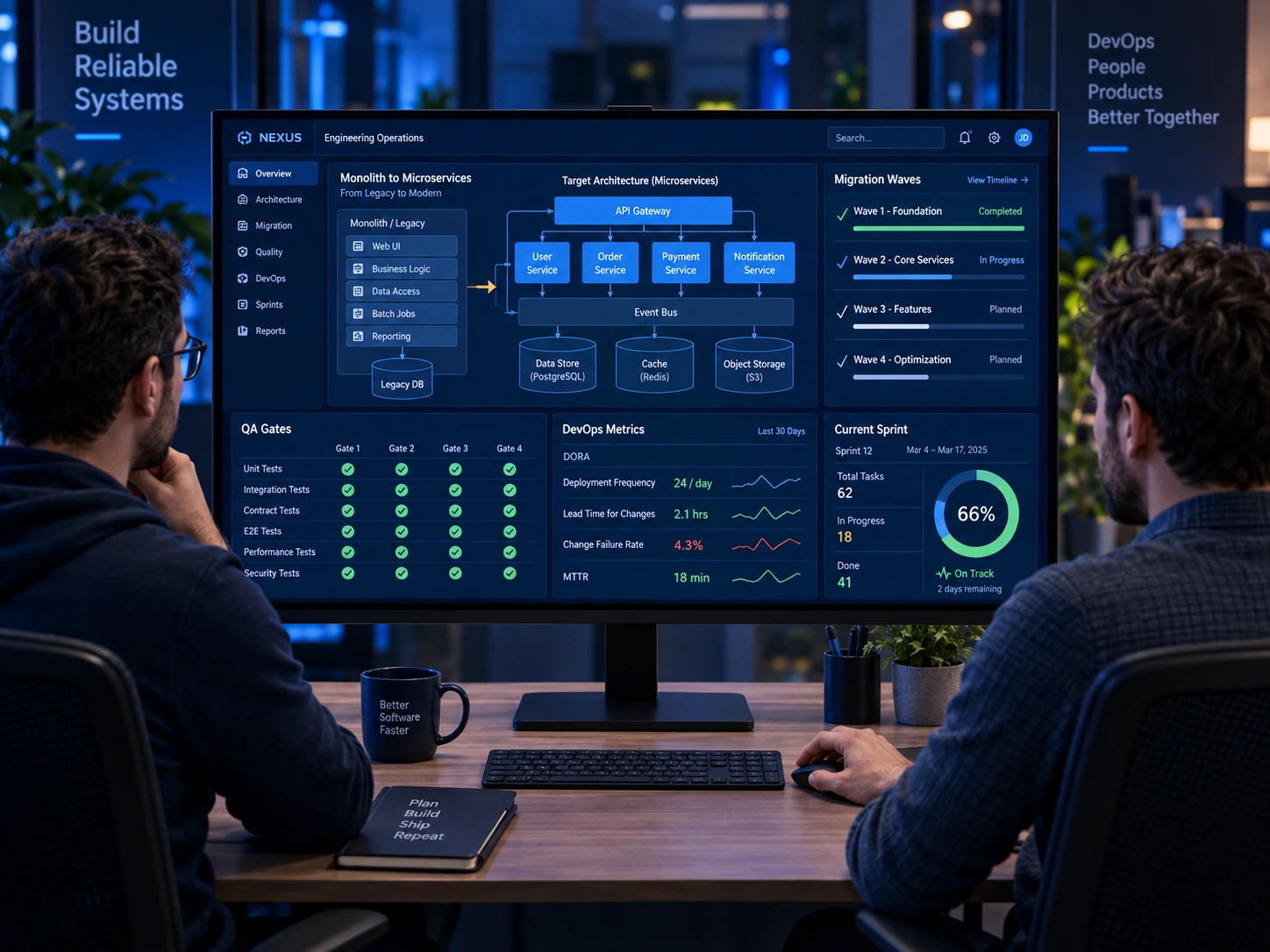
Frontend, backend, QA, DevOps and product delivery working in shared sprints.
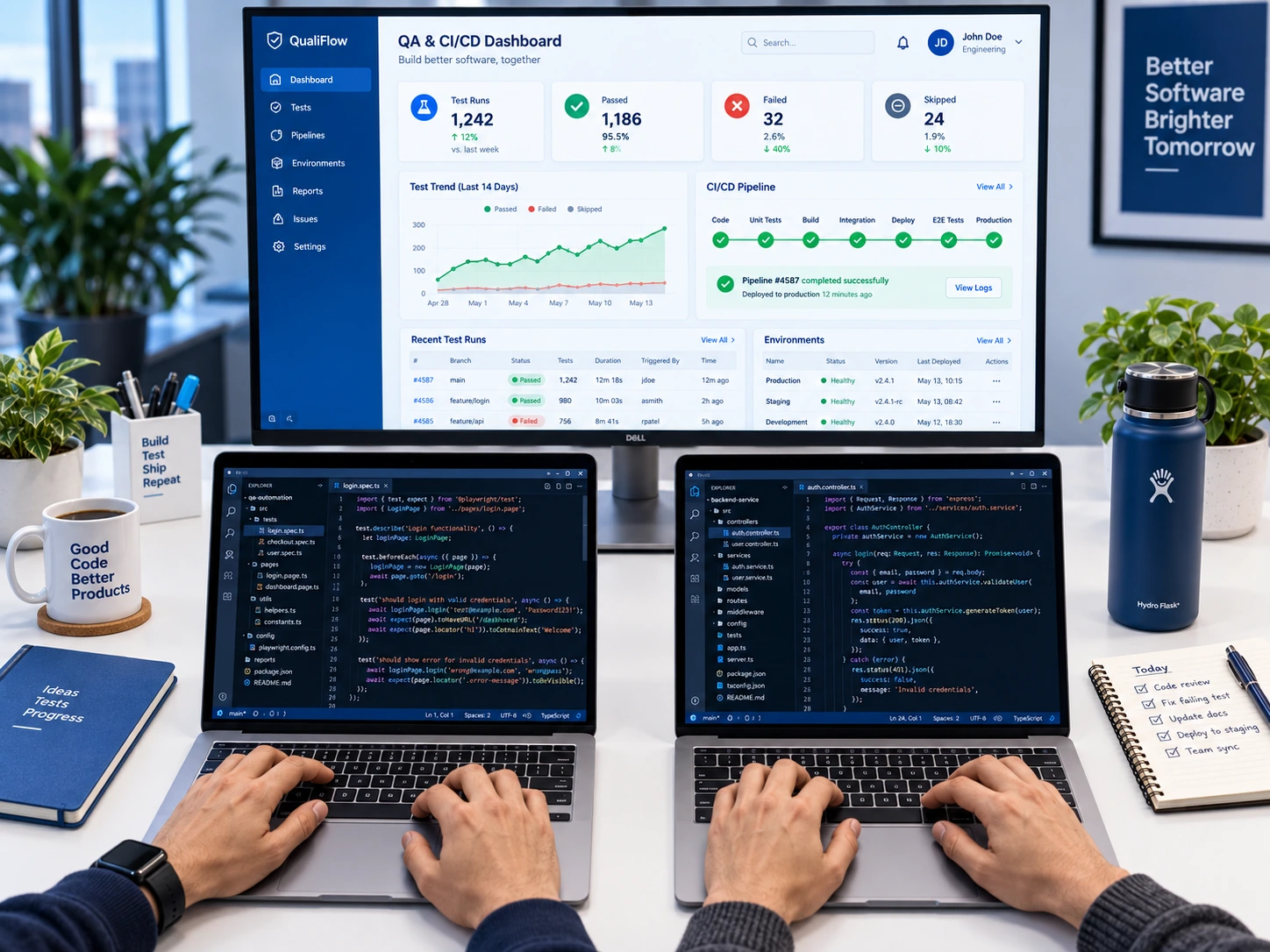
Mobile feature delivery, automation, backend integration and release support.
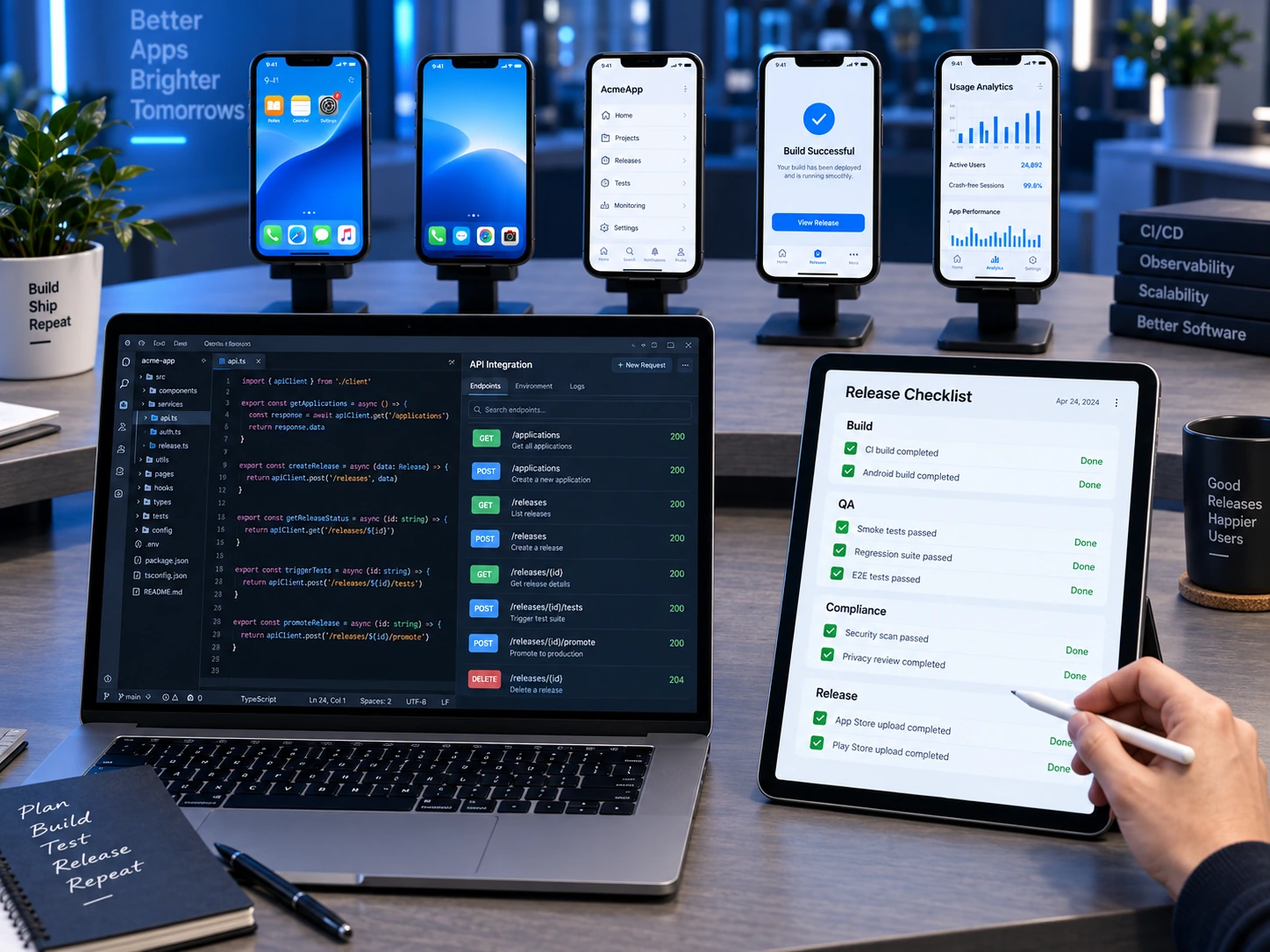
Architecture, engineering, quality and reporting across phased delivery.
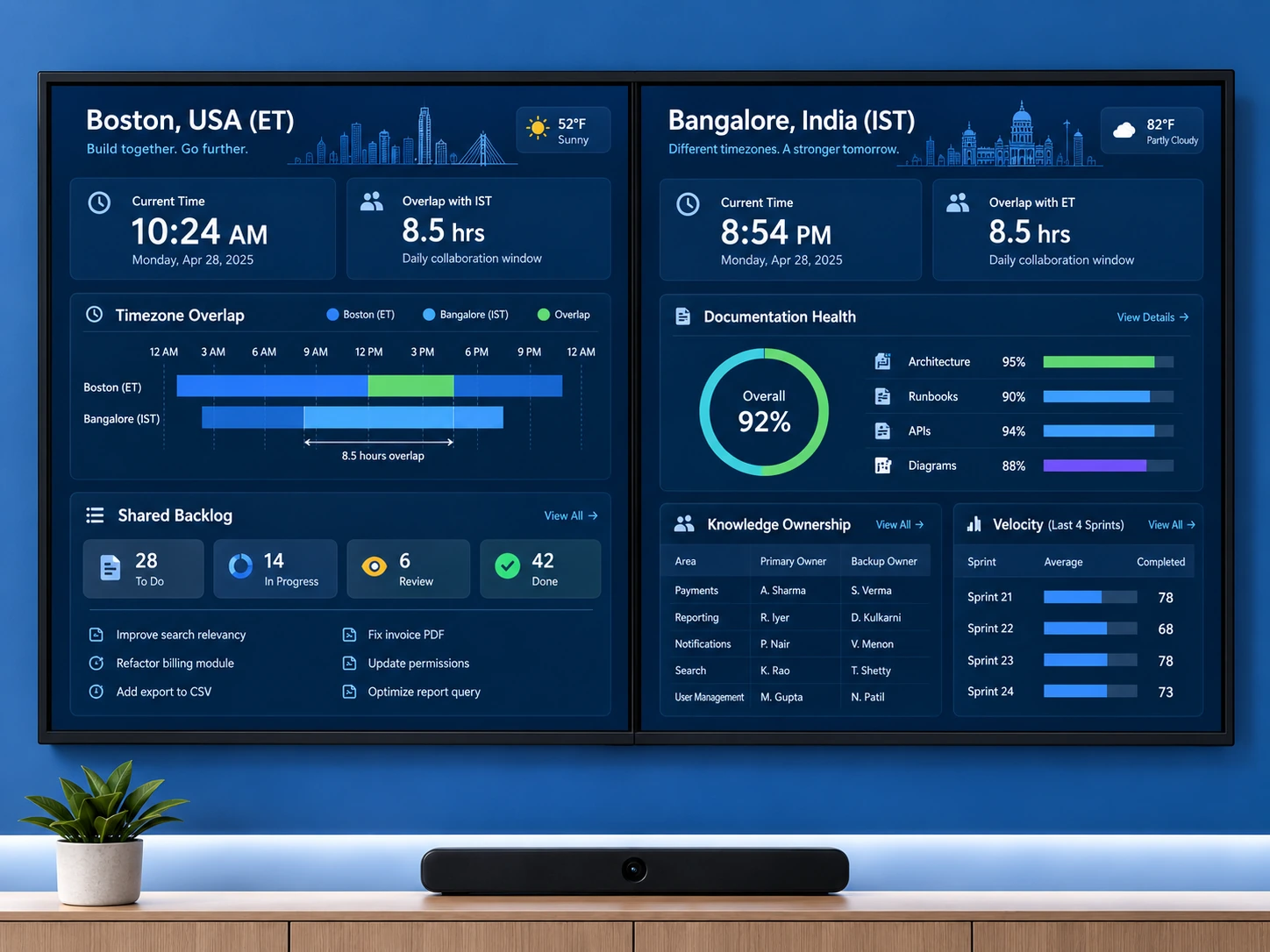
Stable team, time-zone overlap, governance and knowledge retention.
Choose the operating direction based on where ownership, speed or continuity is currently breaking down.
A squad takes responsibility for one roadmap or product domain.
Add technical and delivery leadership where internal capacity is thin.

Create stable long-term engineering capacity around shared standards.

Keep feature delivery moving while the team reduces legacy and platform risk.
We assemble engineers based on the product architecture and roadmap rather than forcing the work into a preselected technology set.
Frontend products, dashboards and complex interfaces.
APIs, services, integrations and event-driven systems.
Backend, automation, data and AI-enabled products.
Enterprise platforms and service architecture.
Business software and Microsoft ecosystems.
Cross-platform mobile product engineering.
Cloud-native product and platform engineering.
Container platforms, scaling and operations.
A structured setup reduces hiring noise and gets the team into your delivery environment with the right context.
Roadmap, roles, seniority, operating model and time-zone needs.
RequirementRecommended squad structure and role responsibilities.
Team blueprintProfiles, technical discussions and role-fit review.
SelectionAccess, tools, product context and delivery cadence.
IntegrationShared sprint goals, quality standards and reporting.
OwnershipAdjust roles, capacity and continuity as the roadmap changes.
GrowthLong-term delivery across SaaS, fintech, healthcare, commerce, enterprise transformation and agency environments.

Continuous roadmap, multi-tenant systems and integrations.

Transaction workflows, cloud, mobile and secure engineering.

Patient products, operational systems and regulated platforms.

Modernization, portals, workflow and platform engineering.
Deliverables cover team structure, onboarding, delivery rhythm, quality, reporting and continuity.
Roles, seniority, size and ownership boundaries.
Access, tools, product context and first delivery milestones.
Meetings, async communication, planning and reporting.
Reviews, testing, documentation and release expectations.
Role changes and scaling aligned to roadmap phases.
Documentation, handover, replacement and knowledge retention.
The objective is not simply to provide people. It is to create a stable engineering unit that learns your product, works inside your system and improves its delivery quality over time.
We scope the team against the work it must own rather than quoting a generic headcount package.
Engineering, QA, DevOps, design and delivery roles.
Lead, senior, mid-level and specialist experience.
Client-led, co-managed or AppsLoading-managed delivery.
Working-hour expectations and collaboration windows.
Architecture, domain, integrations and compliance needs.
Documentation, replacement and long-term capacity planning.
A dedicated development team is a long-term external engineering team assigned primarily or exclusively to one product, product stream or roadmap.
Yes. You can engage one dedicated engineer, a specialist unit or a complete cross-functional product squad.
Staff augmentation usually adds selected specialists to an existing team, while a dedicated model can provide a stable cross-functional unit with broader delivery ownership.
Profiles are matched against technology, seniority, product context, communication needs and the agreed operating model.
Yes. You can review profiles, run technical discussions and assess role fit before the engagement begins.
Yes. Teams can include product management, Scrum or delivery leadership, UI/UX design, QA and DevOps in addition to developers.
You can manage the team directly, share management responsibilities or use an AppsLoading-managed delivery model.
Yes. The team can work inside your repositories, communication tools, documentation, sprint process and release workflow.
Yes. Working-hour overlap, ceremony timing and async expectations are agreed during team planning.
The client retains ownership of approved work product according to the signed engagement, confidentiality and IP terms.
Yes. NDA, confidentiality, IP and access-control terms can be established before onboarding.
Yes. Access can follow your existing security, repository, SSO and permission model.
Yes. Roles and capacity can be adjusted as roadmap priorities, product stages and delivery needs change.
We support structured replacement, overlap and knowledge transfer to reduce disruption.
Yes. Dedicated teams can support long-term development, maintenance, modernization, product scaling and operational improvement.
Share the roles, product context and delivery goals. We will recommend a practical team structure and operating model.
Build your dedicated team →