



Customer data is scattered
Contacts, activity and service history live across spreadsheets, inboxes and separate tools.
AppsLoading designs CRM platforms that connect lead capture, sales pipelines, marketing activity, customer communication, service operations and reporting. From custom CRM development and modernization to integrations, automation, analytics and mobile access, we help teams manage the complete customer lifecycle with clarity.
Fragmented customer records, unclear ownership, inconsistent follow-up and disconnected reporting make growth harder to manage. We map those gaps first, then design the platform around the real operating model.
Contacts, activity and service history live across spreadsheets, inboxes and separate tools.
Sales and service teams miss next actions because ownership is not enforced by workflow.
Stages, probabilities and activity data are inconsistent, weakening forecasting.
Marketing, sales, onboarding and service do not share one continuous history.



CRM works best when customer data, workflows, communication, service and analytics share the same operating model.
Use AppsLoading for a complete custom CRM programme or a focused implementation across sales, service, marketing, mobile access, integration or reporting.

A customer operating platform designed around your lifecycle, teams, fields, permissions and reporting.

Lead qualification, opportunities, stages, quotes, next actions, forecasting and manager visibility.

Tickets, SLAs, history, escalations, customer communication and service productivity.

Segments, campaign activity, lead scoring, nurture, attribution and handoff into sales.

Connect websites, ERP, email, telephony, payments, marketing tools and internal platforms.

Conversion, pipeline, activity, retention, service performance and revenue insight in one place.

Field-ready customer access, visit planning, notes, follow-ups, approvals and mobile dashboards.

Improve legacy CRM architecture, usability, automation, security, reporting and long-term adoption.

We structure customer data so account context remains consistent across marketing, sales, onboarding, service and management reporting.
Stages become useful when the CRM controls required information, ownership, next actions and exit criteria at each step.
Source, need, territory and first response owner.
Scoring, budget, timing and opportunity value.
Pricing, approvals, documents and stakeholder activity.
Closed-won data, onboarding tasks and account ownership.


Assignment rules can consider territory, source, product, account value, availability or strategic priority while keeping exceptions visible.

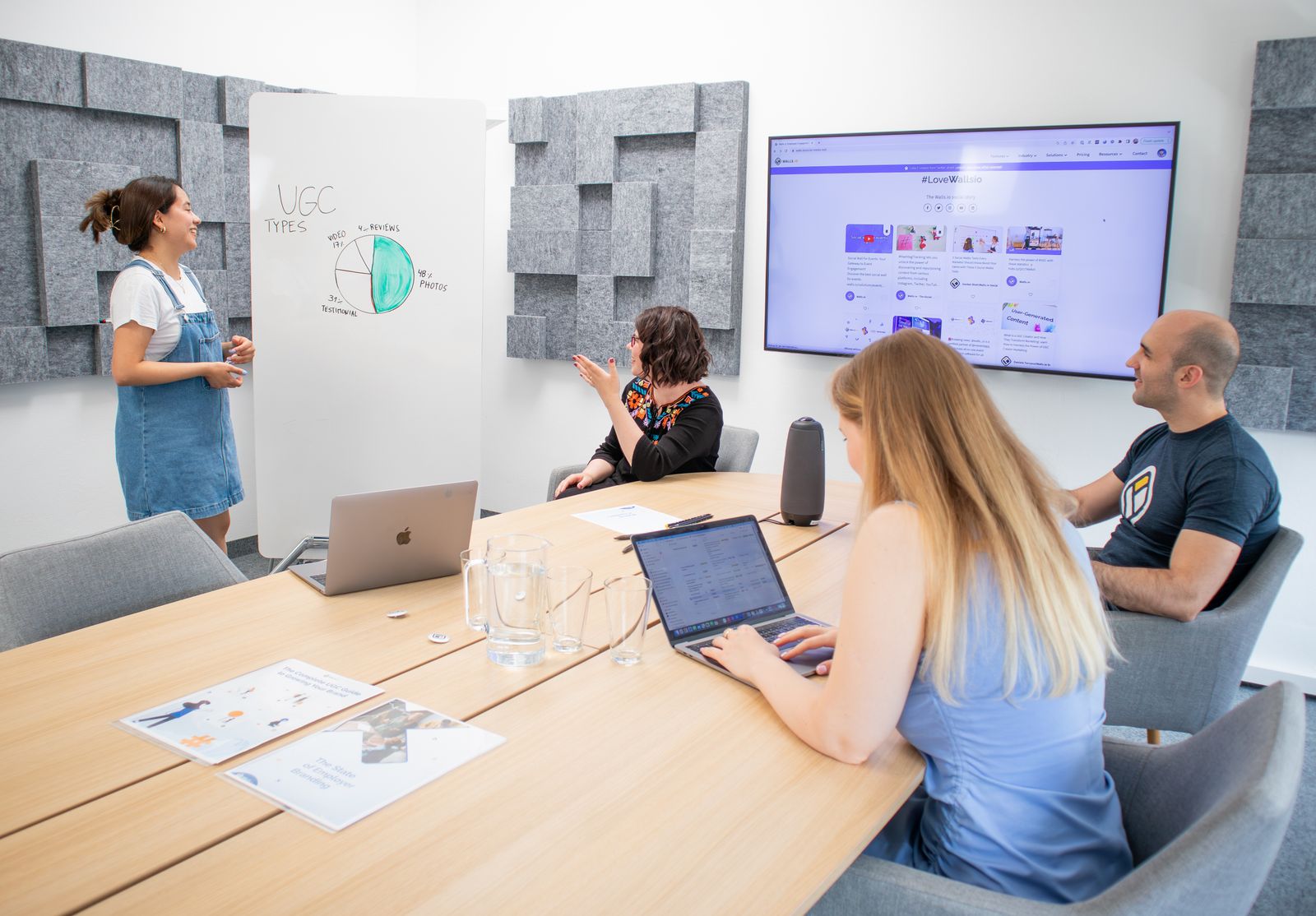
Marketing activity becomes more valuable when campaign response, scoring and lifecycle signals flow directly into the CRM and sales process.
A service CRM should connect account context, ticket ownership, SLAs, communication, escalation and resolution learning in one workspace.




Account managers can track onboarding, success plans, renewals, expansion opportunities, stakeholder health and service history without rebuilding context from scratch.
Mobile CRM can support visits, calls, notes, approvals, follow-ups and territory activity without forcing field teams back into desktop workflows.


CRM rarely creates full value in isolation. We connect it to operational, communication and financial platforms so data and actions move automatically.
Reporting starts with consistent stages, required fields and event capture. Once the data is reliable, dashboards can show funnel health, service performance, team activity and customer value.


Migration planning separates useful operational history from duplicates, obsolete fields and inconsistent records before final cutover.
Identify sources, objects, relationships and record ownership.
Deduplicate, standardize, archive and fix invalid data.
Define field, object and relationship transformations.
Run sample migrations and business-user validation.
Compare counts, values and relationship integrity.
Freeze, migrate, validate and reopen with clear rollback criteria.

Roles, field visibility, ownership, approval authority and administrative controls should match the real responsibilities of each team.
We reduce clutter, remove unnecessary fields, align views to each role and make the next action obvious. Adoption is an interface and process problem, not only a training problem.


Choose the direction based on the biggest operational constraint: fragmented data, unpredictable revenue, service complexity or weak adoption.

Pipeline, forecasting, activity and commercial control.

History, tickets, SLAs, escalation and service insight.

Onboarding, renewals, health and expansion opportunity.

Shared data model, permissions, integrations and analytics.
Engagements can begin with discovery, a single team, data migration or a complete multi-department CRM build.
Lifecycle, users, workflows, data model, integrations and roadmap.
Sales, service, marketing, mobile or analytics implementation.
Improve an existing CRM without discarding valuable data and workflows.
Architecture, build, migration, integrations, rollout and support.
We choose the stack based on CRM complexity, number of users, data volume, ecosystem fit, reporting needs and operating model.

APIs, automation and event-driven CRM services

Enterprise CRM and Microsoft-aligned ecosystems

Large-scale customer platforms and service architecture

Responsive sales, service and analytics interfaces

Reliable customer, activity and reporting data

Revenue, service and performance reporting

Integration, migration and connected workflows

Marketing, CRM and lifecycle integration
CRM value comes from operational consistency, trusted data and faster action, not simply from storing more contact records.
A structured implementation process with clear workflow, data, integration, quality and adoption milestones.
Review lifecycle, teams, tools, data and pain points.
Define stages, roles, fields, rules and reporting.
Create architecture, UX, permissions and data model.
Develop modules, automation and integrations.
Clean data, test workflows and prepare users.
Train teams, monitor adoption and extend capability.
Custom CRM systems for sales-led, service-led and relationship-driven organizations with complex customer journeys.
Lead distribution, site visits, inventory, follow-ups and broker relationships.
Patient communication, referrals, appointments and service coordination.
Lead qualification, applications, documents and relationship management.
Pipeline, onboarding, account management, renewals and customer success.
Prospects, proposals, engagements and long-term client relationships.
Dealer, distributor, account, quotation and sales-territory management.
Deliverables cover workflows, customer data, automation, permissions, integrations, reporting, rollout and long-term administration.
Modules, lifecycle, roles, data and integration structure.
Stages, assignments, approvals, reminders and escalations.
Accounts, contacts, opportunities, activity and service history.
Email, telephony, ERP, payments, websites and external tools.
Sales, service, activity, conversion and retention visibility.
Data cleanup, validation, training, adoption and support.
We design around customer lifecycle, workflow ownership and real operating constraints instead of forcing teams into generic software patterns.

The strongest estimate comes after mapping users, lifecycle, modules, migration needs, integrations and rollout requirements.
Custom CRM development creates a customer relationship platform around your specific sales, service, marketing, reporting and integration requirements.
It is most useful when standard products cannot support your workflows, permissions, integrations, customer data model or reporting needs without heavy compromise.
Yes. We can centralize customer records, activities, tasks, pipelines, service history and reporting into one coordinated platform.
Yes. Lead assignment, reminders, approvals, follow-ups, escalations, notifications and lifecycle actions can be automated around clear business rules.
Yes. Sales, service, marketing, account management and leadership can receive role-based dashboards, fields, permissions and workflow actions.
Yes. Pipelines, stages, probabilities, required fields, stage gates and next actions can be configured around your real sales process.
Yes. We can integrate ERP, websites, mobile apps, email, telephony, payments, marketing tools and internal platforms through APIs and secure data exchange.
Yes. We can map, clean, deduplicate, migrate and validate customer, activity, opportunity, service and related CRM data.
Yes. We can integrate, synchronize or migrate data and workflows where supported by the selected platform APIs and project requirements.
Yes. We can provide responsive CRM access or dedicated mobile applications for sales, service and field teams.
Yes. Dashboards can cover pipeline, conversion, activity, service, retention, forecasting and team performance.
Offline or low-connectivity features can be considered depending on the data model, synchronization rules and security requirements.
Timing depends on modules, workflows, integrations, data migration, number of users and rollout complexity. Larger CRM programmes are usually delivered in phases.
Yes. Support can include enhancements, integrations, reporting, workflow changes, security, performance and adoption improvements.
Ownership terms are defined in the engagement agreement. The intended delivery model can include the agreed code, configurations, documentation and migrated business data after contractual obligations are met.
Share your customer lifecycle, workflows and systems. We will recommend a practical CRM architecture and rollout plan.
Start your CRM project →