Talk to a specialist
React Native App Development Company | iOS & Android | AppsLoading
REACT NATIVE APP DEVELOPMENT COMPANY

Build React Native apps that move fast without giving up native control.

AppsLoading designs and develops production-ready React Native applications for iOS and Android. We combine TypeScript, Expo or bare React Native, native Swift and Kotlin modules, backend integrations, performance engineering, automated testing and app-store delivery into one mobile product system.

✓ React Native + TypeScript✓ Expo and native modules✓ iOS + Android delivery✓ Performance and app-store launch
SharedOne product foundation across iOS and AndroidNativeSwift and Kotlin when platform-specific capability mattersOperationalTesting, CI/CD, monitoring and release health included
React NativeTypeScriptExpoEAS BuildHermesFabricTurboModulesReact NavigationNative ModulesiOS + Android
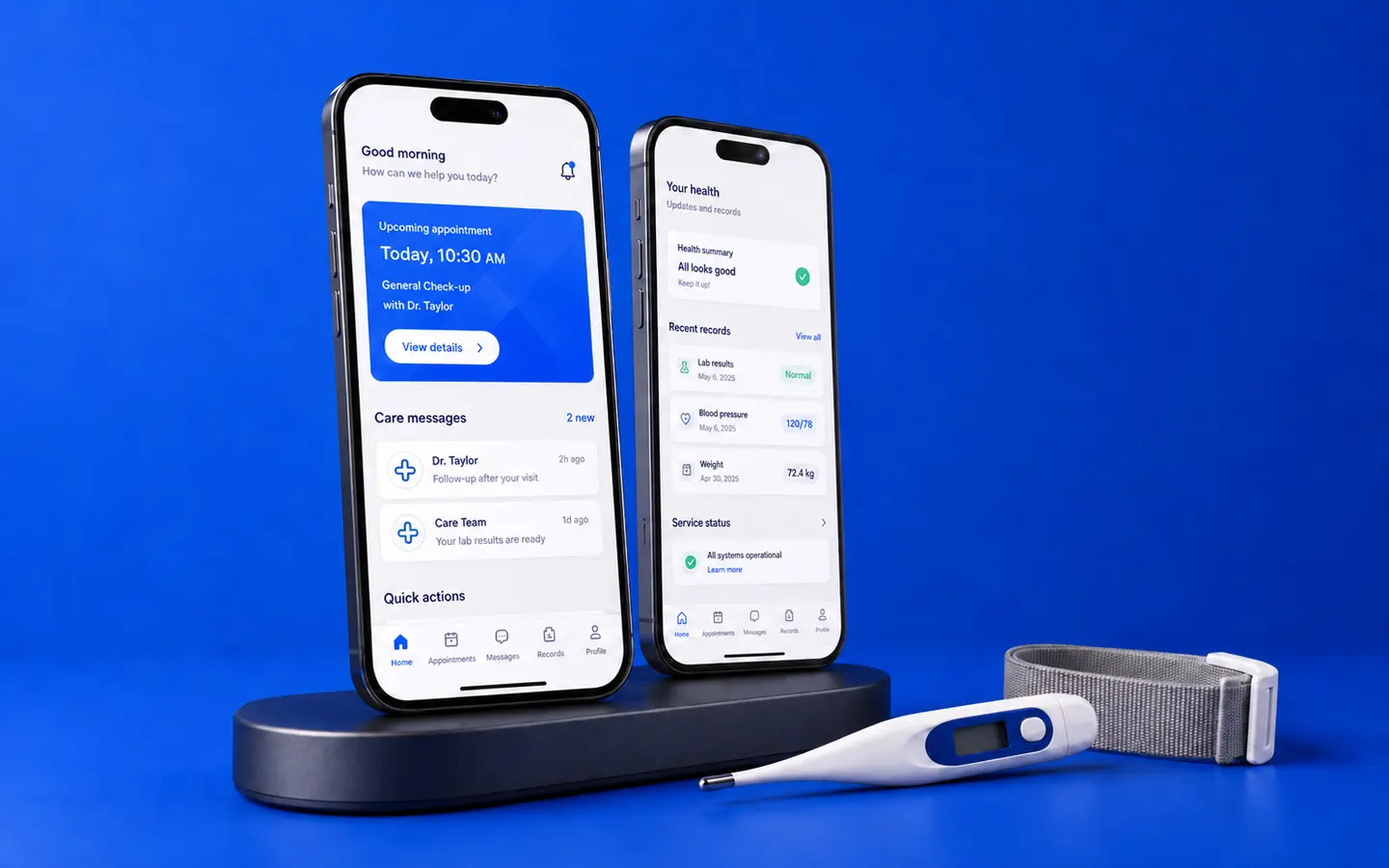
React Native mobile product interface and application engineering
PRODUCT FIT BEFORE FRAMEWORKReact Native is strongest when shared product velocity matters and native escape hatches stay available.
REACT NATIVE PRODUCT STRATEGY

Choose React Native for the product operating model, not because one codebase sounds cheaper.

The framework creates leverage when iOS and Android share product behavior, releases and engineering ownership. It still needs platform-aware UX and native integration where the product requires it.

01

Shared product logic

Reuse business rules, networking, state and most interface code across platforms.

02

Native where it matters

Keep Swift, Objective-C, Kotlin or Java modules for specialized SDKs and device capability.

03

One release rhythm

Coordinate features, QA and app-store delivery from one mobile product roadmap.

04

Measure the real constraints

Decide around performance, offline behavior, native dependencies and team ownership.

REACT NATIVE DEVELOPMENT SERVICES

One engineering partner across build, migration and growth.

We support the full mobile lifecycle without turning the page into a list of generic development cards.

01

Custom React Native app development

Production mobile products for iOS and Android with modular TypeScript architecture.

React Native · TypeScript
02

React Native MVP development

Focused first releases built to validate demand without creating a disposable codebase.

MVP · Validation
03

Expo and EAS delivery

Development builds, cloud builds, internal distribution, updates and app-store workflows.

Expo · EAS
04

Native module development

Swift and Kotlin integrations for SDKs, device APIs and platform-specific features.

Swift · Kotlin
05

Native-to-React Native migration

Move suitable product slices into a shared architecture without a risky all-at-once rewrite.

Migration
06

Performance engineering

Profile rendering, startup, memory, lists, animations, images and native-thread work.

Profiling · Hermes
07

Testing and release engineering

Unit, component and end-to-end testing with automated Android and iOS release pipelines.

Jest · Detox · CI/CD
08

Maintenance and framework upgrades

React Native upgrades, dependency health, OS compatibility and ongoing product development.

Support · Growth
REACT NATIVE ARCHITECTURE

Keep the shared layer clean and make the native boundary explicit.

Modern React Native architecture benefits from clear feature boundaries, typed data contracts, deliberate native integrations and production observability. The New Architecture includes Fabric and TurboModules, while Hermes is commonly used as the JavaScript engine.

Feature modulesBusiness logic, screens and tests organized around product capability.
Shared data layerAPI clients, cache, persistence, auth and synchronization.
Native boundaryTyped integration with platform SDKs and device capability.
OperationsCrash, performance, release and user-behavior telemetry.
mobile-platform / architecture
src/
├── features/
│   ├── auth/
│   ├── payments/
│   └── account/
├── data/
│   ├── api/
│   ├── cache/
│   └── storage/
├── native/
│   ├── ios/Swift
│   └── android/Kotlin
├── design-system/
└── observability/

Fabric → rendering
TurboModules → native modules
Hermes → JavaScript runtime
SHARED VS NATIVE RESPONSIBILITY

Share product behavior. Keep platform-specific work intentional.

Premium React Native engineering is not about forcing every line into JavaScript. It is about choosing the right boundary.

Navigation + UI
React NativeShared screens, design system, flows and business behavior.
↔
Native platformPlatform conventions, system surfaces and OS-specific behavior.
Device capability
React Native interfaceTyped JavaScript/TypeScript contracts and product logic.
↔
Swift / Kotlin modulesPayments, Bluetooth, biometrics, camera or proprietary SDKs.
Performance
Shared optimizationRendering, lists, images, state and network behavior.
↔
Native optimizationCPU-heavy work, platform SDKs and lower-level instrumentation.
React Native application performance and mobile interface
RENDERING · STARTUP · MEMORY · NETWORK · ANIMATIONS
PERFORMANCE ENGINEERING

Performance is designed into the product, not added after complaints.

React Native can deliver polished mobile experiences when the architecture controls rendering work, data flow, image cost, animation, native integrations and production diagnostics.

Startup

Reduce expensive initialization, unnecessary imports and blocking native work.

Rendering

Control re-renders, list virtualization, component boundaries and state subscriptions.

Animations

Keep gesture and animation work smooth with the right execution path.

Network + cache

Use predictable caching, request deduplication, persistence and offline behavior.

Production telemetry

Measure crashes, slow interactions, release health and real-device issues.

DELIVERY MODEL

Expo, bare React Native or brownfield should follow native complexity.

The build model should fit SDK requirements, release ownership and migration strategy instead of becoming an ideology.

OPTION 01

Expo + development builds

Strong default for many new products that want fast iteration with access to custom native libraries through development builds.

  • EAS Build and Submit
  • Internal distribution
  • Expo modules and config plugins
  • OTA update workflow where appropriate
OPTION 03

Brownfield integration

Introduce React Native into an existing native product one feature area at a time.

  • Incremental migration
  • Lower rewrite risk
  • Reuse existing native systems
  • Measure value before expanding
PRODUCT DIRECTIONS

React Native for products that need mobile reach and release speed.

Three common product patterns where a shared TypeScript foundation can reduce duplicated delivery without giving up native capability.

Developer testing a mobile application beside a coding laptop
COMMERCE · CUSTOMER EXPERIENCE

One product roadmap with native payments, notifications and platform polish.

Useful when iOS and Android must move together while still integrating platform SDKs, deep links and app-store commerce requirements.

Laptop and smartphone used for mobile application development
OPERATIONS · FIELD APPS

Offline workflows, camera, location and distributed teams.

Shared feature delivery with native access where field work depends on device capability.

React Native developer workspace with code and smartphone
SAAS · FINTECH · HEALTHCARE

When one roadmap must serve both mobile platforms.

Best where product logic is largely shared but the app still needs platform-aware UX, secure flows and selected native integrations.

NATIVE-TO-REACT NATIVE MIGRATION

Move by product slice, not by risky rewrite.

A phased brownfield approach lets teams introduce shared architecture where it creates value while keeping stable native areas intact.

01

Audit the native application

Map modules, SDKs, navigation, shared logic, platform differences and release dependencies.

02

Choose the first migration slice

Select a feature with meaningful reuse and manageable native dependencies.

03

Establish shared foundations

Add TypeScript conventions, navigation boundaries, data access, design-system primitives and testing.

04

Bridge native capability

Reuse existing native SDKs through modules rather than rebuilding everything.

05

Expand based on measured value

Move additional areas only when delivery speed, maintainability or consistency actually improves.

CI/CD AND APP-STORE DELIVERY

Mobile delivery should be an engineering pipeline, not a release-day ritual.

Expo EAS or existing CI providers can automate builds, signing, internal distribution and production releases for React Native projects.

01

Pull request

Lint, type checks and automated tests.

02

Preview build

Installable build for QA and stakeholders.

03

Device validation

Real iOS and Android checks.

04

Production build

Signed binaries with release configuration.

05

Store + observe

Submission, rollout, crash and release health.

EAS Build supports Expo and React Native projects, including existing React Native projects, and EAS Workflows can automate Android and iOS build jobs. Teams can also keep their existing CI/CD provider when that better fits governance or infrastructure requirements.

WHEN REACT NATIVE FITS

A framework decision should include where React Native is not the best fit.

Clear boundaries make the recommendation more credible and reduce architecture rework later.

Product condition
React Native fit
Why
Most product behavior is shared across iOS and Android
Strong fit
Shared features and release planning create meaningful leverage.
App needs selected native SDKs or custom modules
Strong fit
Native Swift/Kotlin modules can coexist with shared React Native code.
Existing native app should migrate gradually
Strong fit
Brownfield adoption can move one product area at a time.
Product is dominated by highly specialized platform UI or continuous low-level native processing
Evaluate carefully
Native-first architecture may offer simpler ownership for some workloads.
Team expects zero platform-specific engineering forever
Poor assumption
Production apps often need some platform-aware behavior and native integration.
REACT NATIVE TECHNOLOGY STACK

Use the ecosystem deliberately, not as a pile of libraries.

Technology choices should reflect state complexity, native integration depth, offline requirements, test strategy and release operations.

RN
React NativeShared mobile application layer.
TS
TypeScriptTyped product and integration contracts.
EX
ExpoDevelopment tooling and native module ecosystem.
EAS
EASBuild, Submit, Update and workflows.
H
HermesReact Native JavaScript engine.
NAV
React NavigationStacks, tabs, deep links and app flows.
RQ
TanStack QueryServer-state fetching and caching.
DB
SQLite / MMKVLocal persistence and offline support.
J
JestUnit and component testing.
D
DetoxEnd-to-end mobile validation.
S
SentryCrash and performance monitoring.
CI
GitHub ActionsAutomated checks and release orchestration.
INDUSTRIES AND USE CASES

React Native development for teams that need coordinated mobile delivery.

AppsLoading builds React Native products where release speed, shared product logic and native capability need to coexist.

Fintech

Accounts, payments, wallets, onboarding and financial workflows.

Security · Biometrics · Payments

Healthcare

Patient experiences, appointments, care coordination and secure data access.

Identity · Notifications · APIs

Commerce

Catalog, checkout, loyalty, payments, delivery and customer engagement.

Commerce · Push · Analytics

Logistics

Tracking, field workflows, offline data and location-aware operations.

Offline · Maps · Camera

SaaS

Mobile access to dashboards, workflows, collaboration and business systems.

Auth · Data · Notifications

Consumer products

Content, community, subscriptions, lifestyle and engagement applications.

UX · Growth · Release Speed
What is React Native app development?

React Native is a framework for building iOS and Android applications with shared JavaScript or TypeScript code while retaining access to native platform capabilities.

When is React Native a strong fit?

It is a strong fit when iOS and Android share substantial product behavior and the team benefits from coordinated releases, shared engineering and access to native modules.

Can React Native apps feel native on both platforms?

Yes. Platform-aware interaction design, native components and selected platform-specific code can preserve iOS and Android conventions.

READY TO BUILD WITH REACT NATIVE?

Ship one mobile product system without treating iOS and Android like two separate companies.

Share your product, current native codebase or migration challenge. We’ll map the React Native architecture, native-module boundaries and release workflow before implementation begins.

TypeScript architectureSwift / Kotlin modulesEAS / CI delivery
Smartphone beside a developer laptop for mobile application engineering
iOSshared product coreAndroid