



Design custom storefronts without being constrained by a theme system.
HEADLESS COMMERCE DEVELOPMENT COMPANY
Headless commerce built for speed, flexibility and omnichannel growth.
AppsLoading designs and engineers decoupled commerce platforms where storefronts, commerce engines, content, search and operational systems can evolve independently. Build faster customer experiences without losing control over products, inventory, checkout, orders or integrations.
✓ API-first commerce✓ Custom storefronts✓ Omnichannel delivery✓ Composable integrations
DecoupledStorefront and commerce engine can evolve separatelyComposableSearch, CMS, payments and services can be replaced independentlyGlobalChannels, markets, currencies and regions planned into the architecture
Keep product, order and operational logic in a stable commerce engine.
Search, CMS, payments and fulfilment can change without a full rebuild.
Serve web, mobile, kiosks, marketplaces and future touchpoints.
COMPOSABLE COMMERCE ARCHITECTURE
Separate the layers that need to change at different speeds.
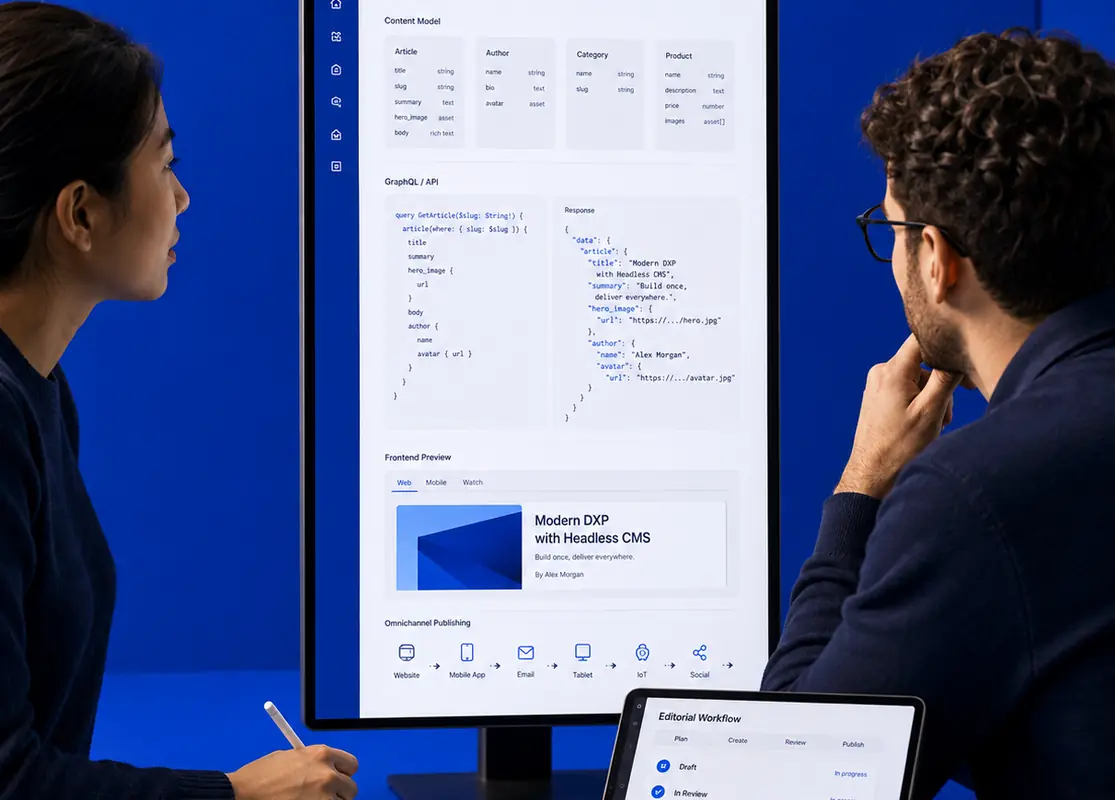
Headless works when boundaries are clear. Storefront experience, commerce logic, content, search, payments and operations should connect through explicit contracts instead of hidden plugin dependencies.
Experience layer
Web, mobile, kiosk and campaign surfaces built around each channel.
Commerce core
Products, pricing, cart, checkout, orders, customers and promotions.
Content & discovery
Editorial content, search, recommendations, merchandising and taxonomy.
Operational systems
ERP, CRM, inventory, fulfilment, returns, tax and customer service.
Delivery platform
CDN, edge caching, observability, CI/CD, security and release control.
STOREFRONT EXPERIENCE SYSTEM
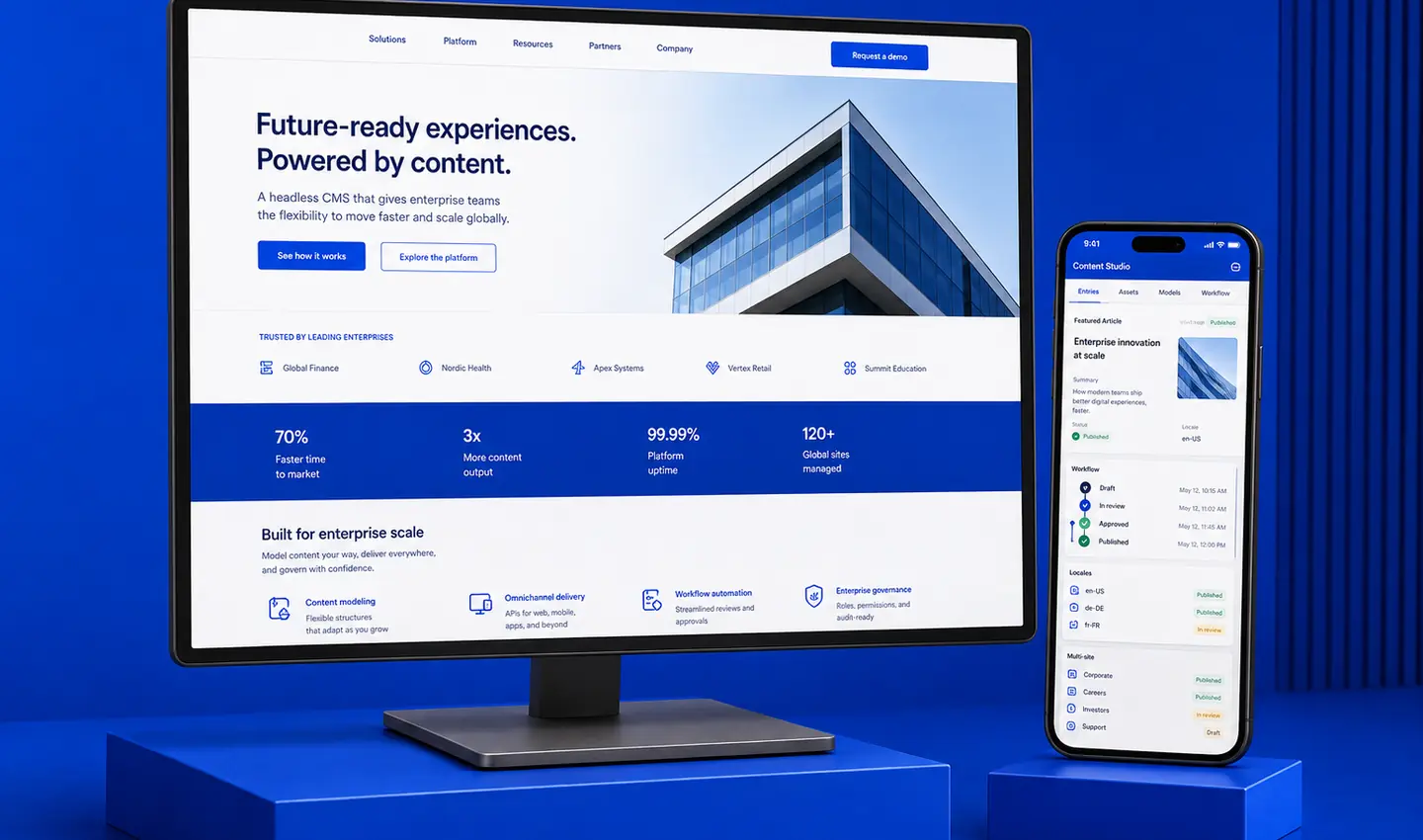
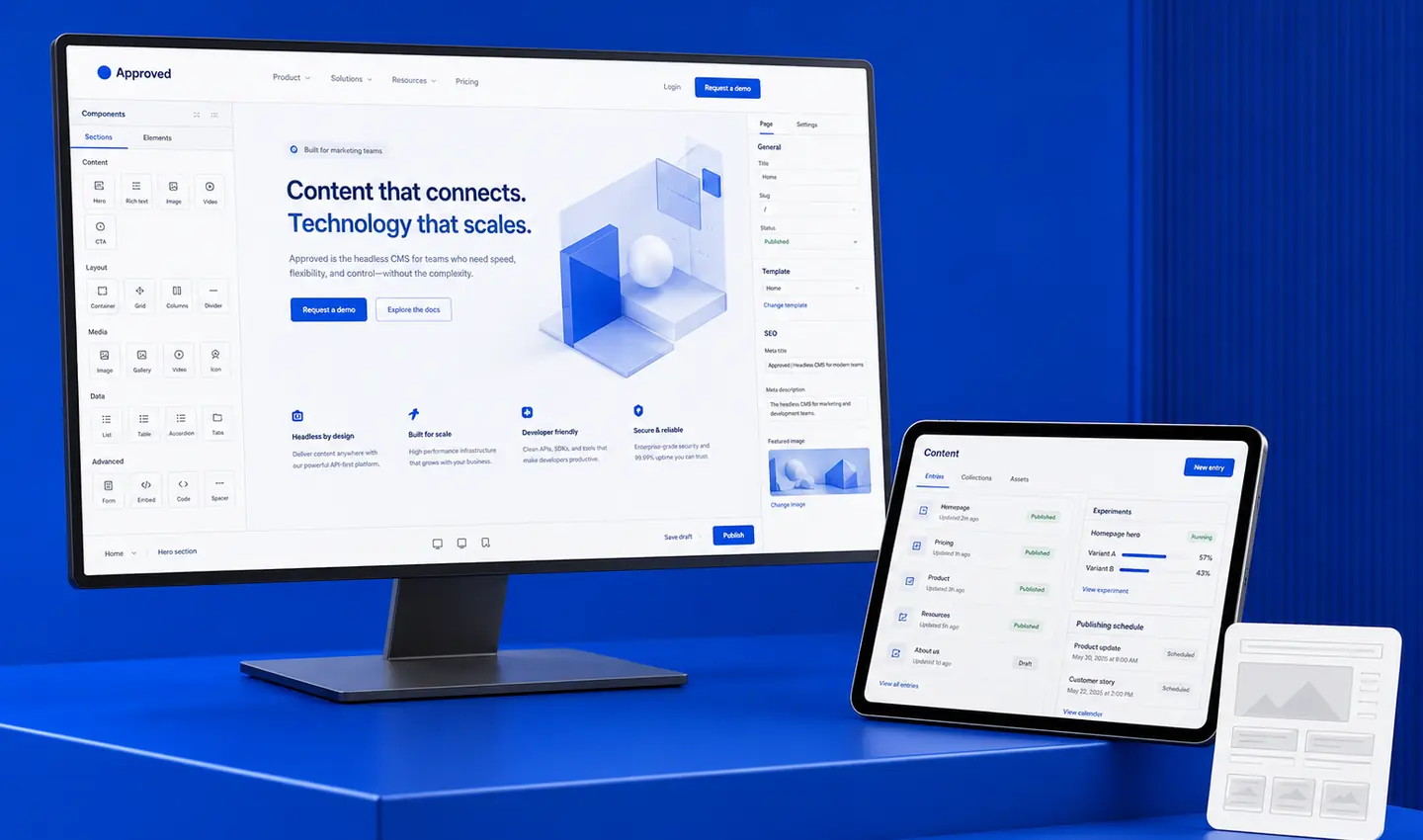
One commerce core can power very different customer experiences.
The storefront becomes a product surface rather than a theme. Teams can design channel-specific journeys while preserving shared product, pricing, inventory and order truth.
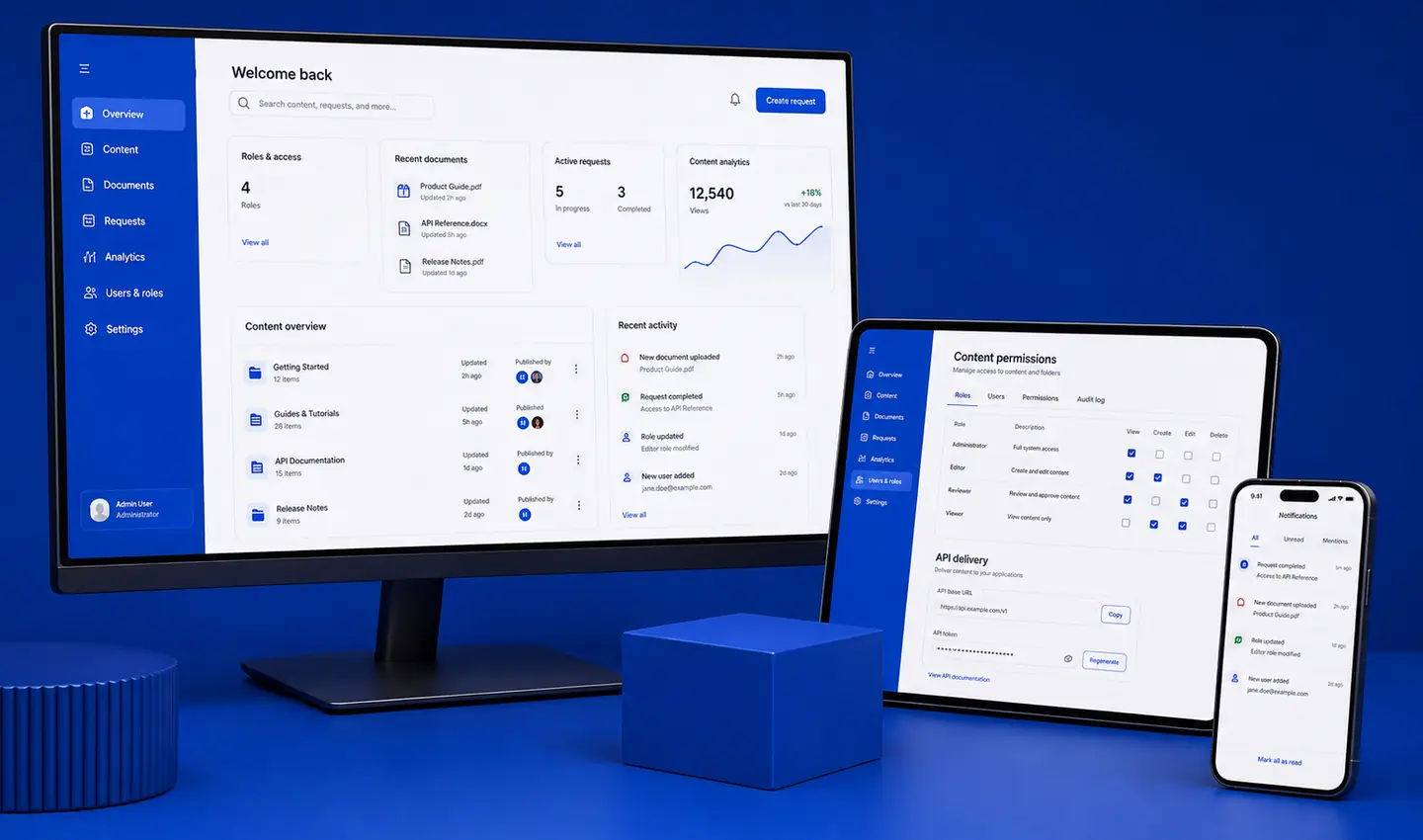
Use the frontend framework and interaction model that best fits the customer.
HEADLESS COMMERCE SERVICES
Build only the layers you need, or replace the whole experience stack.
AppsLoading can lead end-to-end transformation or work on a focused layer where storefront, platform, migration, integrations or performance need deeper support.
Headless commerce architecture
Define platform boundaries, APIs, data ownership, events, content, search and deployment responsibilities.
Custom storefront development
Build responsive, accessible storefronts with Next.js, React, Hydrogen or another suitable frontend.
Headless Shopify
Use Shopify as the commerce engine while replacing theme constraints with a custom storefront layer.
Headless WooCommerce
Keep WooCommerce for products and orders while decoupling experience delivery and content composition.
Composable integrations
Connect search, CMS, payments, tax, ERP, CRM, fulfilment, loyalty and analytics through APIs and events.
Migration and replatforming
Move from monolithic commerce while protecting catalogue, orders, SEO, customer data and operational continuity.
Performance engineering
Improve rendering, data fetching, caching, image delivery, Core Web Vitals and storefront resilience.
Ongoing platform evolution
Operate releases, monitor integrations, add markets and evolve services without turning the platform into a new monolith.
API CONTRACT
The API layer is the product boundary that keeps headless maintainable.
We define what the storefront needs, what the commerce engine owns and how external systems communicate. Clear contracts make services replaceable and failures easier to isolate.
Catalog, pricing and availability
Consistent product truth without leaking backend implementation details.
Cart state and promotions
Deterministic pricing and promotion rules across channels.
Payments, tax and shipping
Secure orchestration with explicit failure and retry states.
Identity, orders and preferences
One account model across storefronts and customer-service surfaces.
Order, inventory and lifecycle events
Asynchronous messages keep downstream systems decoupled.

STOREFRONT LAYER
The frontend should optimize for customer decisions, not backend convenience.
Headless gives teams freedom to shape discovery, editorial storytelling, product detail and account journeys around the buying model rather than the limitations of a theme.
Collection & search UX
Navigation, filters, merchandising and intent-aware product discovery.
Confidence before cart
Variants, media, delivery, stock, reviews and comparison information.
Composable landing pages
Editorial teams launch content-rich campaigns without engineering every page.
Post-purchase experience
Orders, returns, subscriptions, preferences and customer support journeys.
PRODUCT DISCOVERY & SEARCH
Decouple discovery from the catalogue database.
Large catalogues need search, filtering, merchandising and recommendation behavior that can evolve independently from the transaction engine.
Search index
Optimized searchable representation of products, variants, content and availability.
Filter strategy
Attributes designed around how customers actually narrow a buying decision.
Merchandising rules
Campaign boosts, ranking logic, manual curation and business-driven ordering.
Recommendations
Related products, cross-sell and personalized discovery where data supports it.


CHECKOUT ORCHESTRATION
Keep checkout fast while the transaction layer stays reliable.
Checkout is where storefront performance meets payments, tax, shipping, fraud, inventory and order creation. We design explicit states so customers and operators know what happened.
Validate cart
Reconfirm inventory, pricing, promotions and customer context before payment.
Resolve delivery & tax
Calculate shipping options, addresses, tax rules and region-specific constraints.
Authorize payment
Handle success, decline, timeout, retry and authentication states intentionally.
Create order once
Idempotent order creation prevents duplicate transactions during retries.
Publish events
Notify fulfilment, CRM, analytics and service systems after the source of truth commits.

CONTENT + MERCHANDISING
Commerce content should publish without waiting on product-engine releases.
A headless CMS can own editorial storytelling while the commerce engine owns transaction truth. The storefront composes both at runtime or build time.
Reusable content models
Campaigns, guides, navigation and product education across channels.
Preview before publish
Give editors confidence without exposing commerce internals.
Market-specific content
Regional messaging and approved variations without duplicating the entire site.
Roles and workflow
Control who can edit, approve and publish high-impact commerce content.
OMNICHANNEL COMMERCE
Reuse commerce capabilities without forcing every channel to look the same.
One product and order foundation can support purpose-built experiences for web, mobile, assisted sales, marketplaces and future touchpoints.

WEB STOREFRONT
High-performance brand experience.
Editorial storytelling, product discovery and transaction flows designed for the web channel.

MOBILE / APP
Commerce APIs reused in native and mobile experiences.

ASSISTED / B2B
Role-specific commerce for sales, buyers and service teams.
GLOBAL COMMERCE
Global does not mean one identical store copied across markets.
Market architecture should distinguish what is global truth from what must vary locally: pricing, tax, payment methods, language, assortment, content and fulfilment.
Regional assortment
Control which products and variants are available in each market.
Currency & price books
Support regional pricing logic instead of simple currency conversion.
Local payment methods
Offer the methods customers expect in each country or region.
Localization workflow
Translate and adapt editorial content with market-level governance.
Regional inventory
Route stock, delivery and returns around real operational locations.
Tax & policy rules
Model legal and operational differences without branching the whole platform.

OPERATIONS & INTEGRATIONS
Headless should simplify change, not create another integration maze.
We define data ownership and event flow across inventory, ERP, CRM, fulfilment, customer service and analytics so operations remain understandable after the storefront is decoupled.
Inventory
Availability, reservations, stock events and multi-location rules.
ERP / OMS
Orders, invoices, fulfilment state and operational source-of-truth integration.
CRM / CDP
Customer identity, lifecycle events, segmentation and consent.
Search / CMS
Derived indexes and content services fed from governed upstream systems.
Events
Asynchronous order, inventory and customer events with retries and observability.
Analytics
Consistent commerce events across channels and backend lifecycle states.
HEADLESS MIGRATION BLUEPRINT
Move in stages instead of betting the business on one cutover.
A staged migration can protect trading continuity while storefront, APIs and integrations are replaced behind controlled boundaries.
Map current commerce responsibilities
Products, pricing, checkout, orders, content, search, integrations and operational ownership.
Choose the first layer to decouple
Often the storefront, but not always. Start where value and risk justify change.
Stabilize APIs and events
Create contracts that both the old and new experience can depend on.
Validate data, SEO and transaction behavior
Compare outputs before customer traffic fully shifts.
Move traffic with rollback readiness
Monitor conversion, errors, latency and operational reconciliation after launch.


PERFORMANCE & EDGE DELIVERY
Fast storefronts come from architecture, not only a new frontend framework.
We profile the entire request path: rendering, API latency, cacheability, image delivery, third-party scripts and backend dependencies.
Choose static, server, edge or client rendering per route and data need.
Cache product and content safely without serving stale transaction state.
Reduce waterfalls, batch requests and isolate slow upstream services.
Responsive formats, sizing and CDN delivery for product-heavy pages.
Control analytics, marketing and third-party execution cost.
Measure real-user latency, API failures and conversion-critical errors.
HEADLESS COMMERCE DIRECTIONS
Different commerce models need different composable boundaries.
The architecture for a campaign-heavy D2C brand should not be copied into a B2B ordering portal or a multi-region enterprise programme.

D2C & LIFESTYLE
Editorial merchandising with a custom storefront layer.
Campaign velocity, rich content, fast product discovery and frequent frontend releases.

B2B & PORTALS
Account-aware ordering with pricing, approvals and ERP integration.

GLOBAL ENTERPRISE
Markets, regions and channels sharing governed commerce foundations.
HEADLESS COMMERCE TECHNOLOGY
Use specialized tools where specialization creates real value.
A composable stack should reduce constraints without turning the platform into a collection of disconnected vendors.
 ShopifyCommerce engine, checkout, products, orders and Storefront APIs.
 WooCommerceOpen commerce engine for WordPress-centered ecosystems.
 Next.jsModern storefront rendering, routing and edge delivery.
 ReactComponent-based experience layer for custom storefronts.
 GraphQLFlexible storefront queries and typed commerce contracts.
 StripePayments, wallets, subscriptions and payment lifecycle events.
 AlgoliaFast product search, filtering and discovery experiences.
 VercelFrontend delivery, previews, edge execution and deployment workflow.

DELIVERABLES LEDGER
What your product and engineering teams receive.
Architecture blueprint
System boundaries, ownership, API contracts, events, deployment and integration responsibilities.
Storefront application
Responsive frontend with product, content, cart, checkout and account journeys.
Integration contracts
Documented behavior for commerce, CMS, search, payments and operational systems.
Migration plan
Catalogue, content, SEO, customer and operational cutover sequence with validation gates.
Performance baseline
Targets, profiling results, caching strategy, Core Web Vitals and API latency visibility.
Operational runbook
Monitoring, ownership, deployment, rollback, incident and service dependency documentation.
HEADLESS COMMERCE DELIVERY PROCESS
Make architecture decisions before implementation makes them expensive.
The delivery model keeps commercial goals, experience, integration ownership and release risk visible at every stage.
Discover
Business model, customers, catalogue, channels, regions and existing systems.
Architect
Choose boundaries, platforms, APIs, data ownership and release model.
Build
Implement storefront, services, integrations and operational workflows.
Validate
Test transactions, integrations, SEO, performance, failure paths and reconciliation.
Launch & evolve
Move traffic, monitor production and improve channels without rebuilding the core.
ENGAGEMENT MODELS
Bring AppsLoading in where the complexity actually is.
Engagement can cover the complete headless programme or one layer where your internal team needs specialist support.
Architecture sprintPlatform and boundary decisions
Storefront buildFrontend experience delivery
Migration programmeControlled replatforming
Integration squadAPIs, events and operations
Optimization retainerPerformance and evolution
COST DRIVERS
Headless cost follows system complexity, not page count.
We scope around the number of commerce domains, integrations, channels, markets and operational constraints that need to work together.
Commerce enginePlatform and customization depth
StorefrontsNumber of channels and experiences
IntegrationsAPIs, events and data ownership
MarketsRegions, currencies and localization
Migration riskData, SEO and continuity
When is headless commerce the right choice?
Headless is most useful when storefront experience, release velocity, omnichannel delivery, integrations or regional complexity justify separating the customer experience from the commerce engine.
When should we stay with a traditional commerce setup?
If the current platform meets experience needs, the catalogue is straightforward and the team does not need independent frontend releases, a simpler architecture may be easier to operate.
Does headless automatically improve conversion?
No. Headless creates technical freedom. Conversion improves when that freedom is used to create faster, clearer customer journeys and those changes are measured properly.
Can Shopify be used as a headless commerce engine?
Yes. Shopify can manage products, checkout, orders and commerce operations while a custom storefront uses Storefront APIs, Hydrogen, Next.js or another frontend approach.
Can WooCommerce be used headlessly?
Yes. WooCommerce APIs can support a decoupled storefront, especially where WordPress content and open platform ownership remain important.
Do we need a headless CMS as well?
Not always. A separate CMS is useful when editorial content, campaign velocity, localization or multi-channel publishing requires its own workflow.
How do you avoid creating too many integrations?
We define clear system ownership, use integration boundaries intentionally and prefer stable contracts over direct point-to-point dependencies wherever possible.
Do you support GraphQL and REST APIs?
Yes. The choice depends on platform capabilities, storefront data needs, caching strategy, team experience and operational requirements.
Can you integrate ERP, CRM and fulfilment systems?
Yes. Integrations can use APIs, webhooks, middleware or event-driven patterns depending on how each system exposes and owns data.
Can you migrate an existing store to headless commerce?
Yes. Migration can be phased so the storefront is replaced while the commerce engine and operational systems continue running until each boundary is validated.
How do you protect SEO during a headless migration?
We preserve crawlable rendering, routing, metadata, canonicals, redirects, structured data and internal linking, then validate the new storefront before and after cutover.
Will headless commerce always be faster?
No. Performance depends on rendering strategy, APIs, caching, images, scripts and backend latency. We treat performance as an engineering discipline rather than a framework promise.
How long does a headless commerce project take?
A focused storefront build may take weeks, while multi-region migrations with several integrations can require multiple delivery phases. Discovery is used to create a responsible plan.
Can you work with our internal engineering team?
Yes. AppsLoading can own a complete stream or work with internal product, commerce, platform, DevOps and operations teams around defined boundaries.
Do you provide support after launch?
Yes. Support can include storefront optimization, integration maintenance, monitoring, market expansion, new services and ongoing architecture evolution.
READY TO GO HEADLESS?
Build a commerce platform that can change without forcing every layer to change with it.
Share your current stack, channels, integration constraints and growth plans. AppsLoading will help define the right decoupling strategy and delivery path.
Custom storefrontsComposable APIsOmnichannel deliveryMigration planning
