



What belongs on the wrist?
Keep only actions and information that benefit from immediate access.
AppsLoading designs and develops wearable applications for Apple Watch, Wear OS, fitness devices, healthcare platforms and connected ecosystems. From sensor data and companion apps to alerts, activity tracking, secure cloud sync and device integrations, we build focused experiences that feel fast and useful.
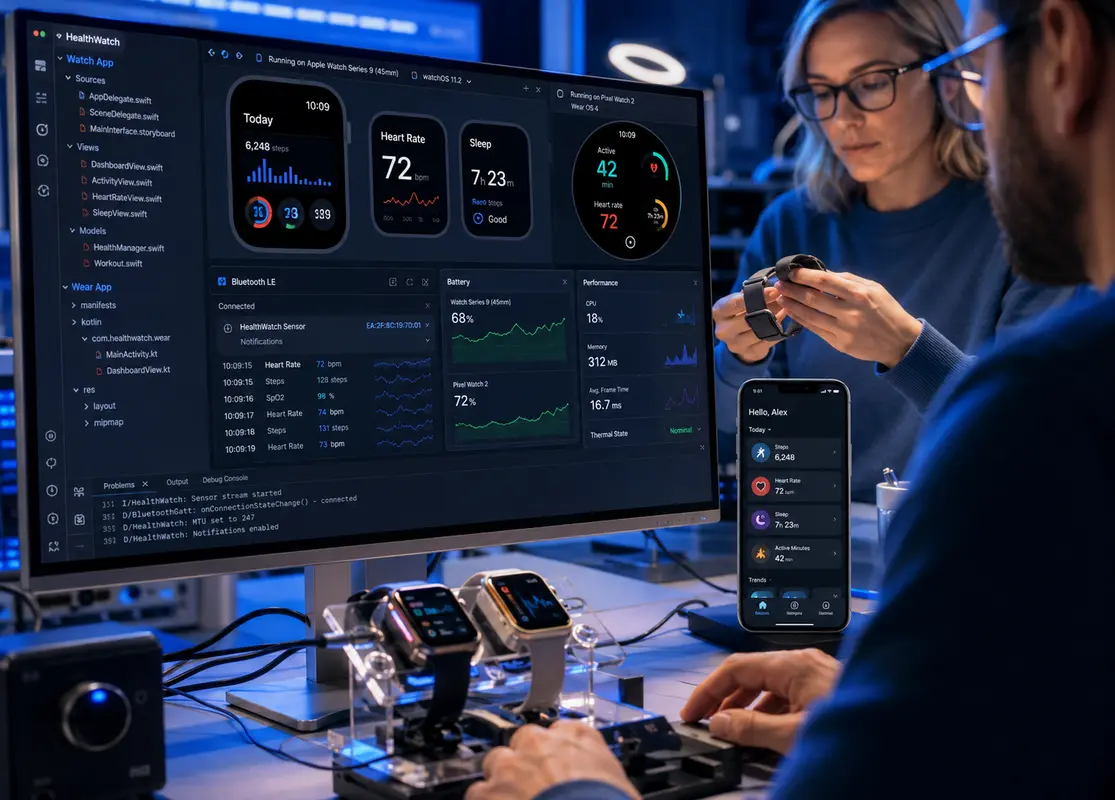
Wearables are constrained by screen size, battery, connectivity and attention. The product succeeds when each interaction earns its place.
Keep only actions and information that benefit from immediate access.
Move setup, deeper analytics and long workflows to the phone.
Define sensor frequency, alerts and sync behavior before implementation.
Design local state, deferred sync and failure handling from the start.
Engagements can cover one device experience or the complete wearable ecosystem across mobile, cloud, sensors and operations.
watchOS experiences for alerts, health, fitness, productivity and quick actions.
Responsive smartwatch apps, tiles, complications and device services for Android ecosystems.
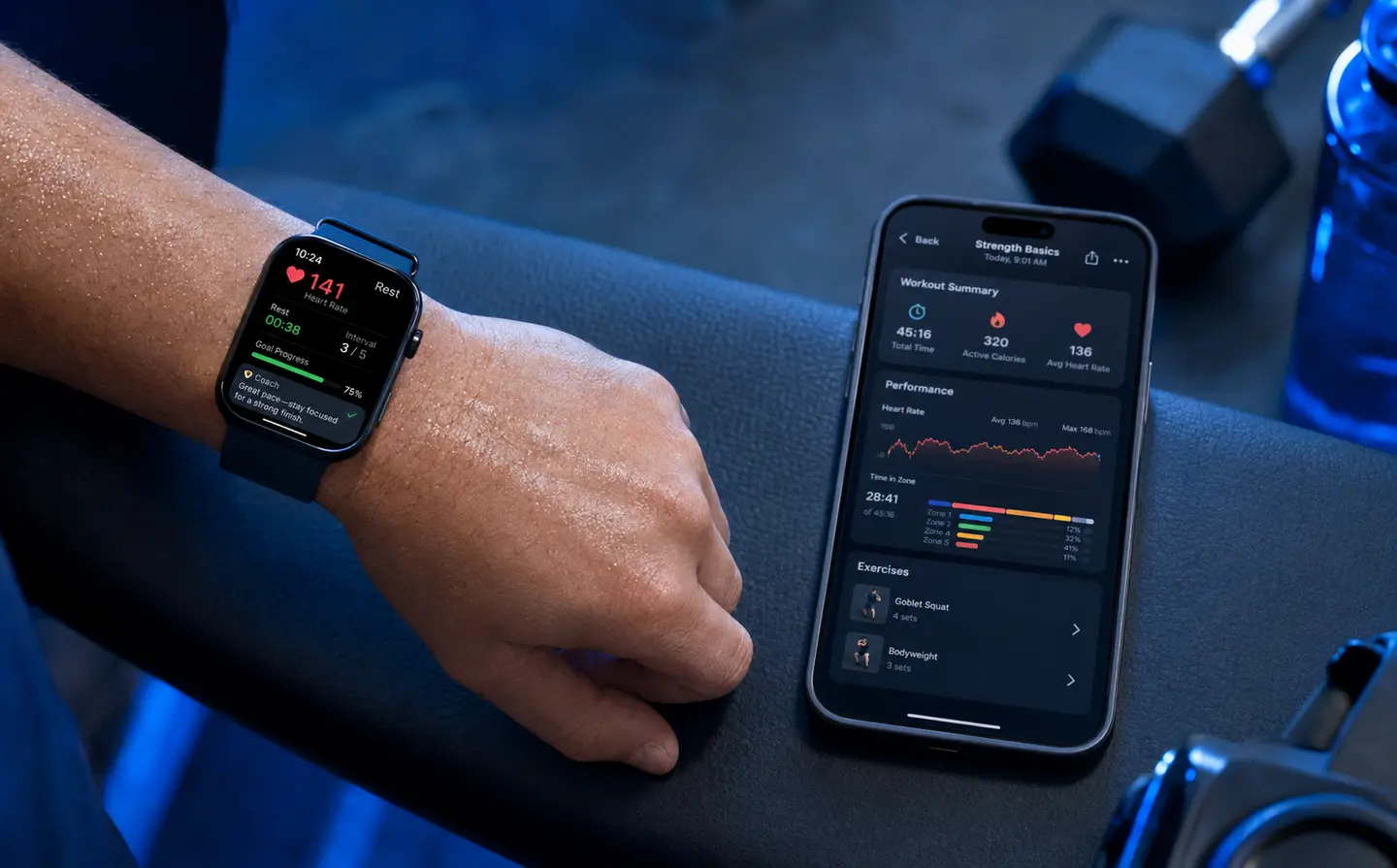
Activity tracking, workouts, goals, sleep, coaching and progress feedback.
Secure monitoring, clinical alerts, remote data and permission-aware health workflows.
Setup, account management, analytics, device configuration and richer product flows.
Pair devices, synchronize signals and manage connected hardware reliably.
Reduce expensive background work, sensor usage, sync and rendering overhead.
Support new OS releases, hardware changes, analytics and product expansion.
Device, sensors, phone, cloud and analytics need explicit responsibilities and reliable data contracts.
Strong wearable products manage those constraints deliberately instead of treating the watch like a smaller phone.
Keep the interaction understandable in a few seconds.
GlanceableSchedule sensors, networking and background work carefully.
EfficientExpect intermittent phone, cloud and Bluetooth availability.
ResilientAsk for sensitive health or device access only when the value is clear.
TrustedPrioritize one action or insight instead of shrinking mobile UI.
Focused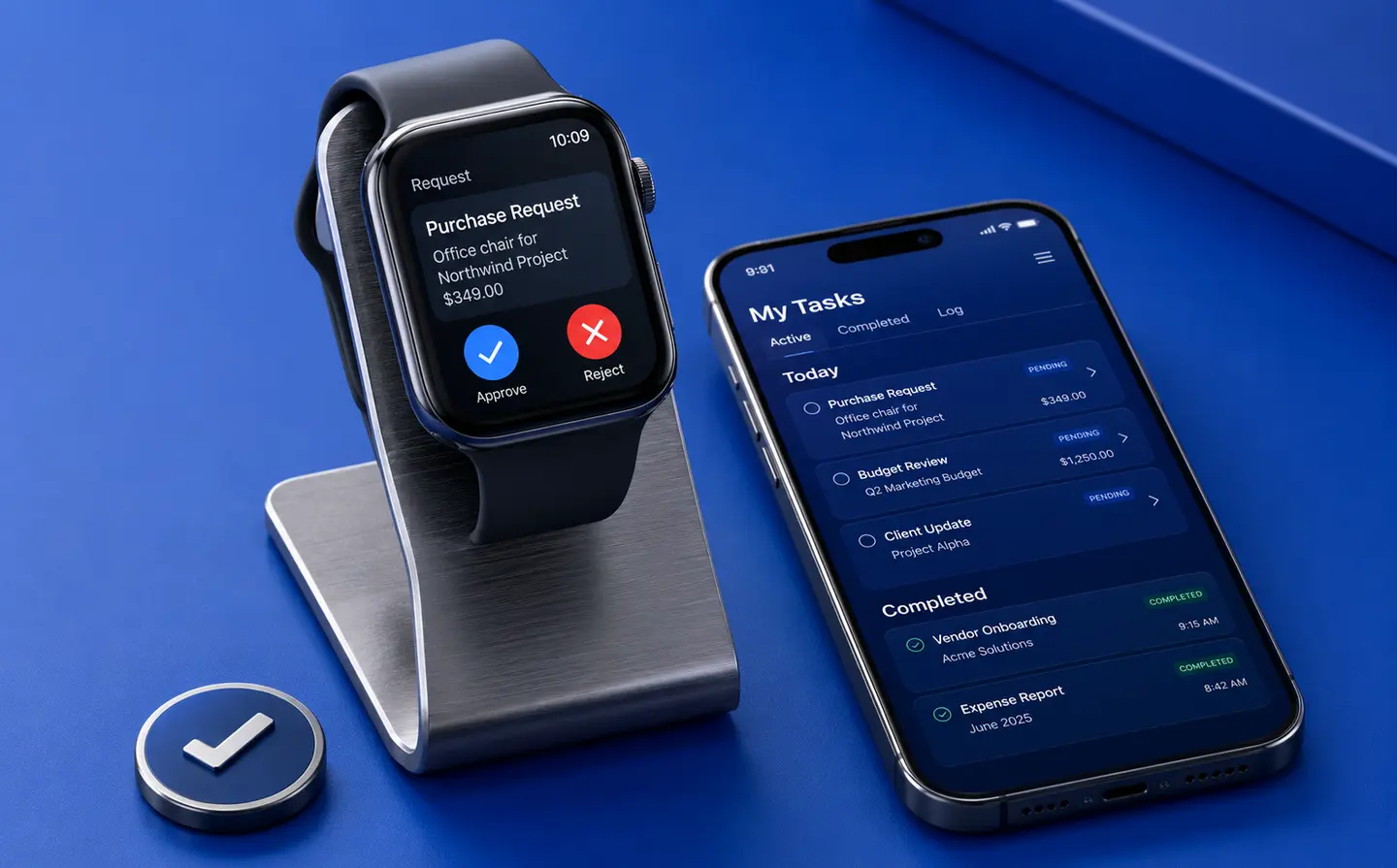
Setup, deep analytics, settings and account flows remain accessible without overloading the wearable.
A companion architecture keeps device interactions fast while giving users a richer place to configure, explore and understand their data.
Pair hardware, permissions and accounts with clearer mobile guidance.
Show trends, history and richer visualizations beyond the watch screen.
Manage preferences, sync, notifications and firmware-related controls.
Keep complex commerce, support and profile interactions on mobile.
Sensor capture, local processing, Bluetooth transfer, cloud sync and analytics all need clear failure and retry behavior.
Heart rate, motion, location or device signal.
Filter, aggregate and decide what needs to move.
Transfer data with retry and conflict handling.
Turn signals into useful feedback or operations.
Architecture should follow the interaction model, data sensitivity and hardware dependency rather than a generic smartwatch template.
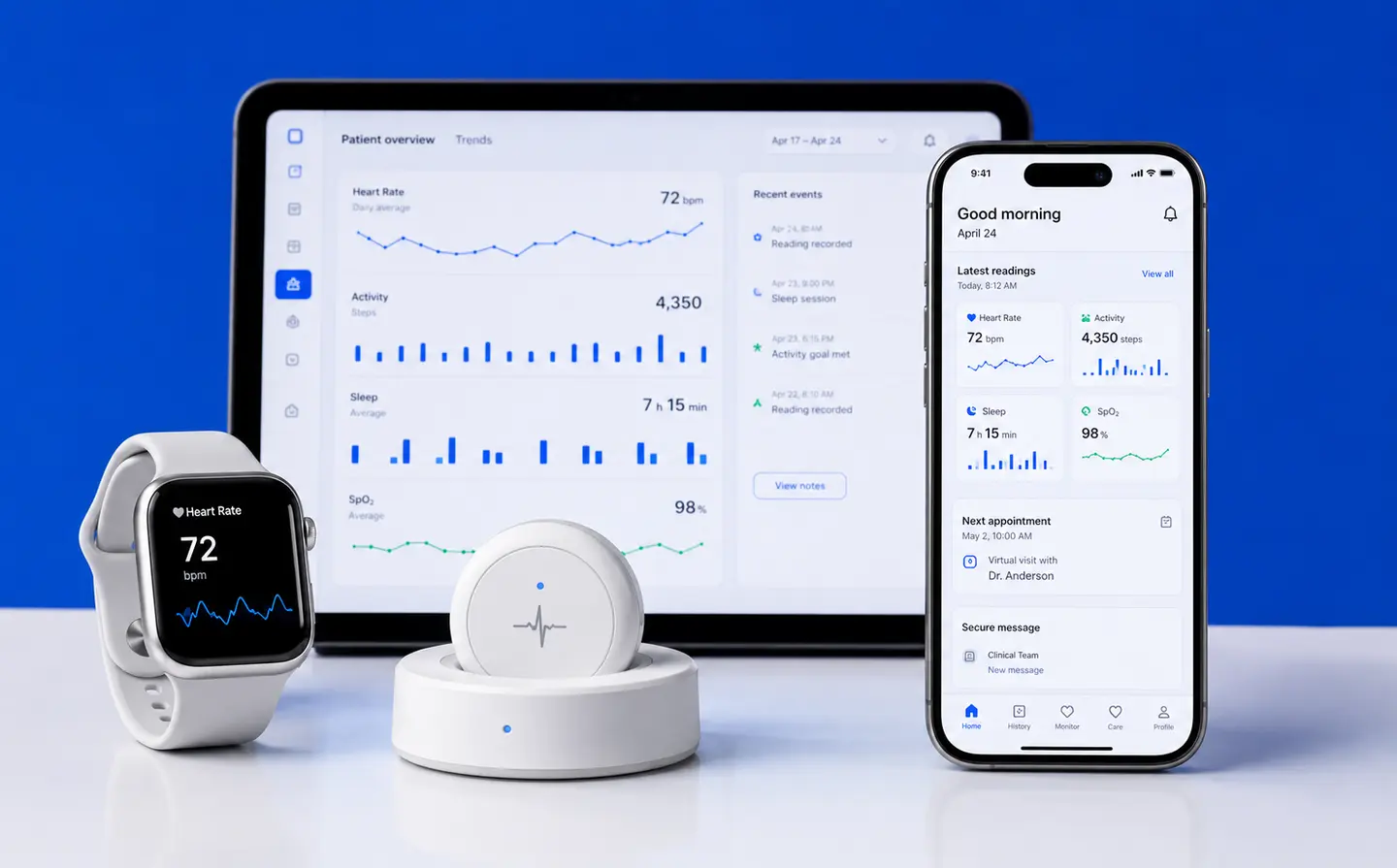
Workouts, goals, activity rings, sleep signals, coaching and progress feedback across wearable and companion app.
Useful when data can influence clinical or care decisions.
Useful when immediate access matters more than deep interaction.
Useful for status, pairing, control and live telemetry.
Apple Watch, Wear OS and companion-first architectures are not interchangeable. The right option depends on sensors, market, UI depth and hardware ecosystem.
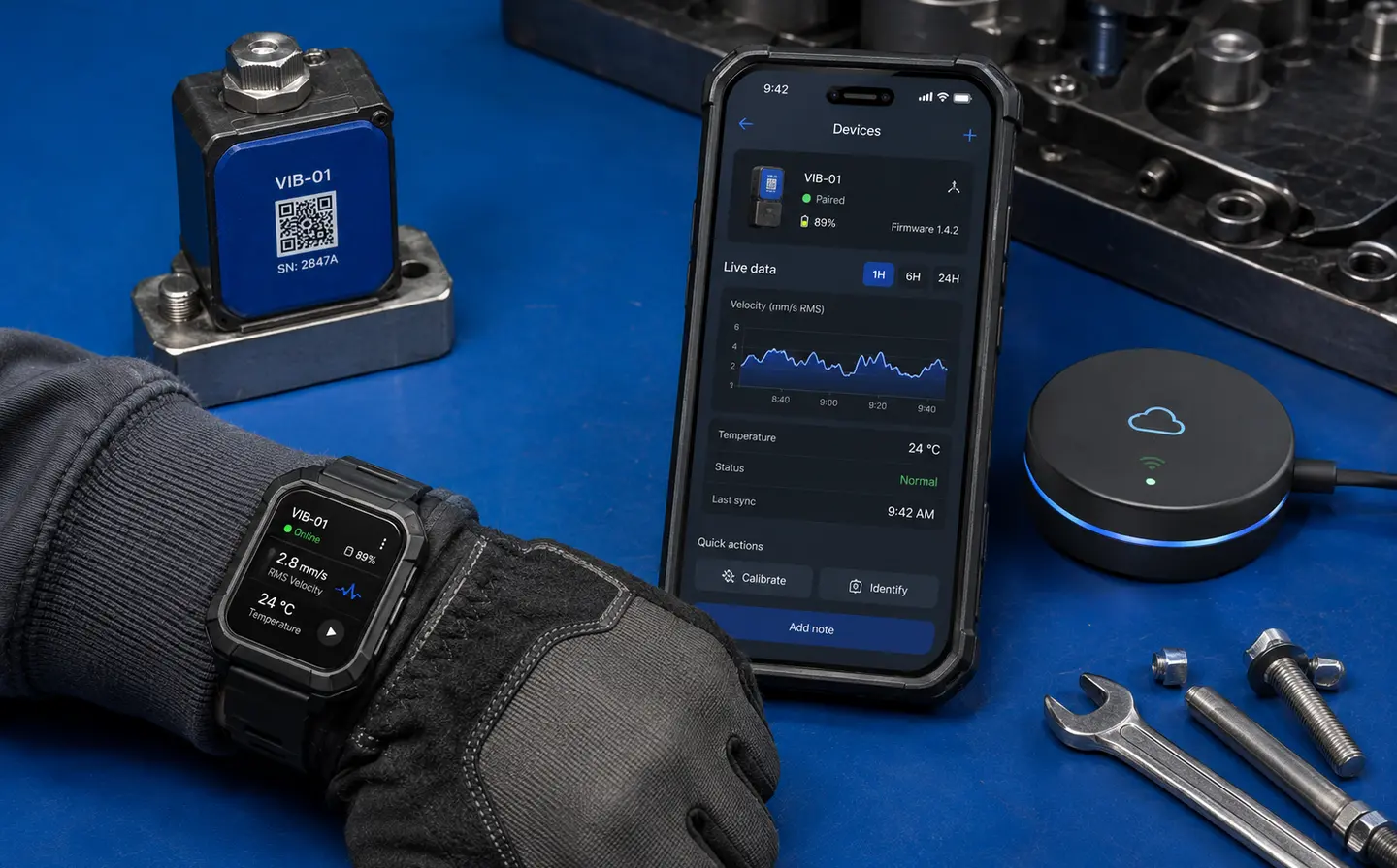
Wearable failures often appear in battery behavior, Bluetooth handoffs, sensor timing and OS-specific constraints that simulators do not reproduce faithfully.
We choose technology around platform capability, battery cost, native integration depth and the long-term product roadmap.
The process keeps product scope, hardware constraints, native APIs and release readiness connected from the beginning.
Define user moments, devices, sensors, health data, companion flows and product constraints.
Validate glanceability, navigation, alerts and the split between wrist and phone.
Define local state, cloud services, APIs, sync, permissions and data ownership.
Implement wearable UI, sensors, Bluetooth, companion app and backend services.
Test battery, connectivity, permissions, sensor behavior and OS versions.
Release, monitor crashes and sync failures, then prioritize product growth.
A simple notification companion is very different from a health product with continuous sensors, Bluetooth hardware and cloud analytics.
Apple Watch only, Wear OS only or both platforms.
HealthKit, Health Connect, motion, location or proprietary device SDKs.
Setup, analytics, accounts, subscriptions and device management.
Pairing, firmware behavior, live telemetry and reconnection logic.
APIs, data processing, dashboards, notifications and history.
Device matrix, battery profiling, health data quality and release support.
Launch criteria should include battery, permissions, sync, hardware behavior and production diagnostics.
The strongest use cases benefit from continuous data, hands-free access, alerts or interactions that should happen without opening a phone.
Workouts, recovery, sleep, coaching and activity feedback.
HealthKit · Health Connect · SensorsRemote monitoring, clinical alerts and patient engagement.
Consent · Monitoring · Secure SyncHands-free notifications, approvals, safety and task confirmation.
Alerts · Workflow · OfflineStatus updates, scanning, routing signals and operational alerts.
Location · Events · ConnectivityControl, telemetry, pairing and companion product experiences.
BLE · IoT · Cloud APIsReminders, quick actions, approvals and focused daily utilities.
Notifications · Complications · TilesAppsLoading supports wearable product strategy, smartwatch UX, native watchOS and Wear OS engineering, companion mobile applications, Bluetooth Low Energy integration, HealthKit and Health Connect, cloud APIs, analytics, device testing, performance optimization and post-launch maintenance. The architecture is shaped around device capabilities, sensor frequency, permissions, battery consumption, offline behavior, synchronization and the product's long-term roadmap.
Native watchOS applications using Swift and SwiftUI, including complications, notifications, HealthKit, Core Motion and Watch Connectivity.
Native Wear OS applications using Kotlin and Compose for Wear OS, with tiles, complications, Health Connect and Android device APIs.
Health, activity, workout and monitoring experiences with permission-aware data flows, sensor validation and secure synchronization.
Bluetooth Low Energy pairing, device state, telemetry, commands, reconnect behavior and cloud-connected hardware workflows.
We develop for Apple Watch, Wear OS and connected wearable ecosystems based on device capability and product requirements.
A wearable app is valuable when users benefit from real-time alerts, quick actions, continuous data or hands-free access.
Yes, depending on the platform, connectivity, hardware and product architecture. Some experiences can operate independently.
The choice depends on target users, device adoption, required sensors, companion apps and product strategy.
watchOS applications are commonly built with Swift, SwiftUI, HealthKit, Core Motion and Watch Connectivity.
Yes. A shared backend can manage accounts, analytics, notifications, device data and synchronization across platforms.
We optimize sensor frequency, background work, network requests, sync timing and screen updates.
Yes. Heart rate, movement, location and other supported signals can be processed and synchronized in real time where platform rules allow.
Yes. Bluetooth Low Energy can support pairing, data transfer, device status and control.
Yes. We can modernize the UI, update SDKs, improve battery use, fix compatibility and add new features.
Yes, subject to permissions and platform rules. Existing backend data and user accounts can usually remain intact.
Yes. We support signing, testing, metadata, submissions and release monitoring.
Cost depends on devices, sensors, companion apps, backend services, integrations, security and timeline.
Yes. We can prioritize one device, core interactions and essential data flows for initial validation.
Yes. Support can include OS compatibility, device testing, analytics, performance optimization and new features.
Share your wearable idea and receive a practical recommendation covering platform, sensors, architecture, testing and rollout.
Start your wearable project →