


Release velocity is falling
Small product changes require disproportionate engineering effort or risky regression work.
AppsLoading modernizes established apps, websites and software through a controlled combination of UX redesign, code refactoring, architecture improvement, cloud migration, performance engineering and product evolution. We preserve stable business value, reduce technical risk and create a cleaner foundation for future releases.
A mature product usually contains both proven value and accumulated friction. We separate those two before changing technology, UX or infrastructure.
Small product changes require disproportionate engineering effort or risky regression work.
Navigation, accessibility, responsive behavior or workflow design no longer matches user expectations.
Scaling, deployment, monitoring or environment management makes product growth harder than it should be.
Unsupported libraries, fragile integrations and legacy data models increase security and reliability exposure.
The architecture no longer supports the product roadmap without repeated workarounds.
Each capability is assessed independently so stable business value can stay in place while high-risk or high-friction areas are changed deliberately.
Stable workflows, data or services that remain reliable and economical.
Strengthen UX, code quality, performance and testing without replacing the whole capability.
Change frameworks, cloud services or runtime architecture while protecting behavior and data.
Recreate modules where incremental improvement no longer makes technical or commercial sense.
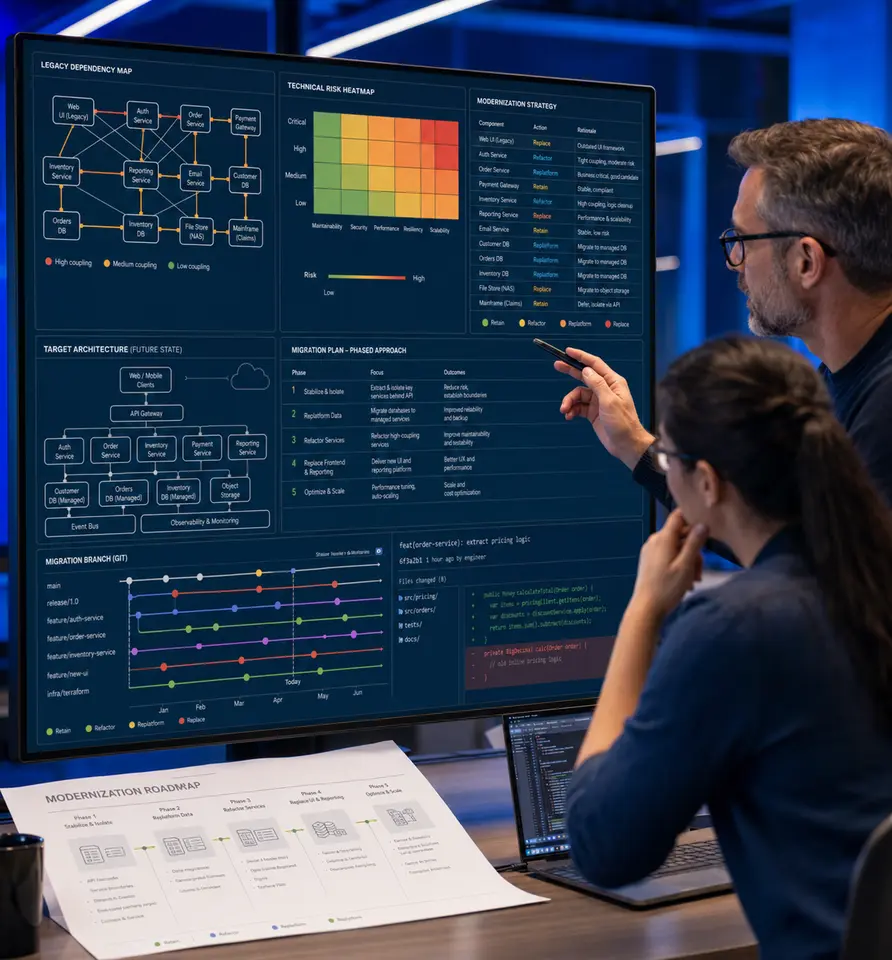
Map user friction, technical debt, architecture risk, performance bottlenecks, data constraints and modernization dependencies.
Improve product structure, responsive behavior, accessibility and critical journeys without discarding useful interaction patterns users already understand.
Reduce structural complexity, isolate fragile modules, strengthen testability and create clearer boundaries for future engineering.
Move workloads, interfaces or services to a more maintainable foundation while preserving business behavior, data and continuity.
Modernize schemas, APIs, data flows and external integrations so the product can evolve without brittle handoffs.
Address slow interactions, unstable runtime behavior, vulnerable dependencies and weak operational visibility before they become business incidents.
The target state is not simply newer technology. It should reduce the cost and risk of every future product decision.
The right programme depends on where the actual constraint sits: experience, code, architecture, infrastructure, data or all of them together.
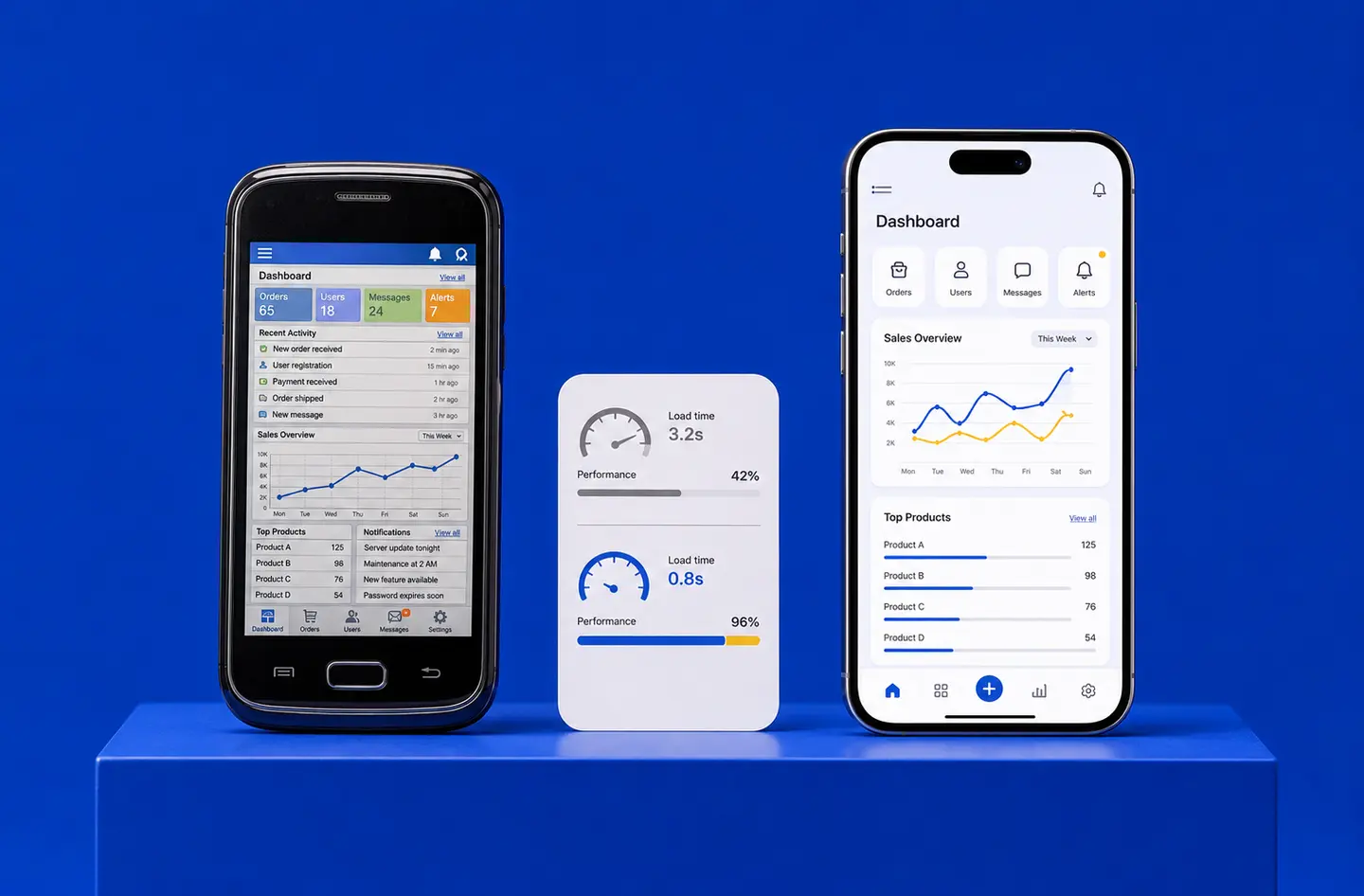
Modernize navigation, platform behavior, performance, dependencies and release workflows without forcing users through unnecessary product disruption.
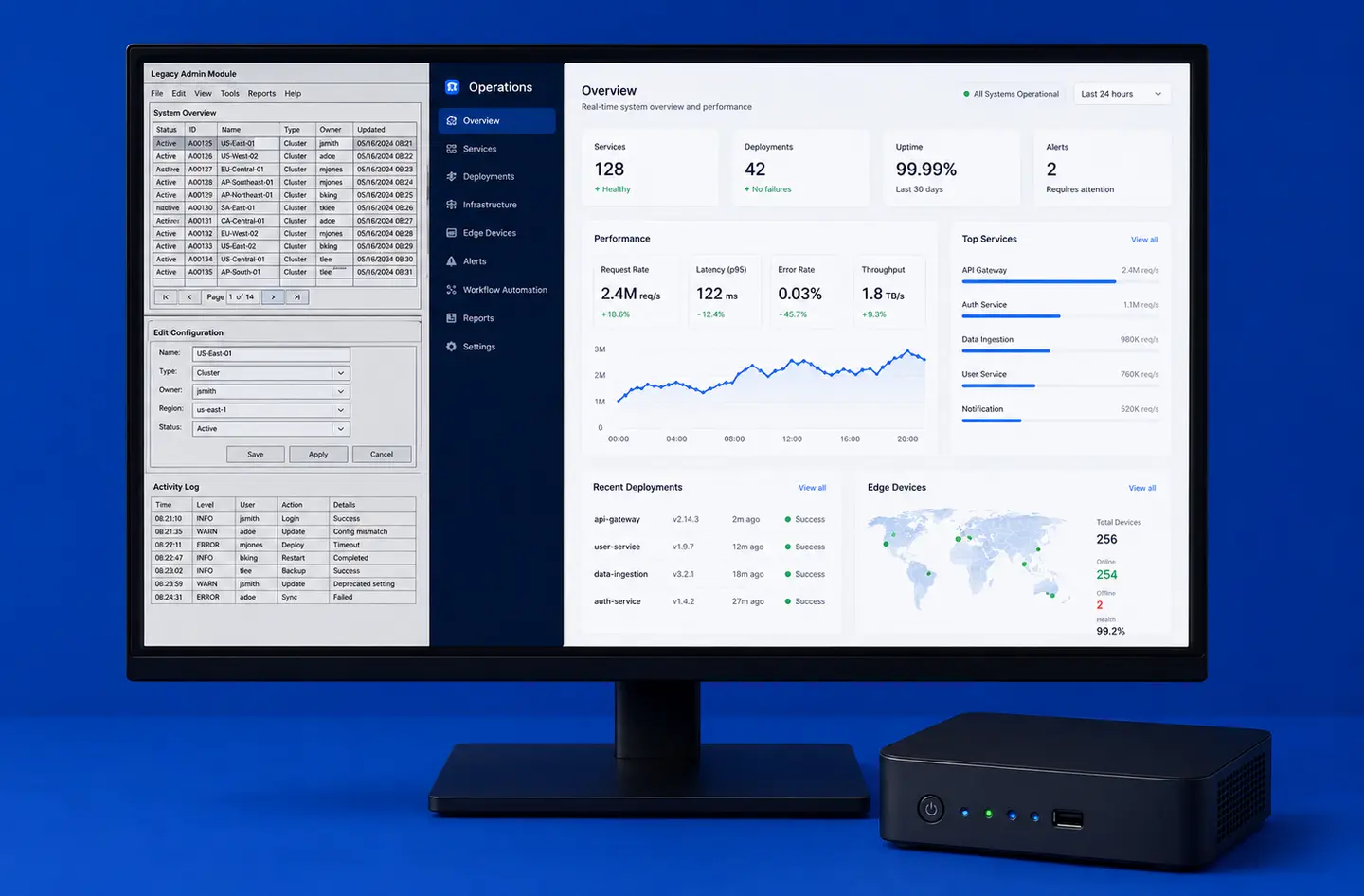
Rework frontend architecture, rendering, APIs and operational tooling so teams can ship more safely and users experience less friction.
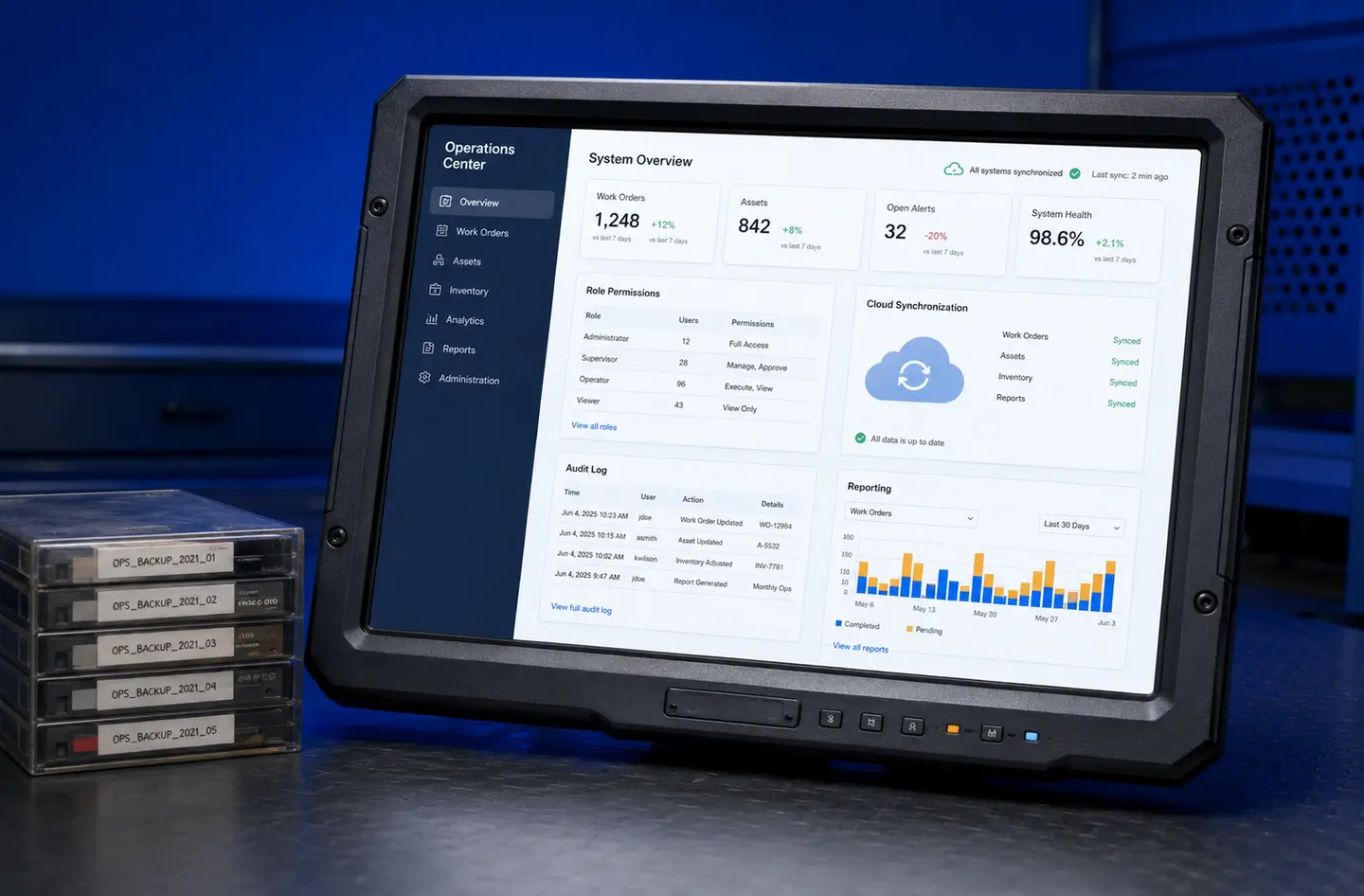
Separate high-risk modules, modernize permissions, improve reporting and migrate infrastructure in stages that protect day-to-day operations.
Reduce the chance of incidents before larger architectural change begins.
Output: risk baselineEstablish the foundation needed to move safely without improvising during cutover.
Output: target-state blueprintPrioritize modules and journeys based on business value, risk and technical dependency.
Output: controlled releasesCompare data, functionality, performance and operational outcomes before full cutover.
Output: acceptance evidenceUse staged exposure, production telemetry and defined recovery paths.
Output: release readinessRemove old systems after data, users and operations have moved safely.
Output: legacy retirementModernization is successful when it changes product and engineering behavior, not simply when the framework version is newer.
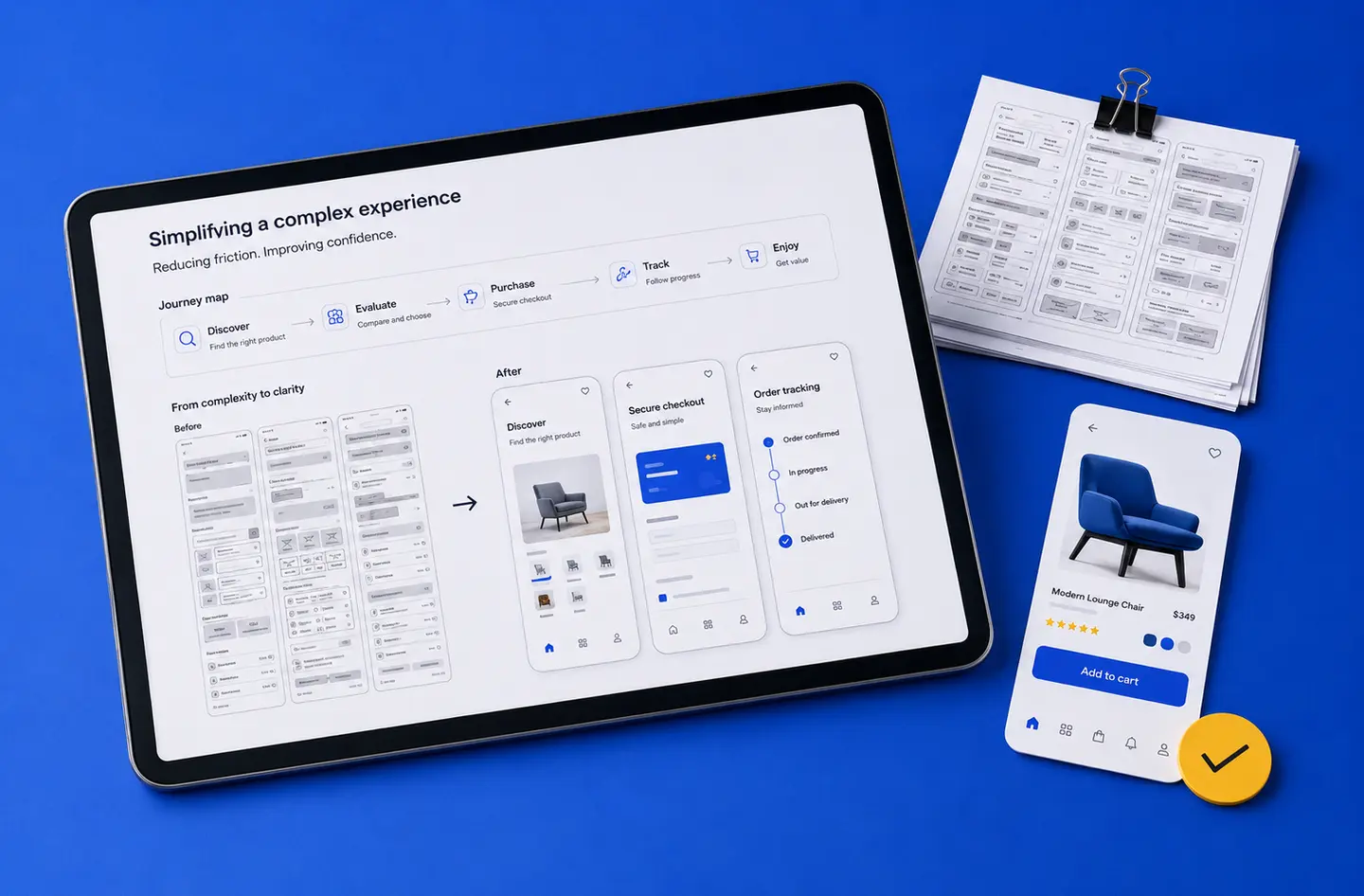
Reduce friction without erasing familiar product value.
Measure startup, rendering, API latency and runtime reliability.
Improve architecture boundaries, testing and deployment practices.
Strengthen monitoring, logging, alerting and incident context.
Reduce the structural friction behind new product work.
There is no universal modernization stack. We choose tools based on the existing product, target architecture, team capability and migration constraints.
 React
React Next.js
 Flutter
 TypeScript
 Node.js
 .NET
.NET Python
 GraphQL
 PostgreSQL
 MongoDB
 Redis
Redis Elasticsearch
 AWS
AWS Azure
Azure Docker
 Kubernetes
Every stage creates a concrete decision or artifact so modernization stays governable instead of turning into an open-ended rewrite.
Understand users, workflows, code, data, infrastructure and business constraints.
Output: modernization baselinePrioritize retain, improve, replatform and rebuild decisions by value and risk.
Output: treatment matrixCreate target journeys, technical boundaries, data flows and migration strategy.
Output: target-state blueprintDeliver product, code, data and infrastructure change in measurable increments.
Output: working releasesConfirm behavior, performance and operational readiness before legacy retirement.
Output: cutover evidenceThe migration path changes when products handle regulated data, physical operations, financial transactions or high-volume customer activity.


Product modernization improves an existing digital product across user experience, code, architecture, infrastructure, data and delivery practices while protecting the business value users already depend on.
We assess business value, code condition, architecture, migration dependencies, user impact and long-term roadmap before recommending retain, improve, replatform or rebuild for each capability.
Yes. A programme can focus on UX, code quality, performance, cloud infrastructure, data, integrations or another high-priority constraint without replacing the entire product.
Yes. Parallel operation is often useful when data, integrations or business continuity make a single cutover too risky.
We use phased releases, environment preparation, data validation, monitoring, rollback planning and cutover rehearsals appropriate to the system.
Risk is managed through dependency mapping, staged delivery, acceptance criteria, automated testing, reconciliation and production observability.
Yes. Useful conventions can remain while hierarchy, navigation, responsive behavior, accessibility and task flows are improved around current user needs.
User interviews, workflow analysis and usability testing can be included where they materially reduce redesign risk or help prioritize change.
Yes, but new capabilities are easier to plan once architecture, data and migration dependencies are understood.
Yes. Stable modules can remain while high-risk components are refactored, isolated, replatformed or rebuilt.
Yes. This can include schema redesign, migration tooling, API modernization, data reconciliation and external integration changes.
Yes. Cloud modernization can include runtime migration, managed services, deployment automation, monitoring, resilience and cost controls.
Timing depends on product size, technical condition, migration complexity and release strategy. Larger programmes are normally split into phases instead of treated as one long rewrite.
Yes. Ongoing work can include monitoring, performance, security updates, maintenance and continued product development.
Ownership and handover terms are defined in the engagement agreement, including approved source code, configurations and documentation.

Share the current product, technical constraints and business priorities. We’ll help turn them into a practical modernization roadmap.
Start your modernization review →